




Neoclassical Silver Candle Stands
Neoclassical silver candle stands are formal lighting pieces defined by classical columns and urn motifs, bought to bring symmetry and period elegance to a room.
Neoclassical Silver Candle Stands
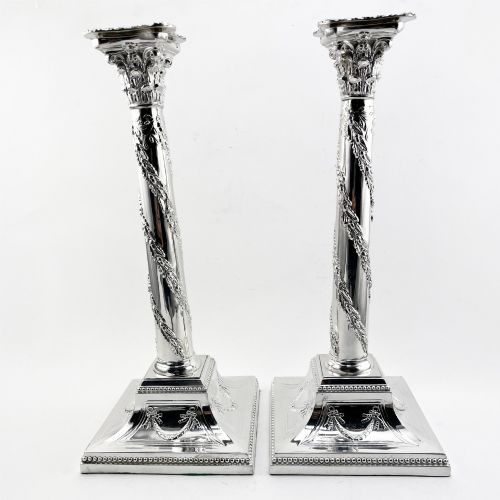
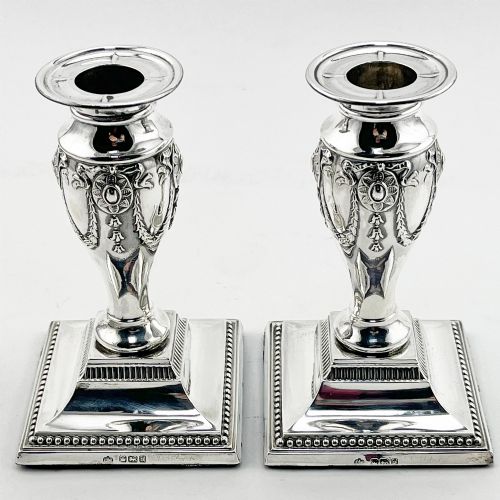
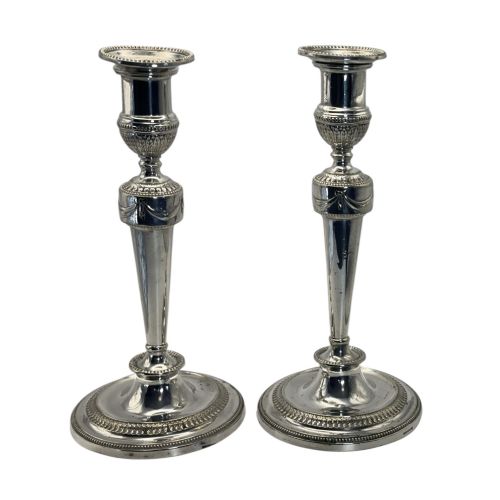
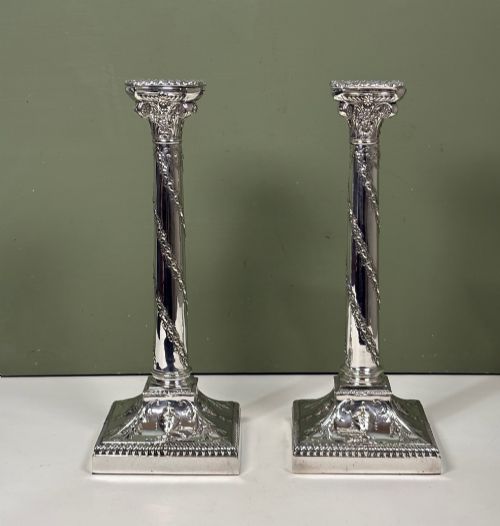
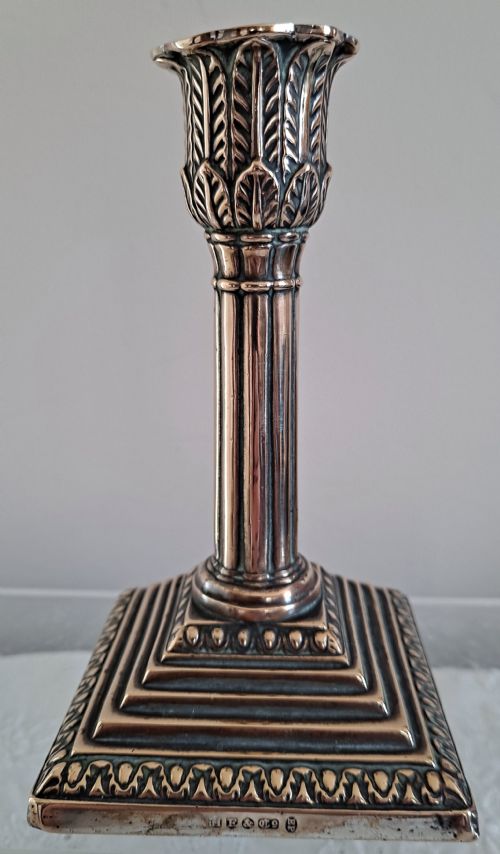
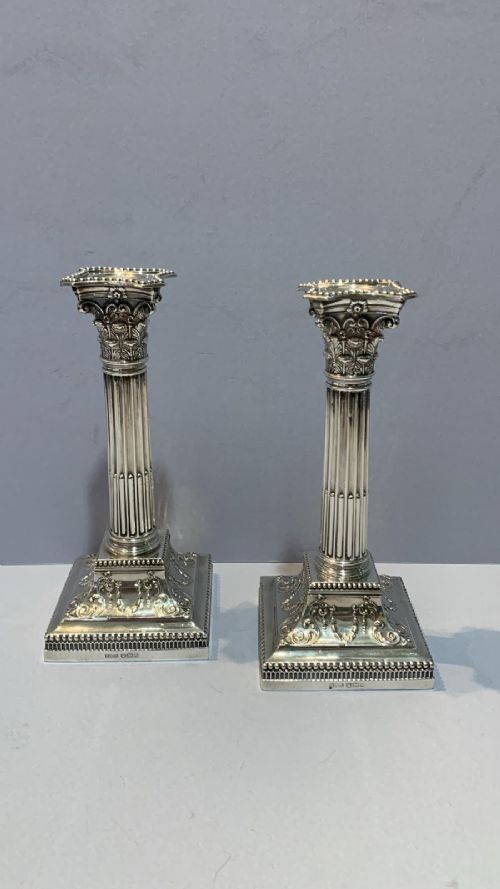
Neoclassical silver candle stands take the form of candlesticks spanning the eighteenth, nineteenth, and early twentieth centuries. You will most frequently encounter silver plated and sterling silver pairs dating from the Victorian and Edwardian eras, alongside Georgian revival pieces and occasional column forms.
The selection ranges from compact desk candlesticks and mantlepiece stands to taller column designs and matching sets of four. English workshops dominate the offerings, with distinct groupings from the 1800s, 1900, and intervening decades reflecting changing domestic tastes for classical revival design.
Makers such as Mappin and Webb and Barker Ellis appear among the plated wares, while unmarked pieces and older Georgian items show the broader scope of the market. Whether styled as Victorian Neoclassical or Italian Neoclassical, these objects serve as functional lighting with strong architectural silhouettes.
How They Were Made
Makers utilised sterling silver and silver plate over base metals, alongside nickel silver, brass, copper, and occasional combinations involving glass. Silver plated examples often rely on techniques developed for Old Sheffield plate or later electroplating methods to coat a durable core.
Construction methods include column assembly, weighted bases to provide stability for upright candle holders, and detailed surface work such as silvered carving seen on wooden altar-style variants. These combined materials and methods dictated both the weight and the longevity of each stand.
Neoclassical Silver Candle Stands Retail Price Guide 2026
Typical asking prices for neoclassical silver candle stands among the pieces listed under this phrase on Sellingantiques today, from the lower quarter to the upper quarter. They describe what is for sale here now, not the wider market.
Some nineteenth-century column stands quietly hid glass inserts to catch stray candle drips before they reached the silver.
What Varies in Quality
Quality rests in the crispness of the classical detailing, where sharper fluting on columns and well-defined urn or leaf motifs separate finer work from softer, mass-produced castings. The integrity of the metal plating or the thickness of the sterling silver layer dictates how well a piece ages under polishing.
Proportion and balance also distinguish the range, as superior stands maintain precise symmetry in pairs and proper structural weight in their bases. Maker attribution through stamped marks adds a layer of distinction, though unmarked pieces of strong Victorian or Edwardian design compete on sheer visual presence.
Mappin and Webb·Barker Ellis
The Neoclassical Silver Candle Stands Glossary
- Sterling silver
- A standard alloy composed of pure silver and other metals, usually copper, to increase durability. Items made to this standard often bear hallmarks denoting their metallic purity.
- Silver plate
- A manufacturing method where a thin layer of silver is bonded to a base metal such as copper or nickel silver. This technique allowed makers to produce domestic items at a lower cost than solid silver.
- Old Sheffield plate
- An early form of silver plating created by fusing a sheet of silver to a copper ingot before rolling them together into sheets. Pieces made this way display characteristic copper seams where the base metal shows through.
- Neoclassical
- A design style inspired by the classical art and architecture of ancient Greece and Rome. It emphasises symmetry, straight lines, columns, and classical motifs such as urns and swags.
- Column candlestick
- A candlestick shaped like a classical architectural column, featuring a distinct base, a fluted or plain shaft, and a capital that holds the candle.
Neoclassical Silver Candle Stands: Frequently Asked Questions
What is the difference between sterling and plated stands?
Sterling silver stands are made entirely from solid silver alloy throughout their structure. Silver plated stands apply a thin layer of silver over a base metal such as copper, brass, or nickel silver.
Solid silver pieces carry hallmarks indicating purity and maker, whereas plated items often show base metal underneath where the silver layer has worn away through decades of polishing.
How do I date an antique silver candle stand?
Dating relies on a combination of hallmarks, stylistic cues, and manufacturing techniques. Georgian and Victorian pieces often show distinct weight distribution, hand-finished detailing, and specific stylistic revivals.
Maker marks and registration numbers stamped into the base provide precise chronological markers. Comparing the column style and proportions to known periods helps narrow down unmarked examples.
Were these stands always made in pairs?
Many candle stands were produced as matched pairs to flank fireplaces, sideboards, or dining tables in symmetrical interior schemes. Sets of four also exist for larger formal settings.
Single stands do appear, sometimes surviving from larger sets or designed originally for specific tasks like desk use.
How should I clean antique silver plate?
Cleaning requires a soft microfibre cloth and a mild, non-abrasive silver polish formulated for plated items. Vigorous rubbing can wear away thin silver plating over copper or brass.
Gentle maintenance preserves the underlying metal and maintains the soft finish acquired over centuries of domestic use.