


Neoclassical Porcelain
Neoclassical porcelain brings ancient architectural restraint and classical myth into domestic interiors through refined figures, urns and table lamps.
Neoclassical Porcelain
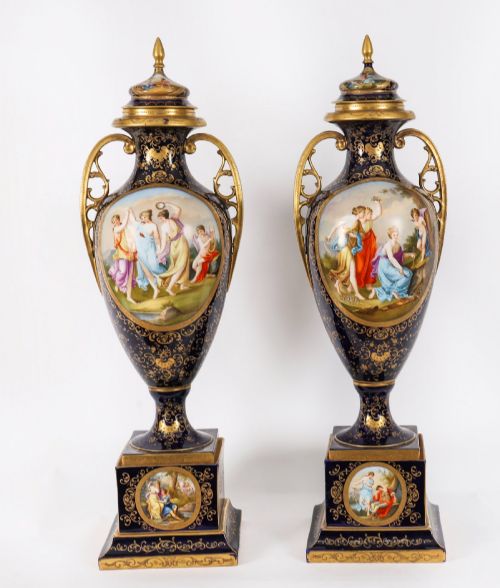
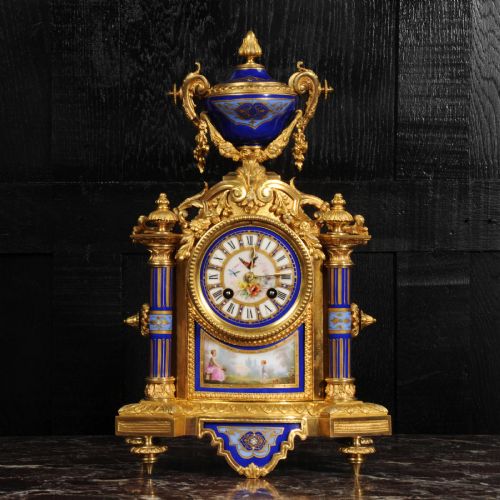
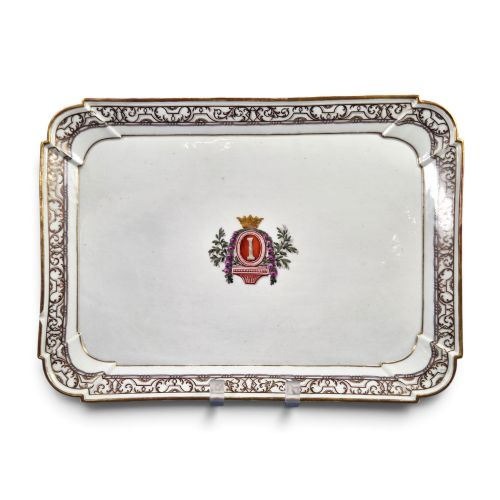
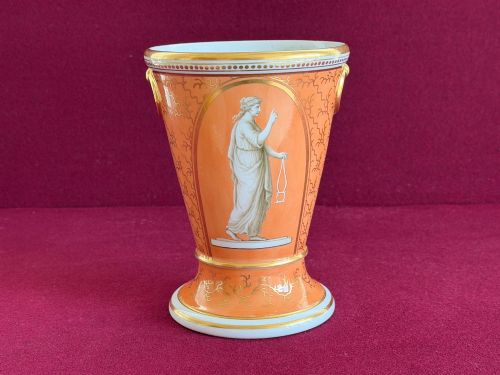
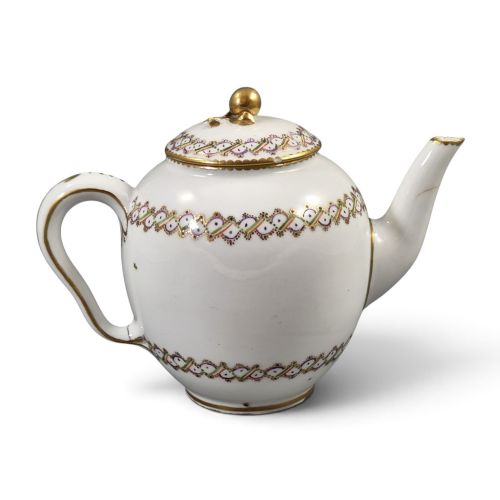
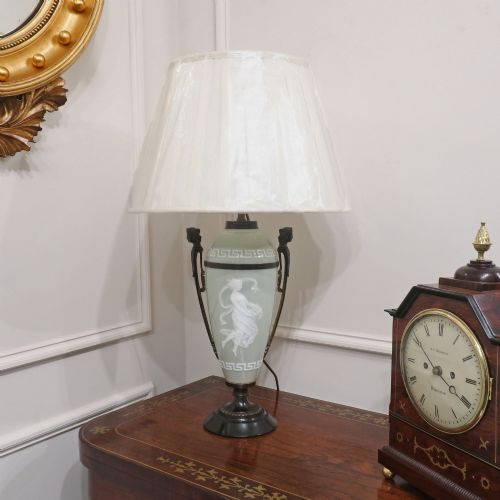
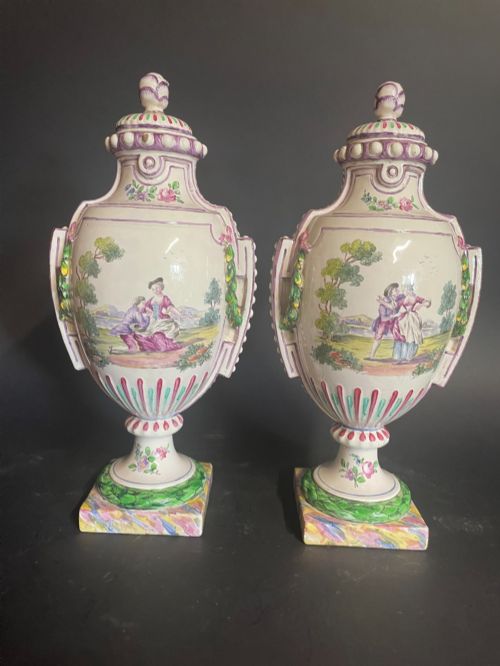
Neoclassical porcelain encompasses decorative objects and vessels drawn from eighteenth-century aesthetic revivals, spanning Georgian, Victorian and nineteenth-century periods. Buyers typically encounter decorative urns, figural groups, mantel clocks, and table lamps shaped by classical antiquity.
The assortment includes pieces produced across various European centres, featuring French Paris porcelain, English factories like Derby and Royal Worcester, alongside continental makers such as Meissen, Sèvres and Royal Vienna. Forms range from large display vases to smaller desk items and brooches.
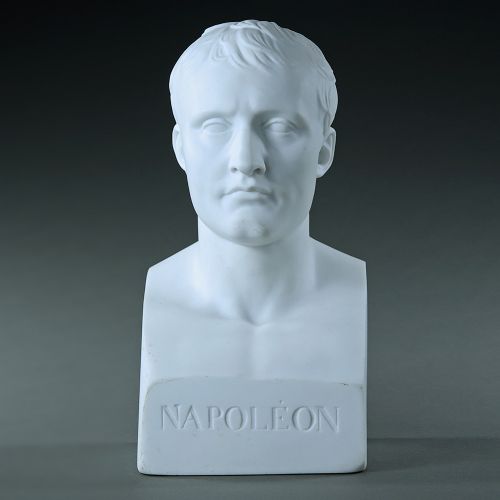
Many works adopt specific classical guises, including Campana and Medici vases, campana urns, and portrait busts of historical figures. These items reflect enduring academic interest in ancient Greek and Roman sculpture, translated into ceramic media.
Materials and Technique
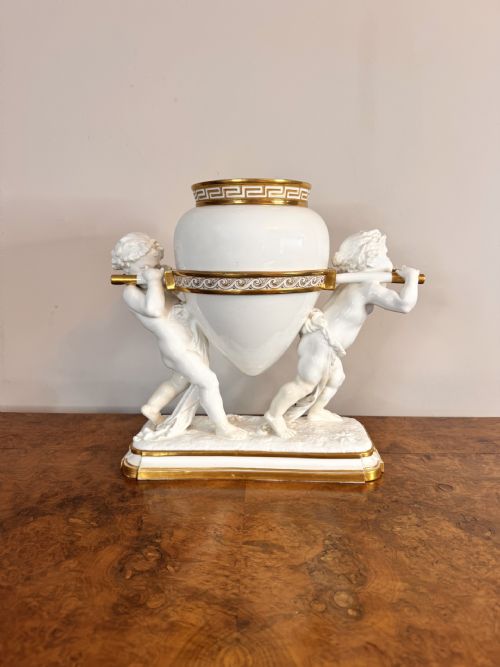
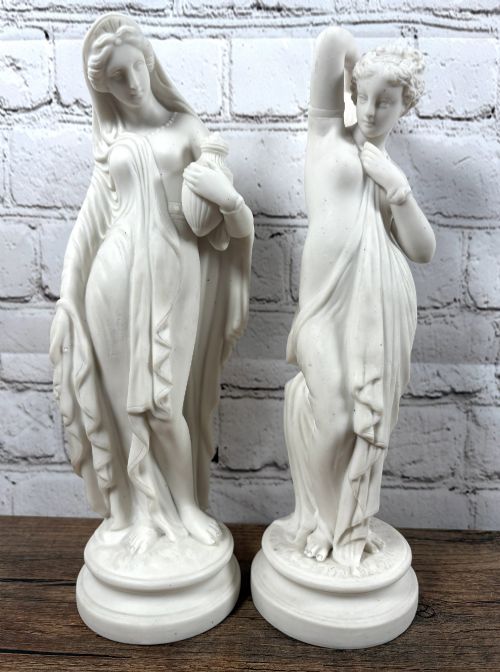
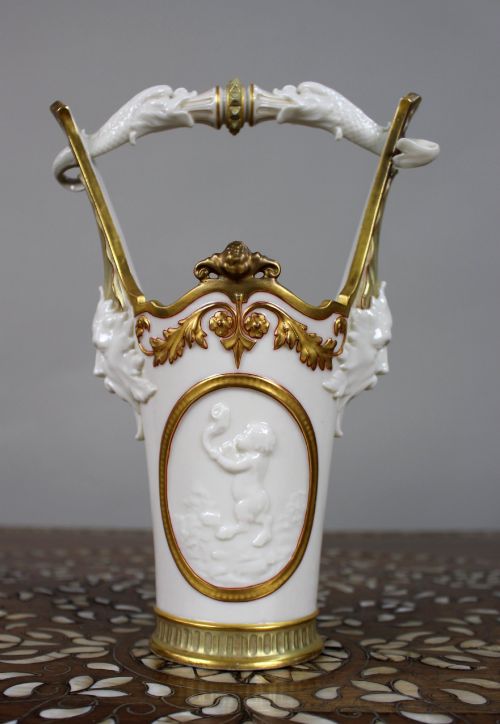
Makers utilised fine porcelain bodies, bisque porcelain, and parian ware alongside decorative elements such as gold leaf, gilding, and gilt bronze mounts. Parian ware provided a marble-like finish suited to classical figure studies after antique sculpture.
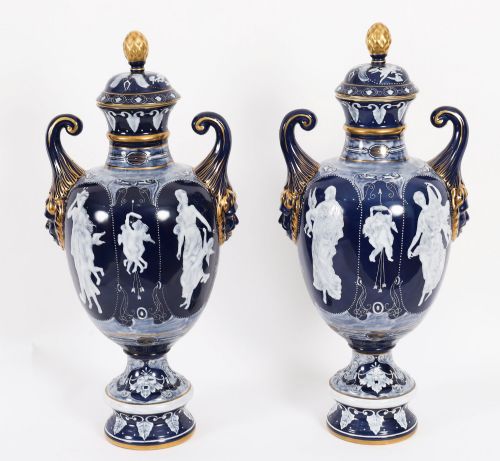
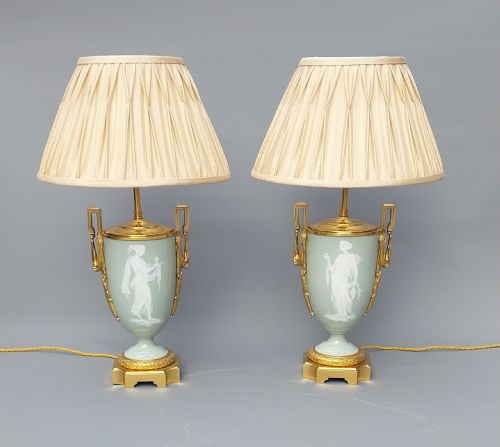
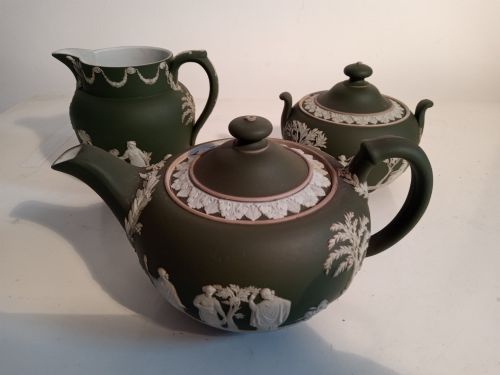
Surface decoration frequently involved hand-painted scenes, blue glazing, and delicate pâte-sur-pâte techniques where liquid clay built up low-relief designs against contrasting backgrounds. Enamel colours and gilt detailing accentuated moulded architectural motifs and classical drapery.
Many ornamental vessels incorporated cast metal elements, such as ormolu and ormolu mounts, securing porcelain bodies to pedestals or framing handles with classical cast bronze foliage.
Neoclassical Porcelain Retail Price Guide 2026
Typical asking prices for neoclassical porcelain among the pieces listed under this phrase on Sellingantiques today, from the lower quarter to the upper quarter. They describe what is for sale here now, not the wider market.
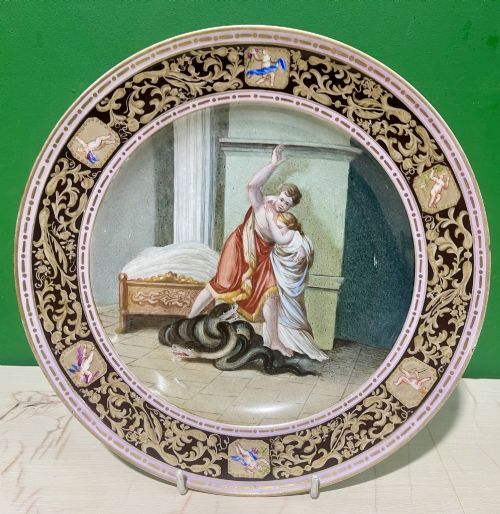
Domestic interiors gained classical gravity through porcelain figures of tragic heroines and delicate chamber pots finished in neoclassical style.
Craftsmanship and Execution
Quality rests in the crispness of the modelling, particularly in figures and low-relief work where facial expressions and drapery folds must remain sharp after firing. Softer, blurred contours indicate worn moulds or hurried production.
The refinement of hand-painted scenes and the precision of the gilding dictate a piece's standing. Superior examples display controlled brushwork in pictorial panels and neatly applied gold leaf that resists fading or crude application.
Royal Vienna·Sèvres·Japy Freres·Flight and Barr Worcester·Ludwigsburg Porcelain·Royal Worcester·Sceaux·Wedgwood·Helena Wolfsohn·Derby·Meissen·Manufacture de la Reine·Ernst Wallace
The Neoclassical Porcelain Glossary
- Bisque porcelain
- Unglazed ceramic body fired to a matte, marble-like finish. This material was widely used for classical figures and portrait busts to mimic ancient carved marble.
- Parian ware
- A type of fine-grained white biscuit porcelain developed in the nineteenth century. It shares the smooth texture and appearance of Parian marble from the Greek island of Paros.
- Pâte-sur-pâte
- A method of ceramic decoration where successive layers of liquid white clay are painted onto a darker body. This builds up a cameo-like relief design before glazing and firing.
- Campana urn
- A bell-shaped vessel with a flared rim and pedestal foot derived from ancient Roman garden vases. They frequently appear in porcelain as decorative mantel garnitures or table ornaments.
- Ormolu
- Gilt bronze decorative mounts applied to porcelain bases, handles, and rims. The technique involves coating cast bronze with a finely ground gold mercury amalgam and heating it.
Neoclassical Porcelain: Frequently Asked Questions
What were neoclassical porcelain urns used for?
These large ornamental vessels served primarily as decorative garnitures on mantelpieces and sideboards, reflecting the eighteenth and nineteenth-century taste for classical antiquity.
Unlike utility wares, they were intended solely to display refined painting, sculptural relief work, and classical motifs within formal domestic interiors.
How do I identify parian ware?
Parian ware appears as an unglazed, off-white ceramic with a smooth texture that closely resembles carved marble.
It lacks the glossy shine of standard glazed porcelain, making it particularly effective for detailed portrait busts and classical figural studies.
Can I use antique porcelain table lamps daily?
Many nineteenth-century porcelain vases and urns have been converted into table lamps while retaining their original hand-painted scenes and gilt bronze mounts.
Careful placement away from heavy traffic areas ensures these fragile ceramic and ormolu structures remain secure during everyday use.
How are different factory periods distinguished?
Factories often utilised changing underglaze blue marks, impressed ciphers, and painted numerals that correspond to specific decades of production.
Examining the paste quality, base construction, and style of gilding alongside these factory marks helps confirm an item's chronological origins.