



Neoclassical Parquetry Commode
These neoclassical parquetry commodes bring architectural geometry and refined timber veneers to a room, offering formal storage with classical presence.
Neoclassical Parquetry Commode
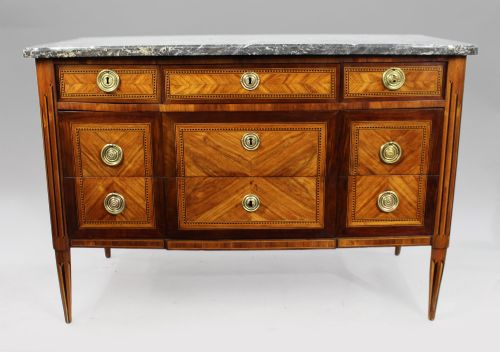
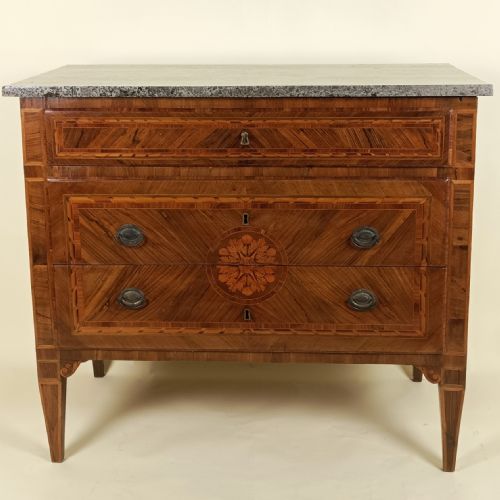
A neoclassical parquetry commode stands as a formal chest of drawers defined by geometric wood veneers and classical restraint. These pieces emerge primarily in 18th Century and 19th Century forms, reflecting Louis XVI, French Transitional, and Italian Neoclassical design influences.
How They Were Made
Cabinetmakers constructed these commodes using carcases of solid timber, such as walnut or mahogany, overlaid with precise geometric parquetry veneers in satinwood and fruitwood. This geometric wood placement created patterned surfaces that played with grain and tone.
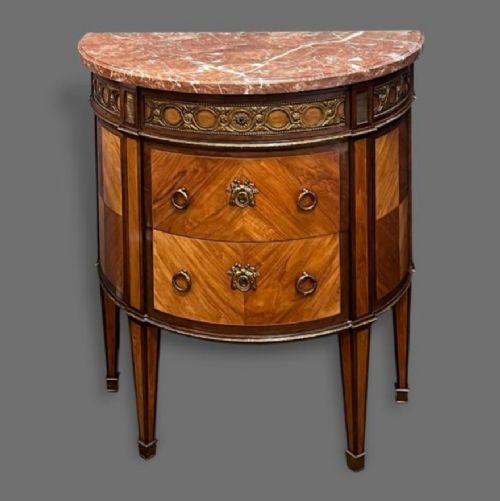
Many examples incorporate heavy contrasting elements, mounting cast ormolu and gilt bronze details around drawers and corners. Slabs of marble, often fitted to the upper surface, provided a durable and weighty finish to the case.
Neoclassical Parquetry Commode Retail Price Guide 2026
Typical asking prices for neoclassical parquetry commode among the pieces listed under this phrase on Sellingantiques today, from the lower quarter to the upper quarter. They describe what is for sale here now, not the wider market.
Listings feature walnut, satinwood, and mahogany surfaces paired with marble tops across Victorian and 18th Century periods.
What Varies in Quality
Quality rests in the precision of the veneer work and the crispness of the secondary materials. Finer examples display meticulous parquetry alignment across curved and serpentine drawer fronts without warping or poor timber matching.
The integration of metalwork dictates distinction at the upper end of the range. Heavy, finely chased ormolu and gilt bronze mounts elevate a piece above simpler variants that rely solely on timber surfaces.
Edmond Poteau·Riesener
The Neoclassical Parquetry Commode Glossary
- Parquetry
- Geometric mosaic woodwork formed by fitting small pieces of veneer together on a carcase. It creates patterns of cubes, squares, and diagonal lines.
- Ormolu
- Gilt bronze ornamentation applied to the mounts, feet, and handles of furniture. The technique involves fusing gold to a bronze base.
- Commode
- A low chest of drawers designed for formal reception rooms. The form developed in France during the 18th century.
- Demi-Lune
- A half-moon shape used for the footprint and top of certain commodes and console tables. This curved form softens room geometry.
Neoclassical Parquetry Commode: Frequently Asked Questions
What is a neoclassical parquetry commode?
It is a formal chest of drawers decorated with geometric wood veneers and classical design details. These pieces originate across the 18th and 19th centuries in European workshops.
They serve primarily as decorative storage furniture for living spaces and hallways. Many include marble tops and bronze mounts to complete their architectural silhouette.
How do I care for a marble top commode?
Protect the stone surface from acidic liquids and moisture by using coasters and mats. Clean the marble gently with mild soap and water rather than harsh chemical cleaners.
Maintain the wood veneer by keeping the piece away from direct heat sources and sudden humidity changes. Apply appropriate furniture wax sparingly to preserve the timber finish.
How do I distinguish 18th century from revival pieces?
Study the construction methods inside the drawers and the backboards for tool marks and timber ageing. Earlier pieces exhibit hand-cut joinery and period-specific secondary woods.
Revival pieces from the 19th or early 20th century often show machine-sawn elements and standardised hardware. Comparing the style details to documented cabinetmaker practices helps clarify the period.
Where were these commodes originally placed?
Owners positioned these decorative chests in grand reception rooms, salons, and formal parlours. They functioned both as display surfaces and as practical storage for household linens or valuables.
Their finished backs and polished sides occasionally allowed them to stand away from walls. They anchored room layouts alongside seating groups and large mirrors.