
Marquetry Drawer Cabinets
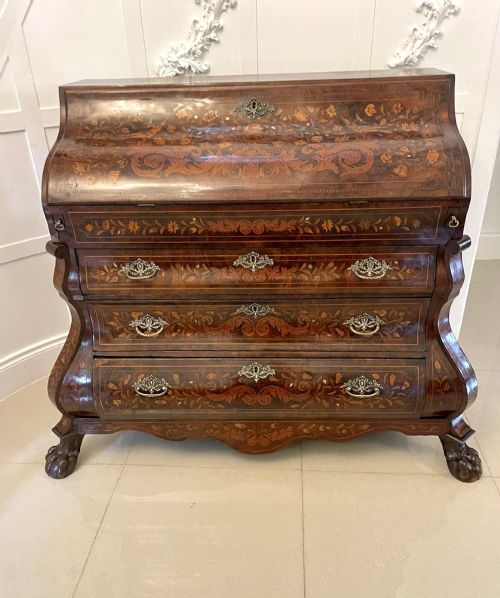
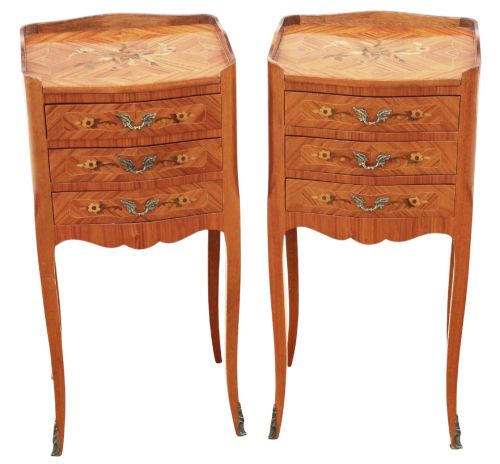
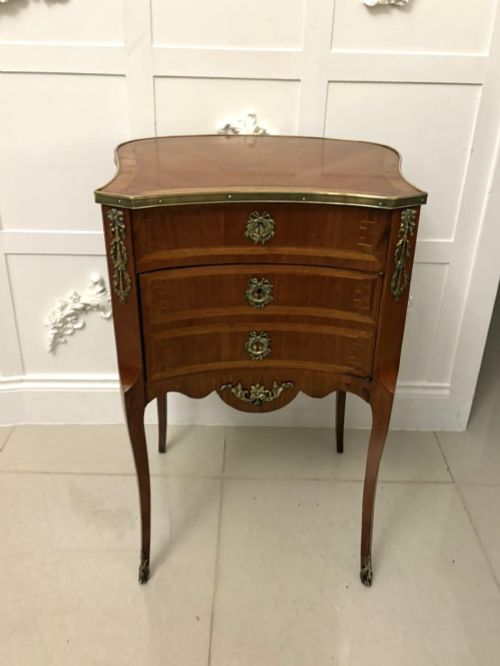
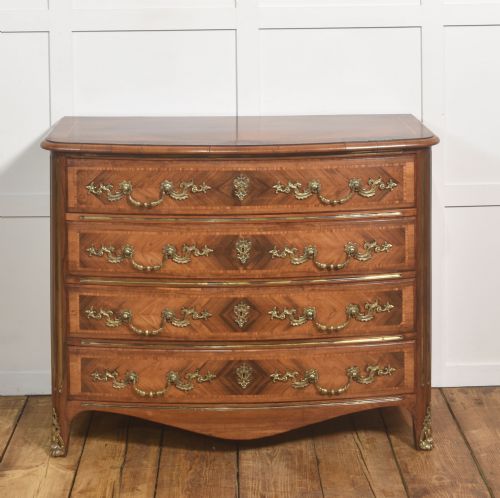
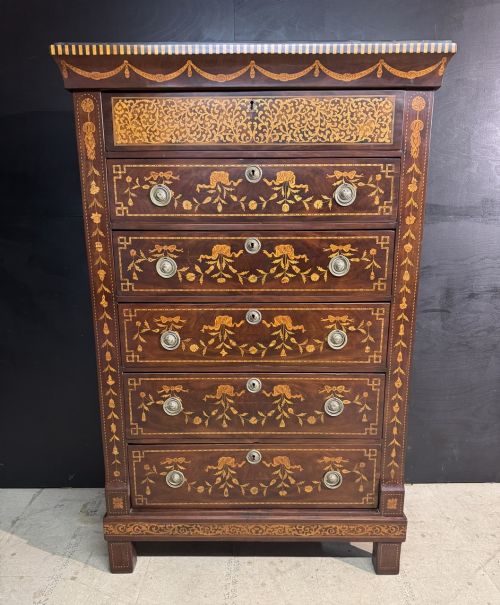
These marquetry drawer cabinets offer intricate floral and geometric inlays set into walnut, kingwood and mahogany, bringing continental elegance and practical storage to a room.
Marquetry Drawer Cabinets
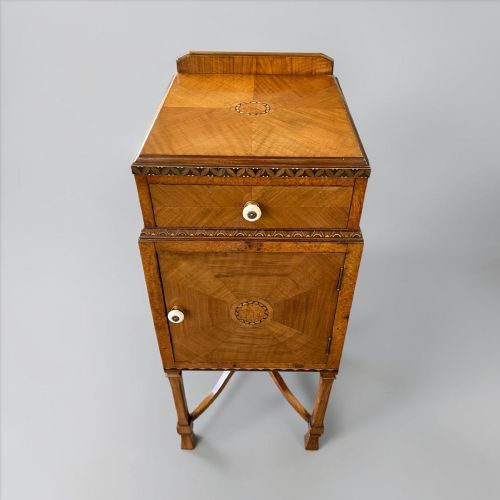
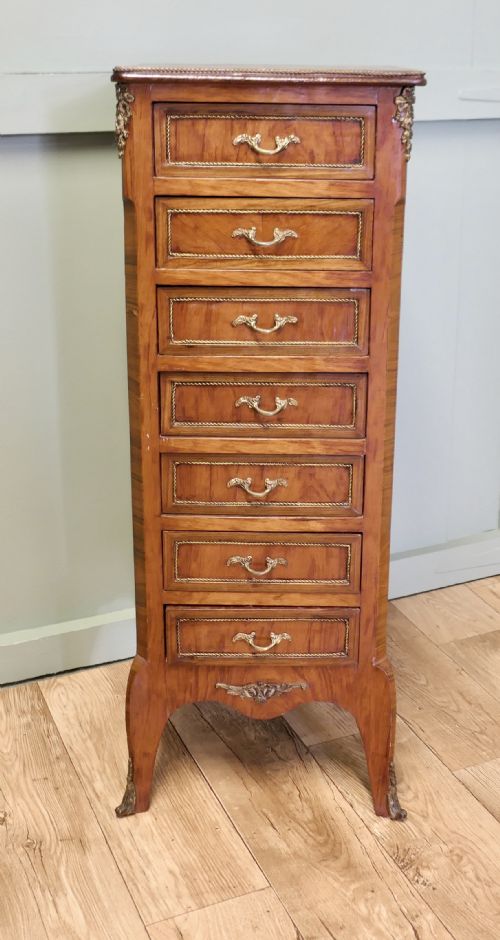
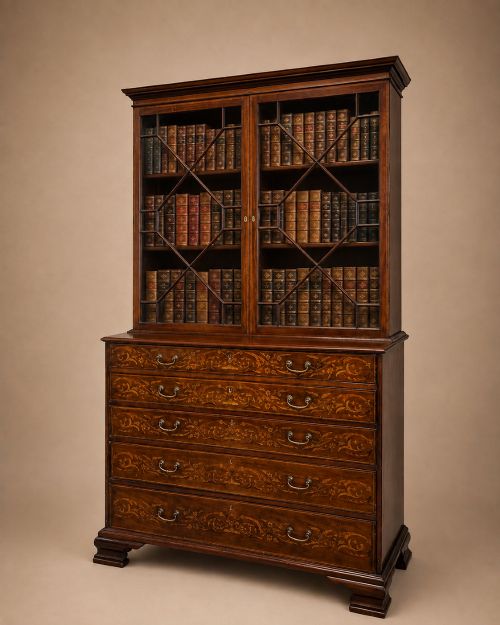
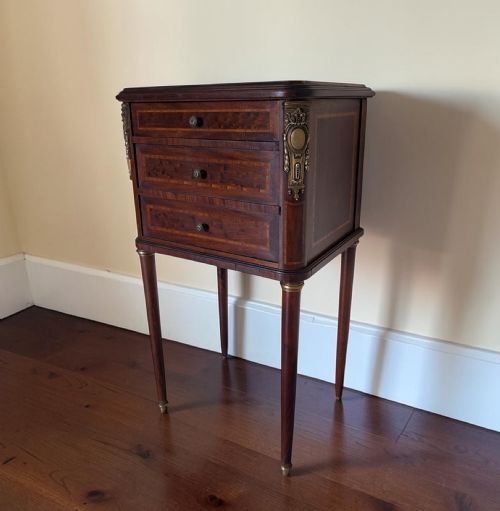
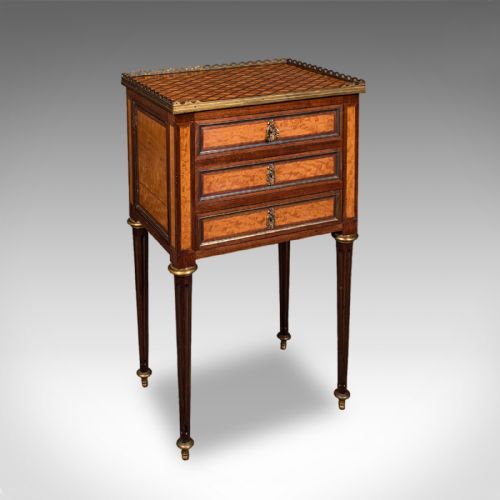
Marquetry drawer cabinets encompass a wide range of storage furniture built with patterned wood veneers, including bedside tables, commodes, tall chests of drawers and bureau bookcases. When searching for marquetry drawer cabinets, buyers frequently encounter French Louis XV and Louis XVI revival pieces alongside Dutch baroque examples dating from the eighteenth century through to the nineteen-thirties.
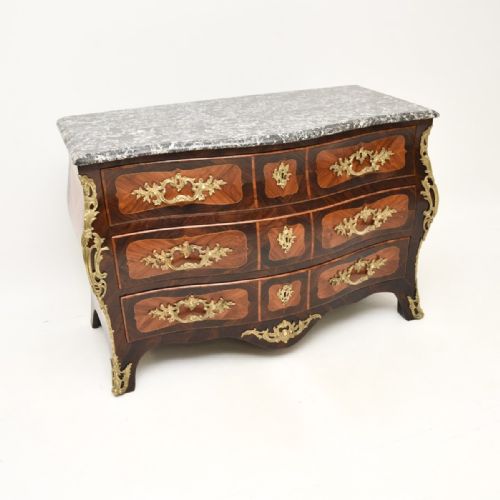
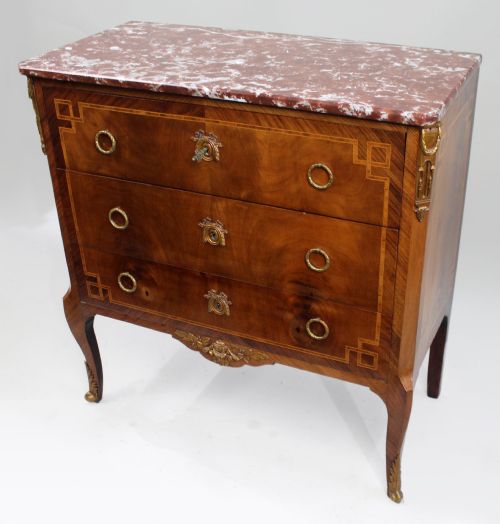
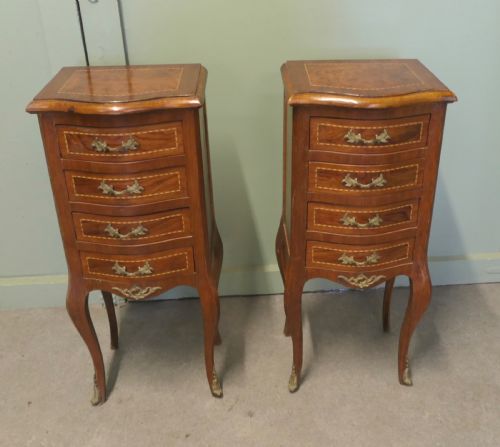
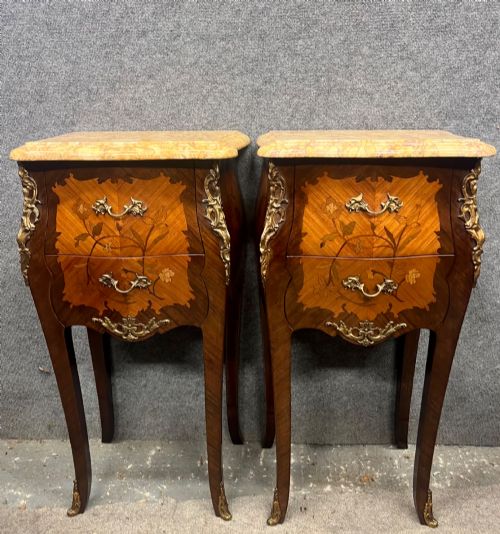
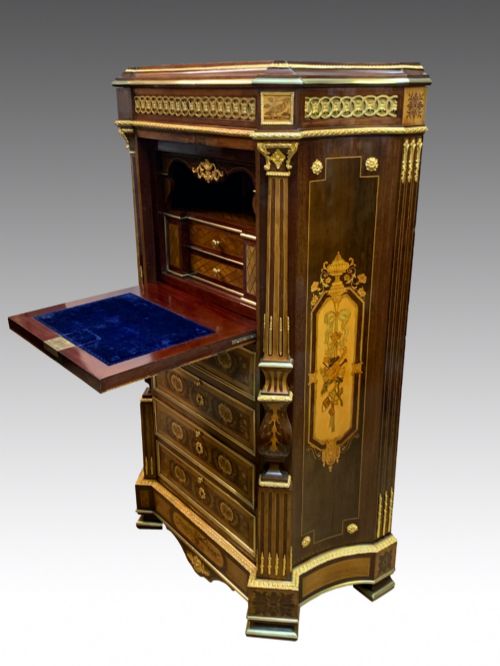
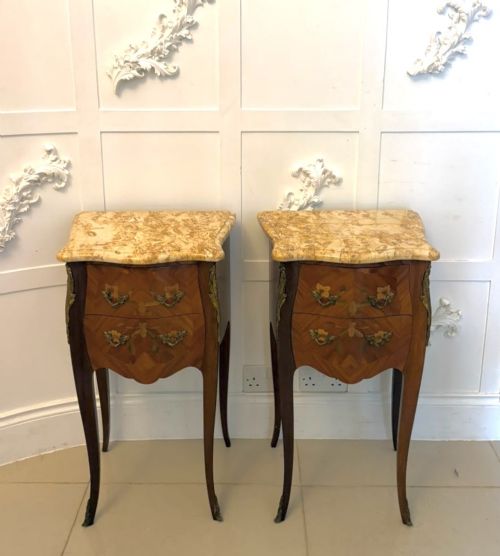
The form varies from serpentine and bombe commodes with marble tops to pairs of compact nightstands and taller secretaire cabinets. Walnut and mahogany provide the primary carcases, while contrasting timbers form the detailed surface decoration.
Materials and Construction
Cabinet makers construct these pieces using solid timbers like walnut, mahogany and rosewood for the structural carcases, applying finely sliced veneers of kingwood, satinwood and walnut across the surfaces. Intricate marquetry panels are assembled by cutting contrasting wood veneers together to form floral, pictorial or geometric motifs before gluing them to the drawer fronts and cabinet sides.
Many commodes and side cabinets incorporate shaped marble tops in white, grey or rouge varieties, while gilt bronze or ormolu mounts accentuate the corners, handles and key escutcheons. Brass hardware and fine stringing lines complete the structural detailing on both French and Dutch pieces.
Listings feature walnut, mahogany and kingwood cabinets decorated with floral marquetry across the eighteenth and nineteenth centuries.
Assessing Quality
Quality rests upon the precision of the veneer work and the crispness of the inlaid floral or geometric patterns across the drawer fronts and sides. Finer examples display meticulous matching of wood grains and tight joints within the marquetry, whereas simpler pieces rely on basic repeating borders.
The choice of secondary materials also separates grades, with thick marble slabs, substantial ormolu mounts and solid drawer linings marking out superior workshop output. Original hardware, well-fitted drawers and smooth serpentine or bombe contours further distinguish the better pieces.
Jacques Bircklé·Maison Krieger·Edwards & Roberts
The Marquetry Drawer Cabinets Glossary
- Marquetry
- A decorative technique where small pieces of coloured wood veneer are assembled into pictorial or geometric patterns on a carcase.
- Bombe
- A bulging, convex shape characteristic of continental furniture styles, particularly associated with mid-eighteenth-century commodes.
- Ormolu
- Gilded bronze mounts and decorative ornaments applied to the corners, feet and handles of fine cabinets.
- Commode
- A low chest of drawers, often fitted with a marble top, originating in France during the eighteenth century.
- Secretaire
- A cabinet or chest incorporating a fitted writing drawer with a drop-down front and internal pigeonholes.
Marquetry Drawer Cabinets: Frequently Asked Questions
How do I style a marquetry bedside cabinet?
These cabinets suit traditional and contemporary interiors alike, where their patterned wood veneers provide a rich textural contrast against plain walls. Placing a simple lamp on top allows the detailed marquetry on the surface to remain visible.
Keep surrounding furniture understated so the inlaid patterns on the drawer fronts and sides become a focal point in the bedroom or living space.
What is the difference between marquetry and parquetry?
Marquetry involves cutting and assembling wood veneers to form pictorial designs, floral sprays or complex curves. Parquetry uses similar veneer techniques but restricts the patterns to geometric arrangements like cubes, chequers or lozenges.
Both methods decorate the surfaces of chests and side cabinets across the eighteenth and nineteenth centuries.
Are marble top commodes heavy?
Marble top commodes carry considerable weight because the stone slab sits loose or fixed directly onto the wooden carcase. Moving these cabinets requires lifting the heavy stone top off first to prevent damage to the underlying frame and veneer.
When positioning the cabinet, ensure the floor surface is level so the weight distributes evenly across the cabriole or tapered legs.
How should I care for antique walnut veneer?
Antique walnut veneer responds best to cleaning with a soft, dry cloth and occasional applications of microcrystalline wax to nourish the wood. Avoid placing these cabinets near direct heat sources or strong sunlight, which can dry out the historic glues holding the veneers.
Maintaining a stable room temperature prevents the timber from expanding or contracting, keeping the delicate marquetry in secure condition.