

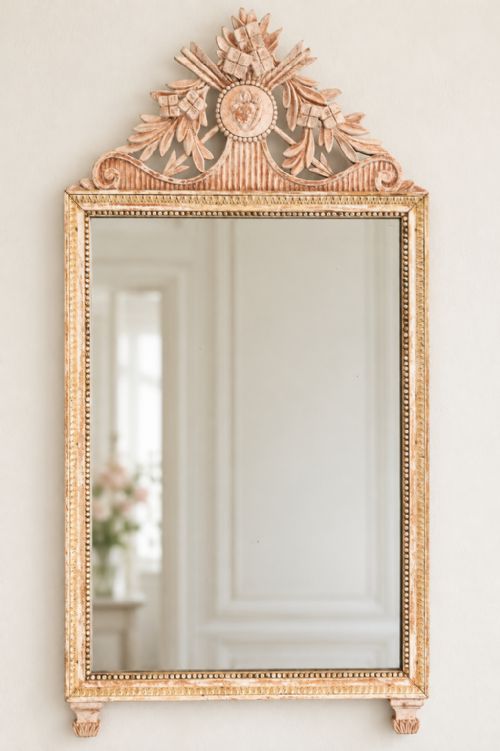


Neoclassical Painted Pier Mirror
These neoclassical painted pier mirror pieces bring architectural symmetry and light to a room, combining painted timber frames with gilded detail.
Neoclassical Painted Pier Mirror
A neoclassical painted pier mirror is designed to hang on the wall space between windows, reflecting natural light deeper into the room. These pieces appear in forms such as tall wall mirrors, trumeau panels, and combinations with console tables below.
The selection ranges from early eighteenth-century architectural formats to nineteenth-century French and Regency interpretations. Most examples on this page date from the nineteenth century, including specific French Empire and Louis XVI styles.
Buyers encounter painted wood surfaces enriched with parcel gilt details, carved gesso, and composite materials. Certain pieces incorporate console tables or grand vertical proportions suitable for high-ceilinged drawing rooms.
How they were made
Carved wood and gesso form the primary structural foundation for these frames, shaped into classical architectural motifs and ribbed profiles. Artisans applied layers of paint, often in green or neutral tones, alongside gold leaf and silvered finishes.
Trumeau panels combine painted wooden boards with integrated oil paintings or decorative panels above the glass plate. Gilding techniques utilise genuine gold leaf or giltwood highlights to accentuate the carved details against the painted ground.
Neoclassical Painted Pier Mirror Retail Price Guide 2026
Typical asking prices for neoclassical painted pier mirror among the pieces listed under this phrase on Sellingantiques today, from the lower quarter to the upper quarter. They describe what is for sale here now, not the wider market.
The listings span the eighteenth, nineteenth, and early twentieth centuries, featuring glass, gesso, carved wood, and painted finishes.
What varies in quality
Quality rests in the crispness of the carved wood and gesso ornamentation, where hand-tooled depth distinguishes superior workshops from later mass-produced alternatives. The integration between the painted surface and the gilt highlights reveals the original decorator's hand.
The proportion and scale of the mirror frame dictate its architectural presence, with monumental heights and matching console tables representing the upper tier of design. Original glass plates and untouched painted surfaces command greater admiration than later restorations.
Gillows Of Lancaster
The Neoclassical Painted Pier Mirror Glossary
- Pier mirror
- A tall mirror specifically designed to hang on the narrow wall between two windows. They frequently sat above matching console tables to create a unified interior scheme.
- Trumeau
- A decorative wall panel incorporating a painted wooden surround, often featuring an oil painting or carved motif above the main mirror glass.
- Gesso
- A plaster-like mixture applied to wood frames and carved into intricate classical details before being painted or gilded. It provides the crisp edge required for neoclassical ornamentation.
- Parcel gilt
- A decorative technique where specific raised portions of a painted surface are highlighted with gold leaf. This creates contrast against the primary painted wood background.
- Empire
- A nineteenth-century style influenced by classical Roman and Greek motifs, characterised by bold architectural lines and restrained decoration. It frequently appears in French examples of this period.
Neoclassical Painted Pier Mirror: Frequently Asked Questions
Where should I hang a pier mirror?
These mirrors suit narrow wall spaces between tall windows, where they reflect daylight and brighten the interior.
They also sit effectively above console tables or fireplaces in reception rooms with high ceilings.
How do I identify a trumeau mirror?
A trumeau incorporates a wooden panel frame that often houses a decorative painted scene or carved artwork positioned directly above the glass.
This architectural format originated in eighteenth-century France and continued through the nineteenth century.
What is parcel gilding?
Parcel gilding involves applying gold leaf selectively to specific carved details while leaving the rest of the wooden frame painted.
This technique highlights classical motifs such as bead and reel carvings or acanthus leaves against a contrasting painted background.
Are these mirrors French or English?
The selection includes both origins, with numerous examples reflecting nineteenth-century French Empire and Louis XVI aesthetics alongside English Regency pieces.
Regional differences appear in the carved motifs and the treatment of the painted wooden surfaces.