
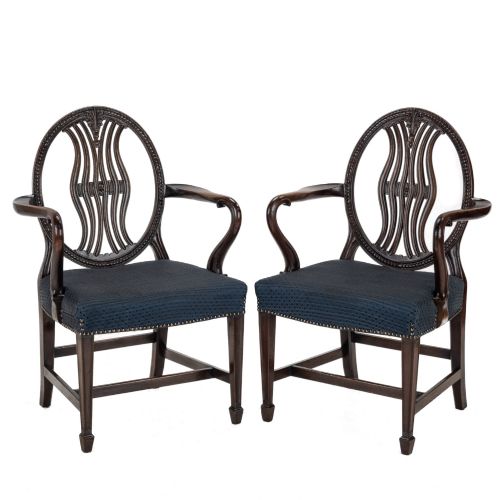


Neoclassical Oval Back Chairs
Neoclassical oval back chairs bring formal symmetry and restrained classical ornament into a room through carved medallion frames and straight tapered supports.
Neoclassical Oval Back Chairs
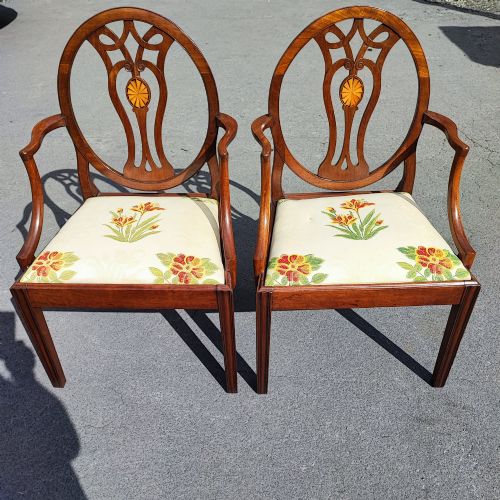
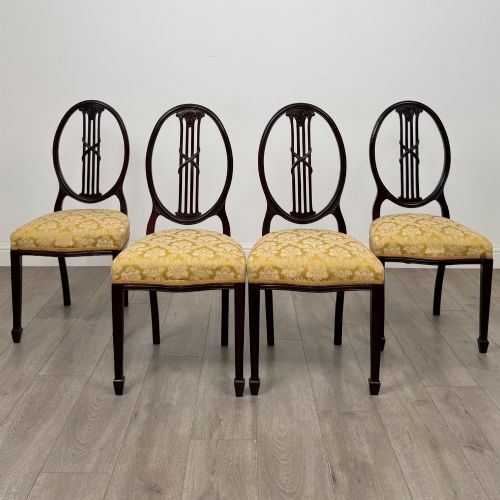
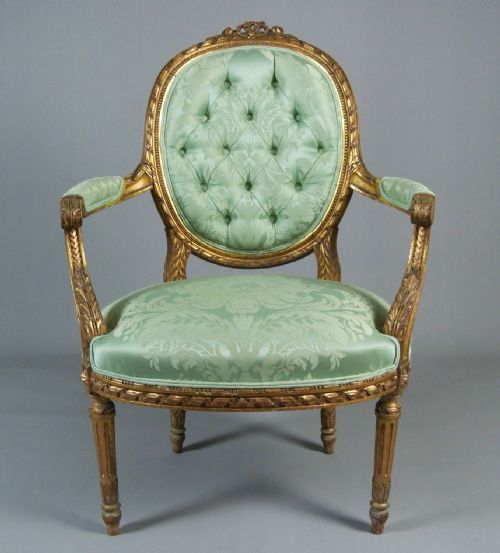
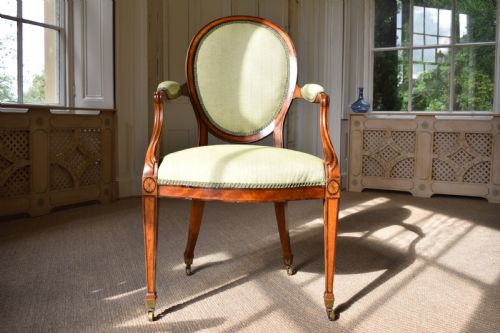
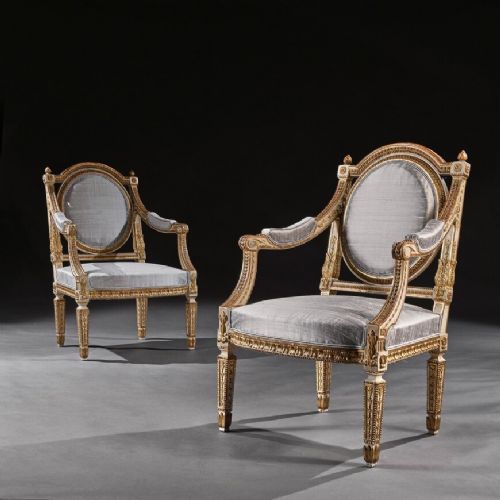
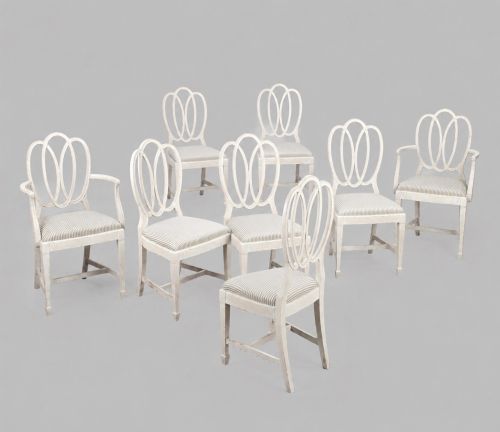
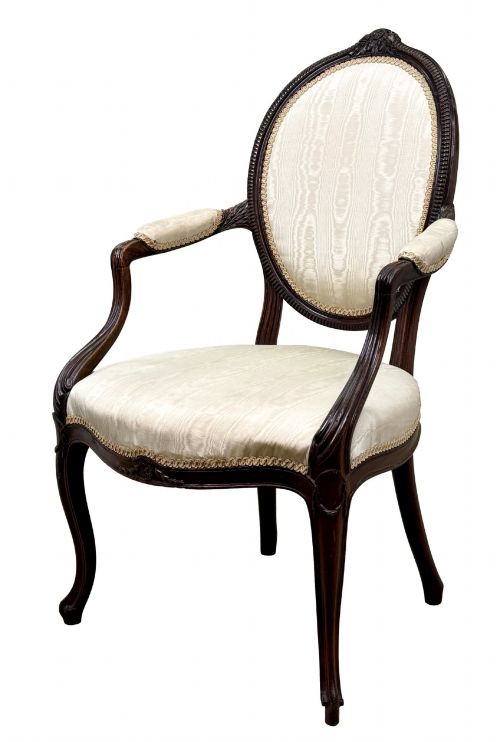
Neoclassical oval back chairs appear in forms such as open armchairs, dining chairs, salon armchairs, and side chairs, spanning the eighteenth century through the twentieth century. A buyer searching for neoclassical oval back chairs will encounter various interpretations, including George III designs, French Louis XVI styles, and later revivals from the Victorian and Edwardian periods.
The defining feature across these seating pieces is the curved medallion or oval back frame, frequently encountered as part of matched sets or smaller pairs. Origins range from English workshops influenced by Sheraton and Hepplewhite to continental French and Italian makers working within the neoclassical idiom.
Judging Quality
The execution of the carved wood elements and the crispness of the neoclassical details determine the distinction between average output and finer work. Sculpted giltwood frames and hand-carved mahogany show greater refinement than simpler later adaptations.
Coherence in larger suites, such as sets of dining chairs or matching salon armchairs, influences the overall character. The integration of original fabric, silk damask, or needlepoint panels contributes to the integrity of the piece.
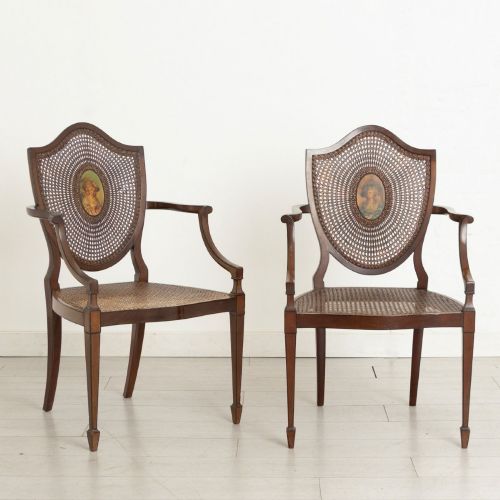
The selection includes dining chairs, open armchairs, bergere chairs with cane panels, and large matching suites.
Thomas Chippendale·John Linnell
The Neoclassical Oval Back Chairs Glossary
- Medallion chair
- A chair featuring an oval or circular upholstered backrest framed in carved wood. This form is central to French Louis XVI styles and related neoclassical revivals.
- Giltwood
- Timber treated with a thin layer of gold leaf applied over a prepared gesso ground. It appears on formal eighteenth-century and revival salon armchairs.
- Parcel gilt
- Woodwork finished with paint or polish where specific carved details are selectively highlighted in gold leaf. This technique emphasises neoclassical ornamentation.
- Fauteuil
- An open-framed upholstered armchair with exposed wooden arms originating in France. These pieces typically feature padded armrests and carved show frames.
- Bergere
- An enclosed upholstered armchair featuring solid sides and a cane or upholstered back. Examples from the twentieth century often utilise split cane back construction.
Neoclassical Oval Back Chairs: Frequently Asked Questions
Where were these chairs used historically?
These seating forms served primarily in formal drawing rooms, libraries, and grand dining spaces. Salon armchairs and open armchairs furnished reception areas where appearance and social display mattered.
Larger dining sets provided seating for formal meals in substantial residences, reflecting the symmetrical tastes of the Georgian and neoclassical periods.
Are these chairs suitable for daily use?
Most antique oval back chairs function well for sitting when the frame joinery and upholstery webbing are secure. Robust mahogany and walnut dining chairs handle regular placement around a table.
Delicate giltwood salon pieces or chairs with historic silk damask and needlepoint panels require more considered placement to preserve their fragile surfaces.
What is the difference between George III and Sheraton designs?
George III neoclassical pieces often incorporate heavier carved mahogany frames influenced by designers like Thomas Chippendale and John Linnell. They utilise rich timber patination and detailed giltwood accents.
Sheraton style examples tend toward lighter proportions, rectilinear geometry, and subtle inlay work, reflecting the transition into the nineteenth century.
How can I tell an 18th century chair from a revival piece?
Eighteenth-century pieces display genuine timber ageing, hand-cut joinery marks, and wear patterns consistent with extended use over centuries. The carving shows the fluid hand of period craftsmen.
Revival pieces from the Victorian, Edwardian, or later periods often exhibit machine precision in their construction and standardised decorative motifs applied during manufacture.