


Neoclassical Ormolu Appliques
Neoclassical ormolu appliques are decorative wall lights that bring structured symmetry and rich metallic warmth to an interior.
Neoclassical Ormolu Appliques
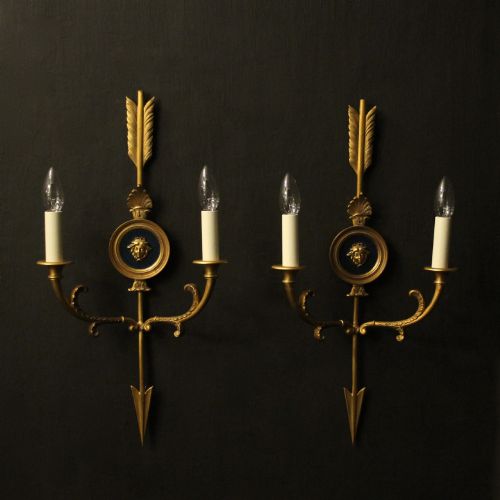
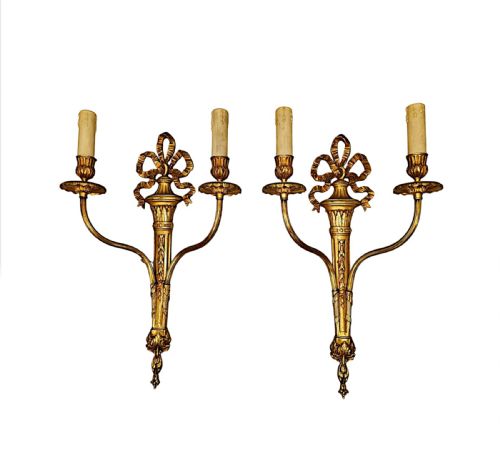
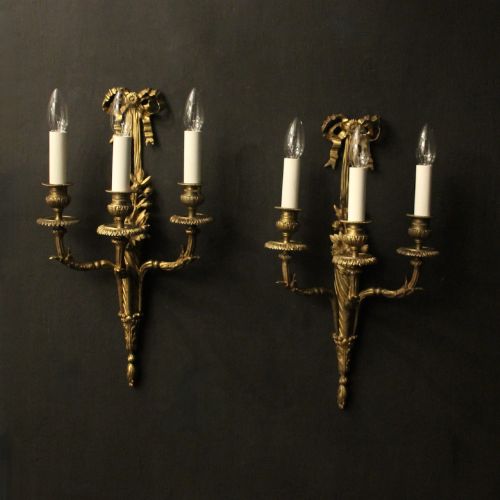
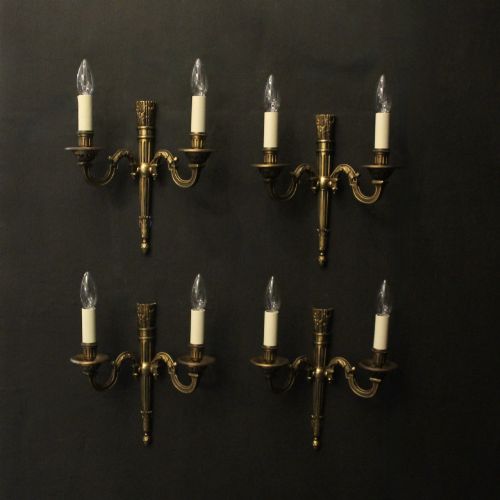
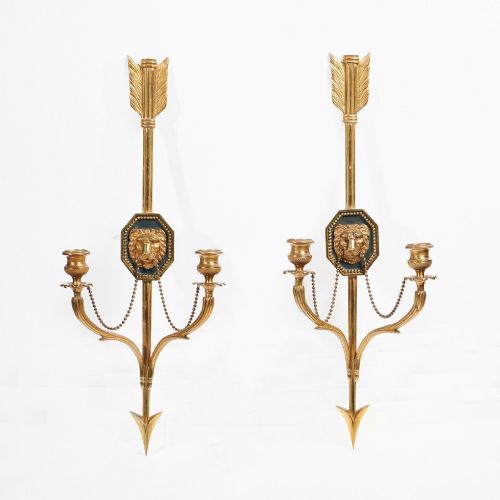
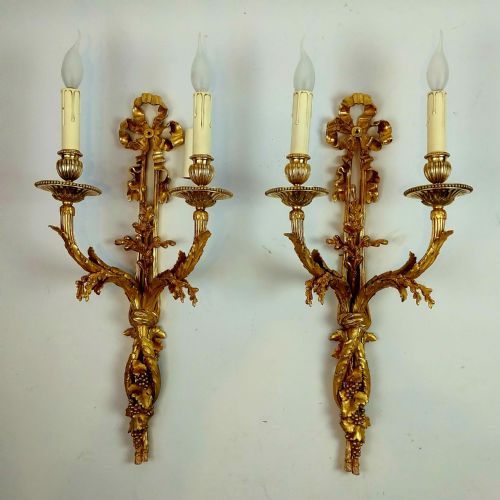
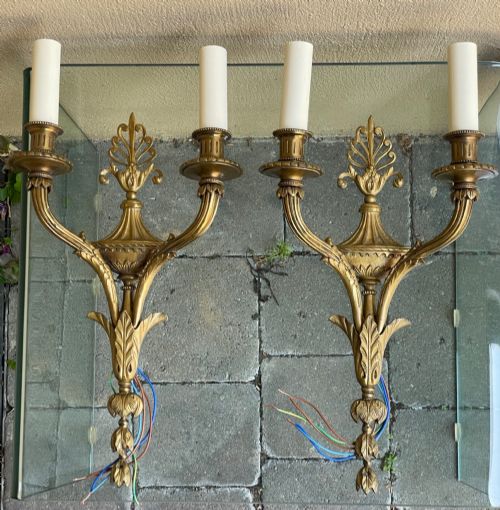
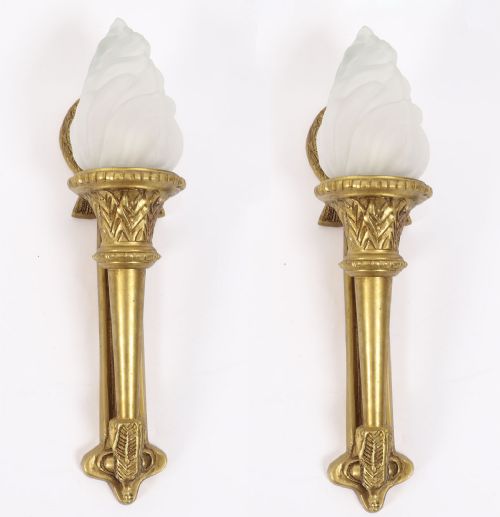
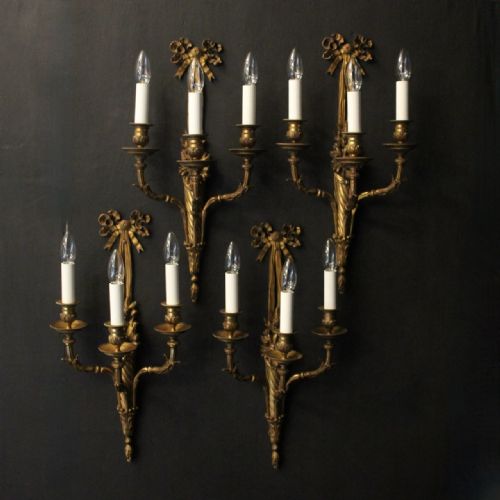
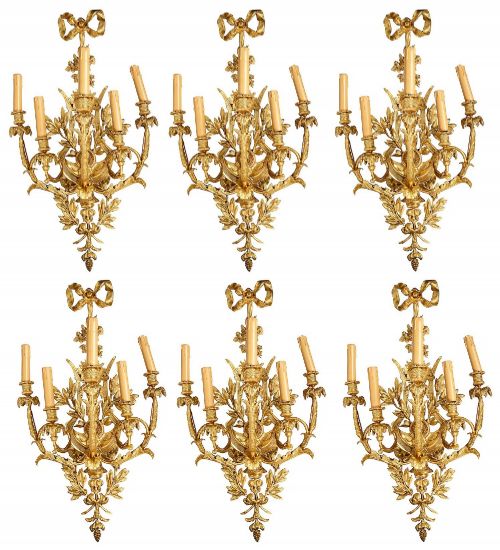
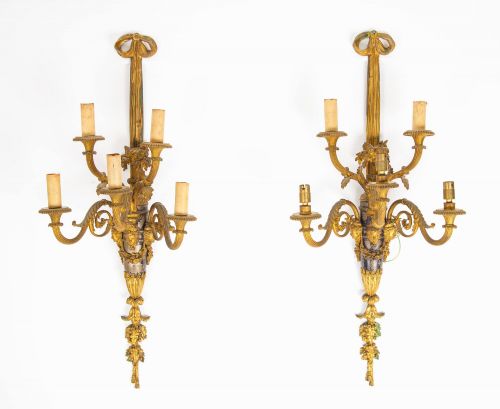
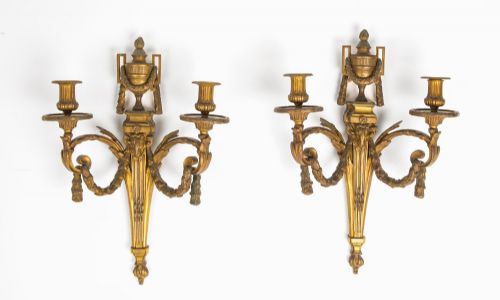
Neoclassical ormolu appliques appear as wall lights and wall sconces, predominantly originating from French workshops during the nineteenth and early twentieth centuries. These fixtures frequently take the form of pairs or larger matched sets, designed to mount directly onto interior walls to provide ambient illumination.
The prevailing aesthetic draws heavily on Louis XVI style, French Empire, and broader neo-classical vocabularies. Buyers will encounter twin-arm, triple-arm, and five-light configurations, often incorporating classical motifs such as ram's head masks or flaming torches.
While most examples maintain a French provenance, the selection also encompasses English and Italian interpretations, alongside Victorian and Regency stylistic revivals. Dating spans widely across the nineteenth century into the 1920s and 1930s.
Materials and Techniques
Makers utilised bronze, brass, and metal as the foundational substrates for these wall lights, applying techniques of casting and chasing to achieve crisp architectural detail. The metalwork is then finished with gilding, creating the characteristic ormolu or gilded bronze surface.
Certain pieces combine this bright metallic finish with patinated metal, glass, or crystal elements to create textural contrast. The integration of mirrored backplates on specific sconces serves to amplify the reflected candle or electric light within a room.
Listings feature wall lights from the nineteenth century up to the 1930s, executed in gilt bronze, brass, and patinated metal.
Assessing Quality
The choice and execution of the finish heavily influence the overall presence of the fixture, distinguishing standard commercial production from the work of premier Parisian foundries. Heavier gauge metalwork and sophisticated combinations of gilt and patinated surfaces generally indicate superior craftsmanship.
Henri Vian
The Neoclassical Ormolu Appliques Glossary
- Ormolu
- A method of applying finely ground high-carat gold to a bronze object using a mercury amalgamation process. This technique produces a warm, durable metallic lustre characteristic of fine antique metalwork.
- Applique
- A wall-mounted light fitting designed to hold candles or electric bulbs. It sits flat against the wall surface, often featuring decorative backplates.
- Sconce
- An alternative term for a wall light, frequently used interchangeably with applique. These fixtures project outward from the wall to distribute illumination.
- French Empire
- A neoclassical design style spanning the late eighteenth and early nineteenth centuries, characterised by military motifs, classical symmetry, and rich ormolu surfaces.
- Patinated metal
- Metal treated with chemical solutions to produce a darkened or antiqued surface colour. This finish often contrasts sharply with bright gilt elements.
Neoclassical Ormolu Appliques: Frequently Asked Questions
What are neoclassical ormolu appliques?
These pieces are decorative wall-mounted lighting fixtures designed to hold multiple candles or bulbs. They utilise classical architectural motifs and gilded bronze or brass to create formal symmetry.
Most surviving examples date from the nineteenth century and early twentieth century, reflecting French design revivals such as Louis XVI and Empire styles.
How were these wall lights used?
Historically, they were mounted in pairs or sets along reception room walls to reflect candle illumination and brighten dark corners. The reflective quality of the gilt metal and occasional mirrored backs maximised the available light.
Today, many have been adapted for modern electrical wiring while retaining their original aesthetic function as primary or accent wall lighting.
How do I live with them?
Integrating these wall lights into a modern interior requires careful consideration of mounting heights and wiring requirements. They suit formal living spaces, hallways, or dining rooms where traditional metalwork complements existing furnishings.
Positioning them at eye level allows the detailed chasing and gilt surfaces to be fully appreciated in natural and artificial light.
How do I tell periods apart?
Distinguishing between periods involves examining the specific decorative vocabulary and casting methods. Pieces from the early nineteenth century often feature heavy Empire motifs, whereas later Victorian or 1920s revivals may display lighter proportions or machine-finished elements.
Signatures or stamps, when present, provide a direct link to specific workshops like those active in nineteenth-century Paris.