





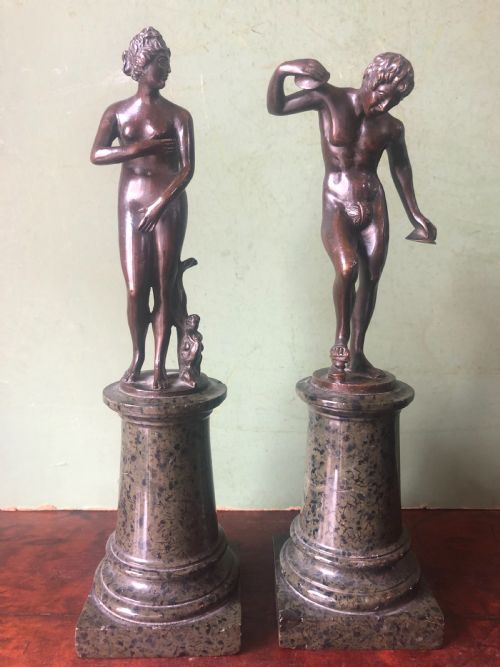


Neoclassical Marble Nude
Neoclassical marble nude sculptures and associated figures bring classical mythology and ancient form into nineteenth-century interiors.
Neoclassical Marble Nude
A search for neoclassical marble nude brings together nineteenth-century interpretations of classical form, mythology, and ancient sculpture. These pieces embody the revival of antiquity that defined Grand Tour souvenirs and Victorian collecting habits.
The versions most commonly met on this page include nineteenth-century marble statues and figures, alongside related bronze and biscuit porcelain works. Figures range from seated ladies and bathing young women to classical deities and mythological subjects.
Many of these objects originate from Italian workshops or French foundries catering to travellers abroad. They serve as tangible links to classical antiquity interpreted through nineteenth-century craftsmanship.
Materials and construction
Carved marble forms the core of these pieces, often paired with patinated bronze or mounted on marble bases. Alabaster and bisque porcelain also appear, offering varied textures for figurative sculpture.
Foundry-cast bronze utilises traditional lost-wax or sand-casting methods to capture intricate muscle structure and drapery. Surface patination or parcel-gilt details are then applied to heighten depth and contrast.
Even ancient deities needed proper support, as many nineteenth-century bronze dancers and bathers are permanently bolted to heavy marble bases.
Assessing quality
Quality rests in the anatomical precision of the carving or the crispness of the bronze cast. Finer pieces display careful attention to human proportion, facial expression, and the texture of hair and skin.
The choice of material and the stability of the mounting further distinguish the work. Superior examples show harmonious integration between figure and base, whether carved from solid stone or cast in metal.
Jean Jacques Pradier·Franz IFFLAND
The Neoclassical Marble Nude Glossary
- Neoclassical
- A style reviving the art and architecture of ancient Greece and Rome. It emphasises proportion, symmetry, and classical subject matter.
- Grand Tour
- A traditional trip through Europe, notably Italy, undertaken by upper-class young men in the eighteenth and nineteenth centuries. Souvenirs purchased along the way included small bronzes and marble statues.
- Patinated bronze
- Metalwork treated with chemical solutions to produce a specific surface colour and finish. This technique protects the metal and defines sculptural contours.
- Bisque porcelain
- Unglazed ceramic fired to a matte, porous finish resembling marble. It was widely used in the nineteenth century for classical figures and portrait busts.
Neoclassical Marble Nude: Frequently Asked Questions
What is a neoclassical marble nude?
These pieces are nineteenth-century sculptures depicting the human form in classical styles inspired by ancient Greece and Rome. They reflect the period's fascination with mythological subjects and antique art.
Collectors encounter them in various forms, including carved stone figures and smaller cabinet bronzes designed for display in period interiors.
How were Grand Tour bronzes used?
Travellers collected these smaller sculptures as souvenirs during European journeys in the nineteenth century. They served as decorative objects on desks, mantelpieces, and library tables.
Such pieces brought classical culture directly into domestic spaces, acting as conversation starters for educated collectors.
How do I identify a nineteenth-century piece?
Dating relies on material patination, casting techniques, and stylistic markers typical of the Victorian era and the 1880s or 1890s. Marble quality and base construction often provide additional clues to origin.
Comparing known foundry marks and subjects helps place these sculptures within their proper historical timeframe.
Are these sculptures solid marble?
Many larger statues are carved from solid marble, while other objects combine marble bases with bronze figures. Alabaster and porcelain also appear among the listed materials.
Examining the underside and weight helps determine whether a piece is carved stone or a composite material.