
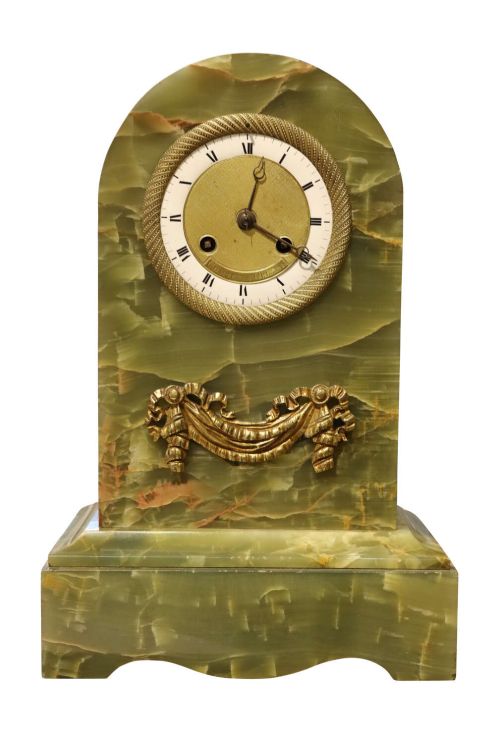
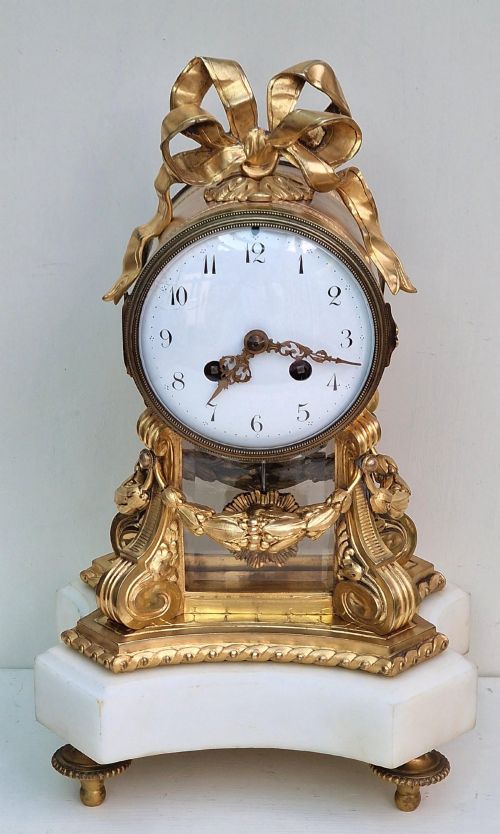
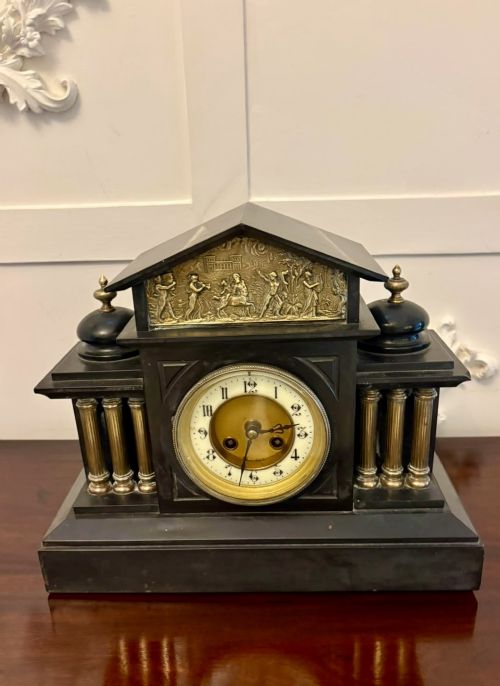
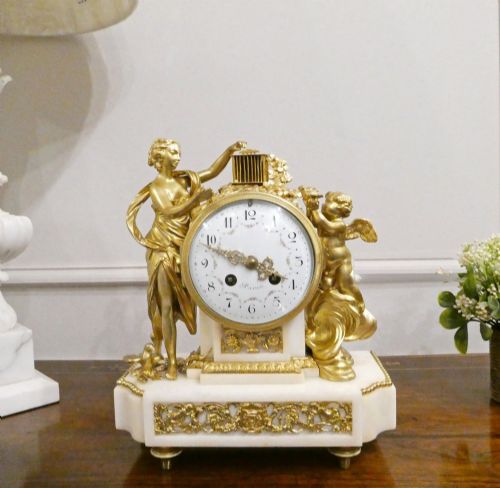


Neoclassical Marble Mantel Clock
A neoclassical marble mantel clock brings classical architectural order and measured weight to a mantelpiece, combining carved stone with gilt metal mounts.
Materials and construction methods
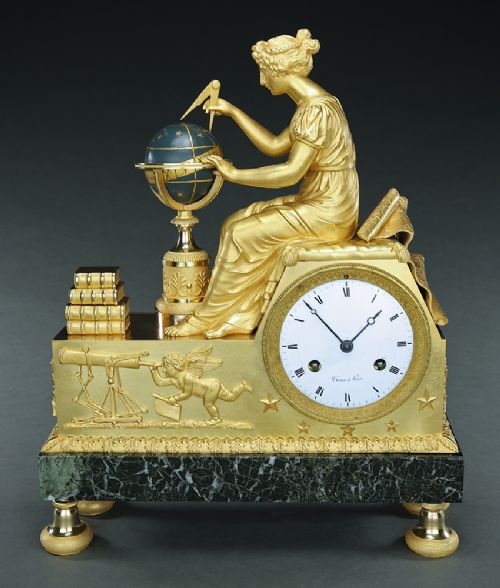
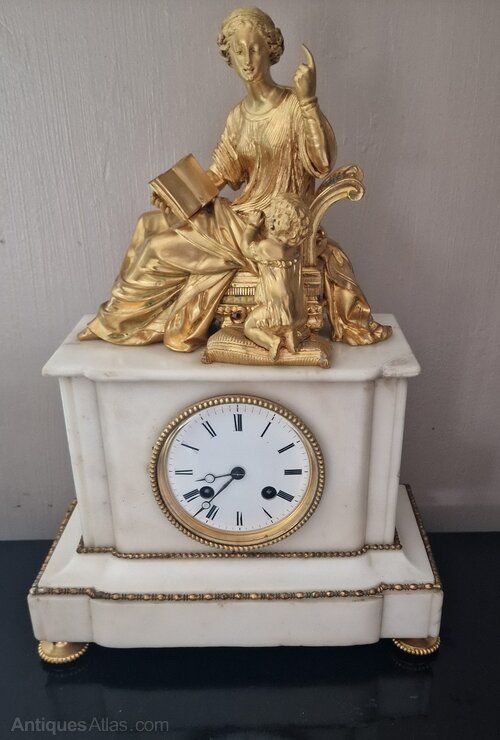
Cases combine natural quarried stone, such as white, Sienna, or black marble, shaped into columns, porticos, and urns. Enamel dials carry the numerals, protected by glass bezels.
Gilt bronze, ormolu, and gilt brass mountings are cast, chased, and secured to the stone bodies with threaded pins. Movements are mechanical eight-day mechanisms, often driven by pendulum and escapement.
Distinctions in craftsmanship and finish
The distinction between ordinary and superior pieces rests on the crispness of the ormolu chasing and the density of the marble. Finer examples display deeply carved gilt bronze mounts with sharp detail, whereas simpler specimens rely on plain cast brass fittings.
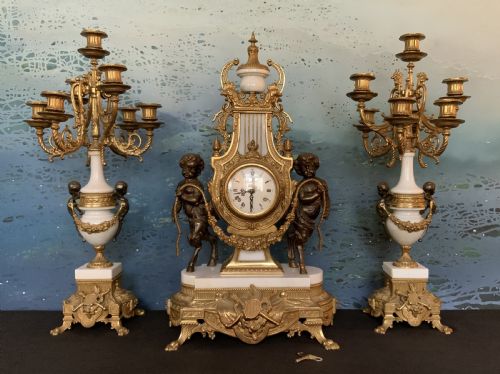
The integration of the movement within the stone housing also marks the grade of the piece, with better makers signing the backplates and producing well-balanced garniture sets where candelabras match the central clock exactly in stone and metal quality.
The architectural styles recorded here span Louis XVI, French Empire, Directoire, and Victorian revival periods.
Charles à Orléans·Reiche·Berger·Louis Goret·Sacre·Remond·Baltazart·AD Mougin·Ferdinand Berthoud·Japy Freres
The Neoclassical Marble Mantel Clock Glossary
- Ormolu
- Gilded bronze produced by applying a mercury and gold amalgam to a cast bronze object and heating it. This technique gives the metal a distinctive matte and bright gold finish found on eighteenth and nineteenth-century mounts.
- Garniture
- A matching set of ornamental objects for a mantelpiece, typically comprising a central clock flanked by a pair of candelabras or urns. These sets share identical materials and stylistic motifs.
- Portico clock
- A mantel clock designed with a distinctive architectural frame supported by four or more columns, resembling a miniature classical temple. The pendulum often swings openly within the central opening.
- Lyre clock
- A clock case shaped like an ancient Greek lyre string instrument, suspended symmetrically with gilt mounts. The dial sits centrally within the upper body of the frame.
- Sienna marble
- A yellow-gold ornamental marble featuring dramatic dark grey and purple veining. It was highly prized for classical revival mantel clocks.
Neoclassical Marble Mantel Clock: Frequently Asked Questions
What is a neoclassical marble mantel clock?
A neoclassical marble mantel clock is a domestic timekeeper featuring a stone case influenced by ancient Greek and Roman architecture and decorative arts. These pieces use columns, urns, and symmetrical proportions derived from archaeological discoveries of the period.
They generally house mechanical eight-day movements driven by pendulums and feature enamel dials. The stone bodies are frequently accented with cast bronze or ormolu mounts depicting floral garlands, classical figures, or geometric friezes.
How do you wind these clocks?
Winding requires a dedicated key inserted into the winding holes on the enamel dial to tension the internal springs. Care must be taken not to overwind the movement.
Most surviving nineteenth-century examples utilise eight-day movements that need attention once a week. Setting the time should be done by moving the minute hand gently in a clockwise direction.
How do I date a marble mantel clock?
Dating relies on examining the stylistic details of the case, the signature on the movement backplate, and the materials used. Eighteenth-century pieces often feature hand-painted enamel dials and finer ormolu chasing, while later Victorian revivals tend to use heavier brass fittings and machine-finished stone.
Maker signatures stamped on the brass movement plates can often be cross-referenced with historical clockmaker records. Portico and lyre forms are particularly indicative of the late eighteenth and early nineteenth periods.
Where should I place a heavy marble clock?
These clocks require a deep, structurally sound mantelpiece, sideboard, or sturdy table capable of supporting significant stone weight. The supporting surface must be entirely level to ensure the pendulum swings evenly.
Placing the piece away from direct sunlight and damp walls protects the marble polish and the interior steel components. Securing garniture candelabras nearby completes the balanced visual display.