
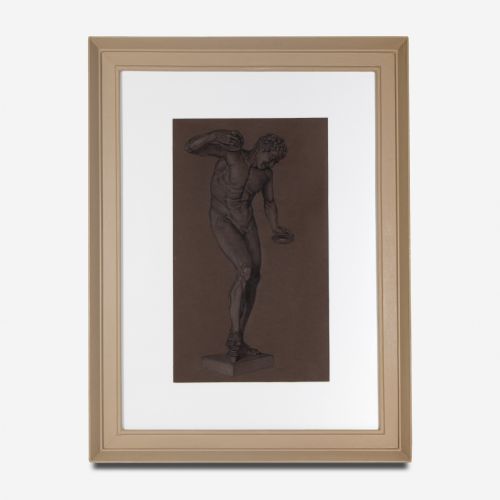





Neoclassical Male Nude
A neoclassical male nude captures the idealised form of classical antiquity, bringing enduring sculptural balance and mythological presence directly into a room.
Neoclassical Male Nude
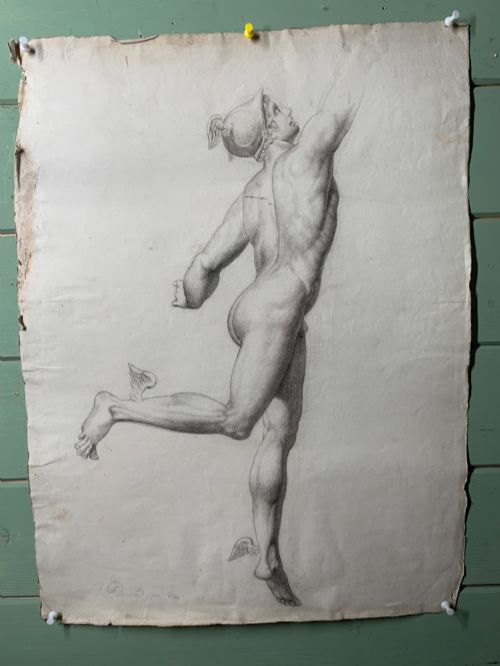
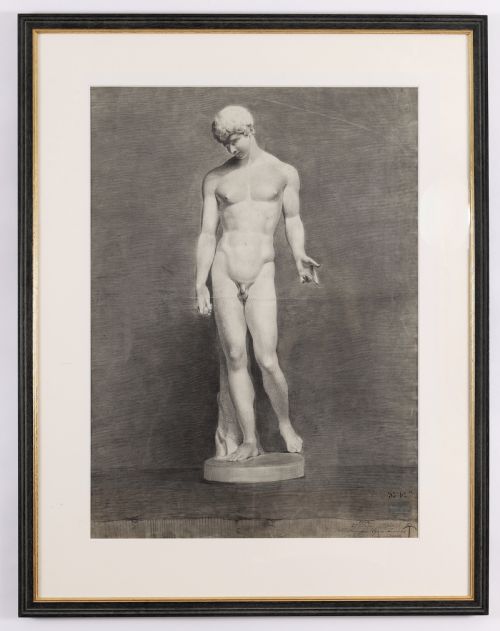
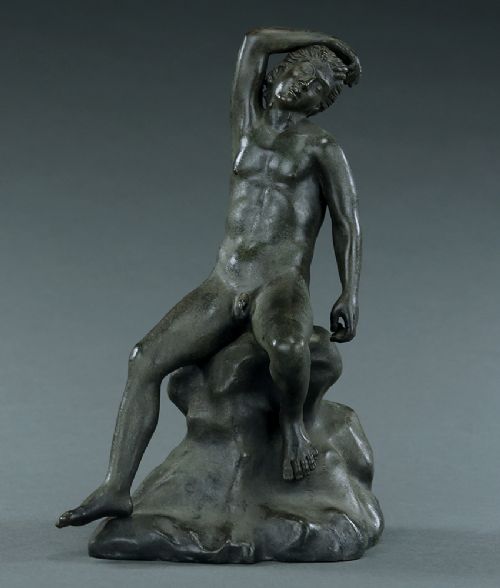
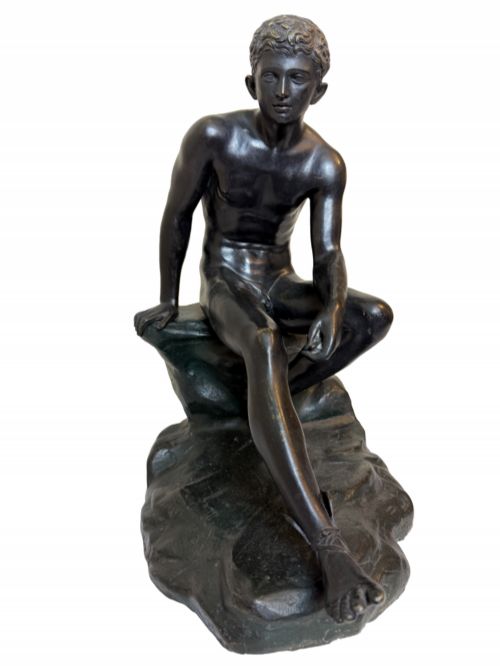
When you search for neoclassical male nude, you encounter sculptures, framed artwork, and drawings that celebrate classical form. The pieces available span the Georgian, Victorian, and later nineteenth-century periods, capturing mythological figures and ancient ideals.
The subjects frequently include classical deities and figures such as Hermes, Dionysus, Narcissus, and fauns. These forms draw heavily on ancient statuary discovered during archaeological excavations and the travels of the Grand Tour.
You will find works ranging from small patinated bronze figures to large marble statues and detailed academic pencil drawings. Each object reflects the nineteenth-century fascination with classical antiquity and academic draughtsmanship.
How they were made
Bronzes were cast utilising traditional techniques, often finished with dark patination or verdigris to emulate excavated antiquities. Marble statues were carved by hand to capture the complex musculature and fluid movement of the human form.
Works on paper were executed in pencil, graphite, charcoal, and ink, often as academic studies or engravings. Engravings like those by James Basire preserved detailed archaeological finds for collectors and scholars.
Listings feature works spanning the eighteenth, nineteenth, and early twentieth centuries in bronze, marble, terracotta, paper, and glass.
What varies in quality
Quality rests in the anatomical precision and the fidelity of the cast or carving. Finer bronzes display sharp chiselling that defines musculature and hair, while weaker examples lose such detail in softer contours.
For works on paper, the sensitivity of the line and the accuracy of proportion distinguish skilled academic studies from routine copies. In bronze casting, the smoothness of the patina and the integrity of the metal surface elevate the piece.
Franz Iffland·James Basire
The Neoclassical Male Nude Glossary
- Grand Tour
- A traditional journey through Europe undertaken by upper-class young men to absorb classical art and culture. Pieces acquired on these travels often included small bronzes of classical statuary.
- Patination
- The chemical or natural alteration of a bronze surface over time or through treatment. A deliberate patina provides colour and depth, ranging from deep brown to green verdigris.
- Neoclassical
- A Western cultural movement drawing inspiration from the art and culture of classical antiquity. It prioritises restraint, proportion, and heroic subject matter.
- Terracotta
- Fired clay used for sculptural models and finished figures. It allows for expressive modelling before the clay is permanently hardened.
Neoclassical Male Nude: Frequently Asked Questions
What is a Grand Tour bronze?
A Grand Tour bronze is a small-scale replica of a famous classical sculpture produced during the eighteenth and nineteenth centuries. Travellers purchased these figures as mementos of their European journeys.
These pieces brought classical culture into private homes, serving as table ornaments or cabinet displays. They document the period's obsession with archaeological discoveries in Italy.
How do I care for a bronze sculpture?
Bronze requires minimal maintenance, needing only occasional dusting with a soft, dry cloth. Avoid using commercial cleaners or polishes that can strip the original patina.
Keep bronze figures away from excessive moisture and direct sunlight to preserve the surface finish. A light application of microcrystalline wax can protect the metal if handled frequently.
What subjects appear most often?
Mythological figures such as Narcissus, Hermes, Dionysus, and dancing fauns dominate these works. These characters allowed artists to explore dynamic movement and idealised human anatomy.
Many compositions directly reference specific ancient sculptures discovered at Pompeii or Rome. This adherence to classical prototypes satisfied nineteenth-century academic tastes.
How do I distinguish drawings from prints?
Drawings feature unique, hand-drawn media such as graphite, charcoal, or pencil applied directly to paper. They often reveal preliminary sketch lines and individual artist touches.
Prints and engravings, conversely, show uniform ink deposition under magnification and derive from a prepared plate. Engravings by figures like James Basire were typically published as book illustrations or portfolios.