


Neoclassical Mahogany Server
These neoclassical mahogany server pieces bring architectural restraint and fine timbers into the dining room or hall.
Neoclassical Mahogany Server
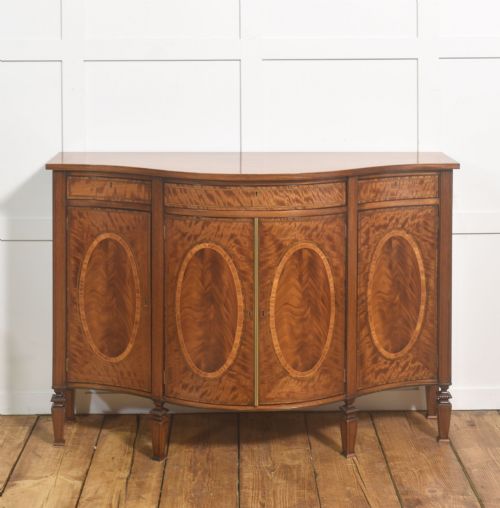
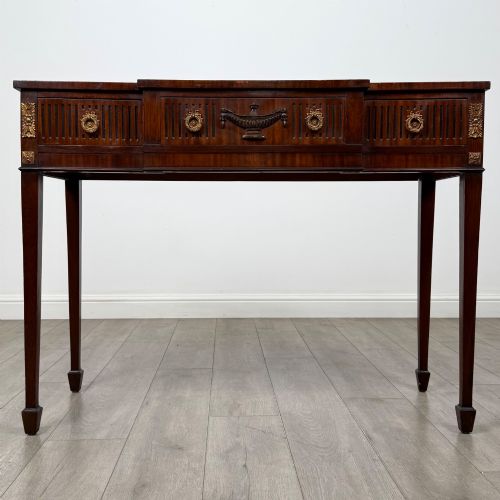
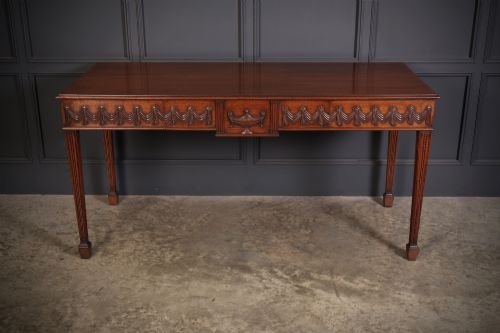
When you search for neoclassical mahogany server, you are looking at large sideboards, serving tables, and console tables that draw on classical antiquity. These pieces appear across several periods, including Georgian, Regency, Victorian, and Edwardian revivals.
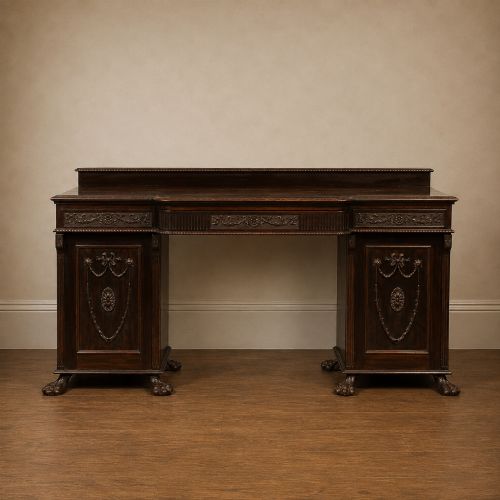
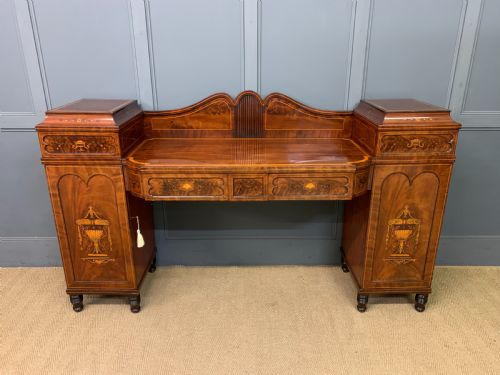
The forms range from breakfront sideboards and pedestal sideboards to demi-lune serving tables and console tables. Most examples on this page date from the Georgian period through to early twentieth-century revivals like Sheraton, Adam, and Edwardian interpretations.
Sideboards and serving tables provide substantial surface area and internal storage, while console and side tables offer leaner architectural silhouettes. The design vocabulary relies on symmetry, straight lines, and classical proportions rather than heavy ornamentation.
Distinguishing quality in timber and detail
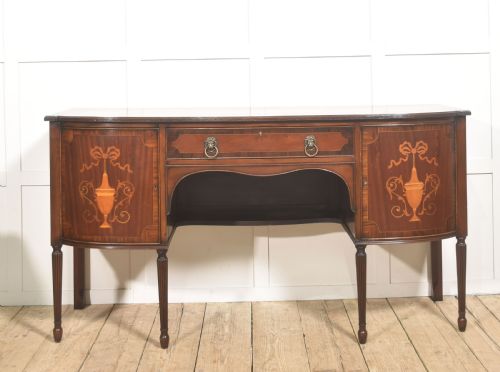
The distinction between standard and superior pieces rests on the selection of timber and the precision of the inlay. Finely figured mahogany grain and meticulously cut satinwood stringing elevate a piece above simpler variants.
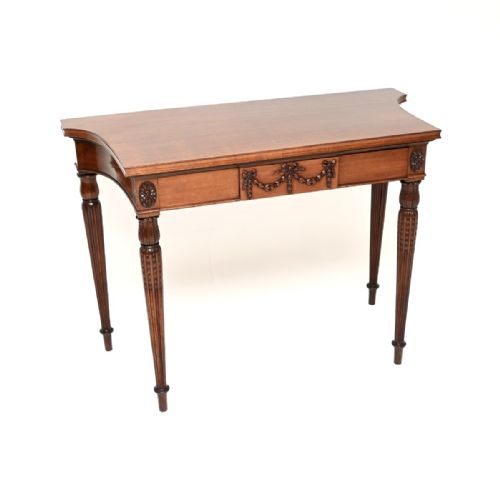
Carved enrichments, such as classical drapery, fluted legs, or paw feet, demonstrate the skill of the hand working the wood. Crisp execution of classical motifs separates sophisticated workshop production from later commercial output.
Listings span George III, Regency, Victorian, and Edwardian periods, employing mahogany alongside satinwood, boxwood, brass, and giltwood.
The Neoclassical Mahogany Server Glossary
- Breakfront
- A piece of furniture whose central section projects forward from the flanking sections. This configuration creates visual depth and helps organise storage space.
- Demi-lune
- Half-moon shape used for the tops and frames of console and serving tables. This curved form fits flush against a wall while softening room circulation.
- Inlay
- A technique where contrasting materials are inserted into depressions in the wood base to form a pattern. Boxwood and satinwood are common choices for this decorative work.
- Pedestal sideboard
- A sideboard comprising a central table flanked by separate pedestals or cupboards. This layout derives from classical architecture and large Georgian dining rooms.
- Stringing
- Thin lines of contrasting wood inlay used to outline drawer edges and tabletops. It defines the structural lines of neoclassical furniture.
Neoclassical Mahogany Server: Frequently Asked Questions
What is a neoclassical mahogany server?
It is a serving table, sideboard, or console table made from mahogany with classical decorative motifs. These pieces date from the eighteenth century to early twentieth-century revival periods.
They function as both display surfaces and storage units in dining spaces and halls, reflecting architectural symmetry and restraint.
How do I date a mahogany server?
Dating relies on construction techniques, hardware, and stylistic indicators such as inlay patterns and leg shapes. Georgian originals show period joinery, whereas revival pieces from the Edwardian era adopt earlier styles.
Comparing the timber preparation and secondary woods inside drawers helps clarify the period of manufacture.
Where were these servers used?
They originated in formal dining rooms as places to store silver, linen, and wine during meals. Servers also stood in grand entrance halls to hold lamps or display decorative objects.
Today, they suit modern dining rooms, living spaces, and hallways where surface space and classical proportion are useful.
What is Sheraton Revival style?
Sheraton Revival refers to late nineteenth and early twentieth-century furniture that copies the lighter, neoclassical designs of Thomas Sheraton. These pieces often feature satinwood inlay, tapered legs, and bow-fronts.
Makers of this era aimed to capture the elegance of the late eighteenth century using contemporary workshop methods.