


Neoclassical Hanging Light
A neoclassical hanging light brings formal symmetry and classical order to a room, drawing the eye upward with bronze, brass and glass.
Neoclassical Hanging Light
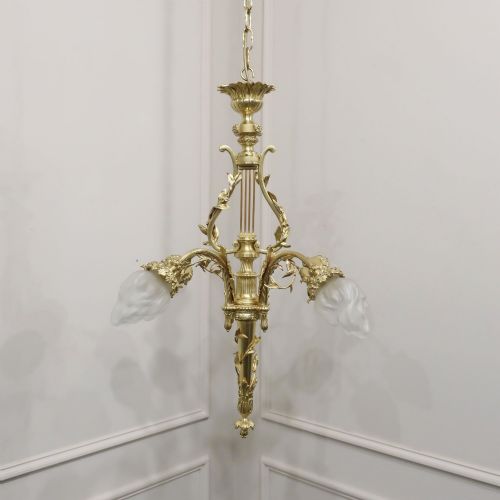
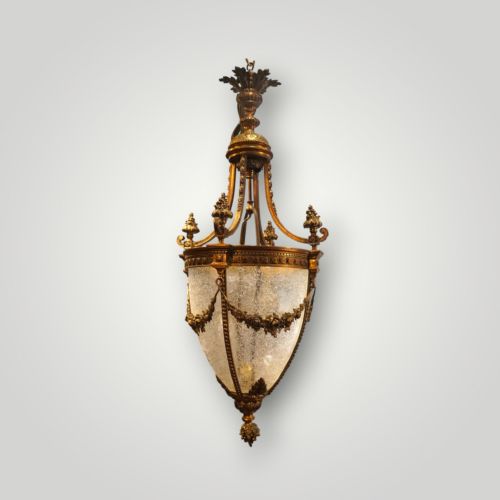
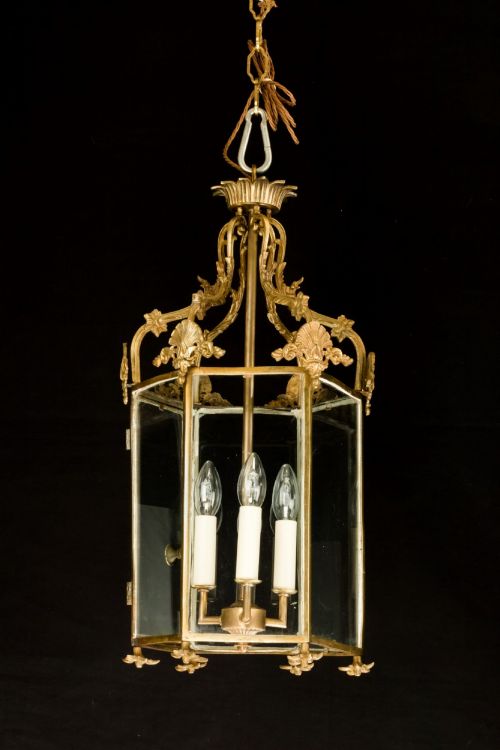
When you search for a neoclassical hanging light, you encounter a selection of chandeliers, hall lanterns and ceiling light shades spanning the nineteenth and early twentieth centuries. These fixtures reflect the enduring influence of French Empire, Louis XVI and Italian neoclassical design vocabularies on domestic lighting.
The version you are most likely to meet on this page is a French or English brass or bronze lantern and chandelier, often dated between eighteen-sixty and nineteen-thirty. They range from single-bulb glazed hall lanterns to large multi-tiered chandeliers adorned with classical motifs.
How they were made
The construction relies heavily on cast and chased bronze, ormolu and brass, formed into structural frames and decorative mounts. Metalworkers utilised traditional founding techniques to create detailed components such as rams' heads, cherubs and lyre shapes.
Glass forms an essential part of many pieces, appearing as blown or painted shades, convex panes for lanterns and crystal droplets. Gilt finishes and silvering were applied to metal surfaces to catch and reflect candlelight or early electric illumination.
Listings span the nineteenth century through the nineteen-thirties, featuring materials like brass, glass, gilt bronze, ormolu and cast bronze.
What varies in quality
The distinction between tiers rests upon the crispness of the metal casting and the depth of the chasing. Superior examples display sharp detail in ornamental motifs like acanthus leaves and classical masks, whereas simpler pieces show softer edges and more utilitarian assembly.
Heft and material purity also dictate grade, with heavier bronze and substantial ormolu mounts commanding greater presence than thinner pressed brass alternatives. The integration of glass panels and the finesse of the gilding further separate standard production from exceptional execution.
The Neoclassical Hanging Light Glossary
- Ormolu
- A technique of applying finely ground high-carat gold to a bronze object. It provides a rich, warm golden surface that does not tarnish easily.
- Plafonnier
- A ceiling-mounted light shade or bowl fixture that sits close to the surface. These pieces often feature painted or frosted glass.
- Colza
- A type of oil derived from rapeseed used in nineteenth-century lamps before widespread electrification. Hanging lights designed for this fuel often retain specific font arrangements.
- Ebonised
- Wood or metal treated to resemble dark ebony wood. This finish offers a sharp contrast against gilt bronze mounts in neoclassical schemes.
Neoclassical Hanging Light: Frequently Asked Questions
How do I hang a heavy bronze chandelier?
Suspension requires fixing directly into ceiling joists or using a substantial ceiling rose with an appropriate metal hook. Professional electrical installation ensures the weight is supported safely by the internal chain or rod.
Older fixtures may need rewiring to meet modern safety standards while retaining their original patinated brass or bronze components.
Can I use modern bulbs in these lights?
Most antique fixtures accept standard modern lamp holders once they are rewired by a qualified electrician. Candle-style LED bulbs work well within open chandeliers and glass lanterns to replicate historical light levels.
Consider the wattage limits of older wiring channels and delicate glass shades when selecting replacement lamps.
How do I clean an ormolu lantern?
Dusting with a soft, dry brush prevents dirt accumulation in the recessed chased details of the metal. Avoid abrasive polishes that can strip away the historical surface finish or thin layers of gilding.
Glass panels can be removed carefully and washed with mild soapy water before being dried and refitted into their brass frames.
What rooms suit a hall lantern?
Hall lanterns provide focused downward illumination suitable for entrance halls, stairwells and high-ceilinged corridors. Their enclosed glass sides protect the light source from drafts while projecting clear patterns onto surrounding walls.
Scale is key to placement, ensuring the fixture allows adequate headroom and matches the proportions of the space.