

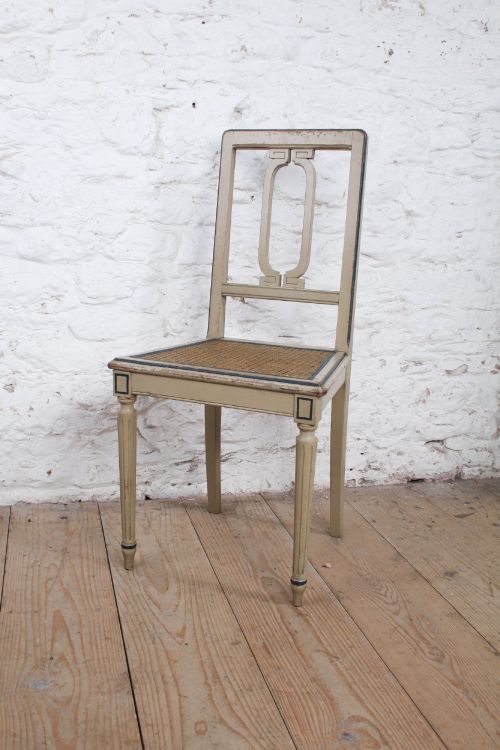
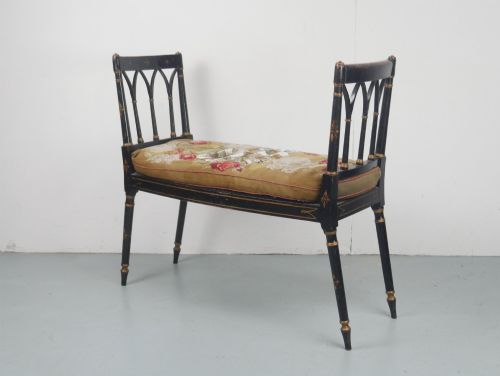
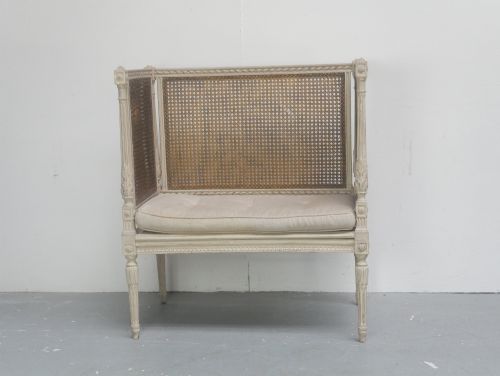
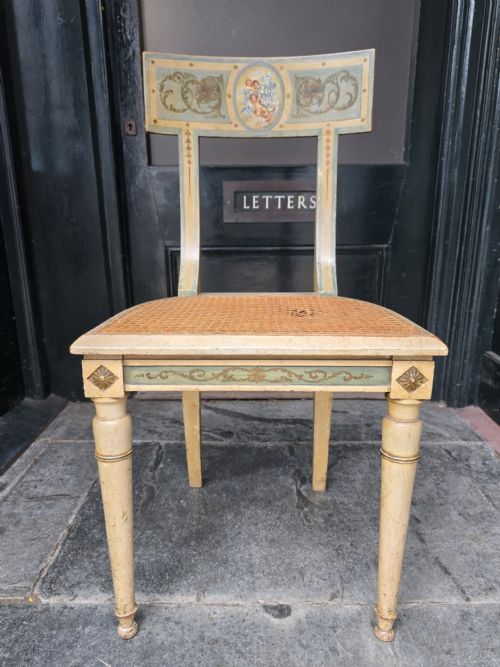


Neoclassical Hall Seat
These neoclassical hall seat pieces bring architectural lines and classic proportions to an entranceway.
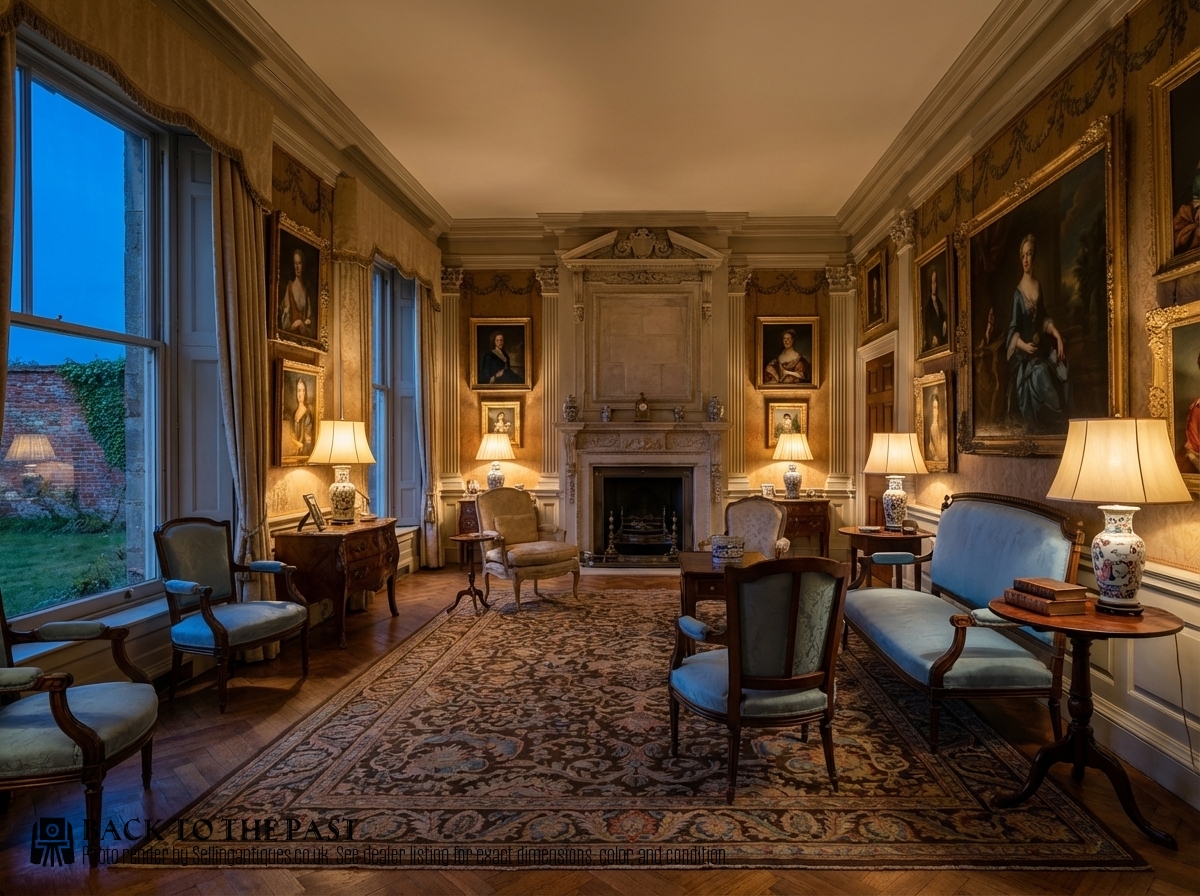
Neoclassical Hall Seat
A neoclassical hall seat provides a formal architectural presence for an entranceway or corridor, drawing on classical design principles. Buyers searching for a neoclassical hall seat encounter various forms including benches, settees, side chairs, and window seats originating from periods spanning the Georgian era through to the early twentieth century.
The selection ranges from traditional eighteenth-century examples to later revivals such as Sheraton, Hepplewhite, Adam, and Louis XVI styles. Materials vary from carved mahogany and satinwood to painted finishes and giltwood frames, often upholstered in fabric or fitted with cane panels.
How they were made
Cabinetmakers constructed these frames using dense timbers like mahogany, walnut, fruitwood, and oak, often employing hand-carving techniques to articulate classical motifs. Decorative surfaces frequently feature painted details, giltwood highlights, or contrasting satinwood veneers.
Seating portions incorporate traditional joinery alongside woven cane panels or upholstered pads covered in fabric. Frame construction relies on time-tested mortise and tenon joints to support everyday use.
Neoclassical Hall Seat Retail Price Guide 2026
Typical asking prices for neoclassical hall seat among the pieces listed under this phrase on Sellingantiques today, from the lower quarter to the upper quarter. They describe what is for sale here now, not the wider market.
Current listings feature mahogany, fruitwood, and walnut alongside painted and giltwood finishes across the Georgian, Victorian, and early twentieth-century periods.
What varies in quality
The refinement of the hand-carved ornamentation distinguishes finer pieces from simpler production, particularly in the crispness of classical details like fluting and paterae. Superior examples utilise high-grade timbers and precise joinery that maintain structural integrity over centuries.
Surface treatments also dictate worth, where original painted finishes or fire gilding demonstrate greater artistic investment than later secondary paint layers.
The Neoclassical Hall Seat Glossary
- Neoclassical
- A style inspired by the classical architecture and art of ancient Greece and Rome, characterised by symmetry, straight lines, and restrained ornamentation.
- Satinwood
- A durable hardwood with a lustrous, golden-yellow sheen frequently utilised for decorative veneers and fine inlay work during the eighteenth and nineteenth centuries.
- Giltwood
- Timber that has been coated with a thin layer of gold leaf or gilt powder, commonly found on decorative frames from Louis XVI and Adam revival periods.
- Shield Back
- A chair back design shaped like a classical shield, popularised by cabinetmakers such as Hepplewhite during the Georgian era.
- Window Seat
- An elongated form of seating traditionally designed to fit within the architectural recess of a bay or sash window.
Neoclassical Hall Seat: Frequently Asked Questions
Where should a hall seat go?
These pieces suit entrance halls, long corridors, or large landings where their linear profiles can anchor an empty wall space. They offer a formal place to sit while maintaining a slim footprint.
Position them away from direct heat sources and strong sunlight to protect delicate painted surfaces, giltwood, and fabric upholstery from fading or drying out.
How do I spot a revival piece?
Revival pieces often date from the late nineteenth or early twentieth centuries, mimicking earlier Georgian or Louis XVI aesthetics. Examine the timber underneath, tool marks, and hardware to determine the actual period of manufacture.
Design proportions and secondary woods inside the frame often provide the clearest clues to whether a piece originates from the eighteenth century or a later revival.
Are painted finishes original?
Original painted surfaces display micro-craquelure, natural wear patterns, and pigment consistency appropriate to the stated period. Later overpainting tends to obscure subtle details in the underlying wood.
Inspect corners and recessed mouldings under magnification to see if multiple layers of paint conceal earlier decorative schemes.
Can I use cane seats daily?
Cane panels offer resilient flexibility when tightly woven from rattan, but historical cane requires sensible care. Avoid placing heavy loads on fragile vintage webbing.
Keep the material slightly humidified in dry winter conditions to prevent the natural fibres from becoming brittle and snapping under pressure.