

Neoclassical Gilt Wall Lights
Neoclassical gilt wall lights bring architectural symmetry and rich metallic warmth to a room, offering classical refinement through cast bronze, brass and ormolu.
Neoclassical Gilt Wall Lights
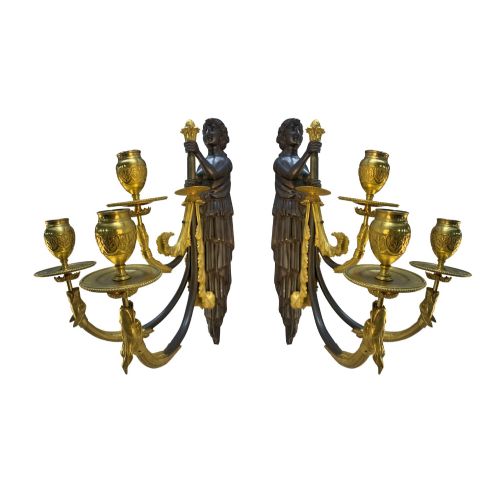
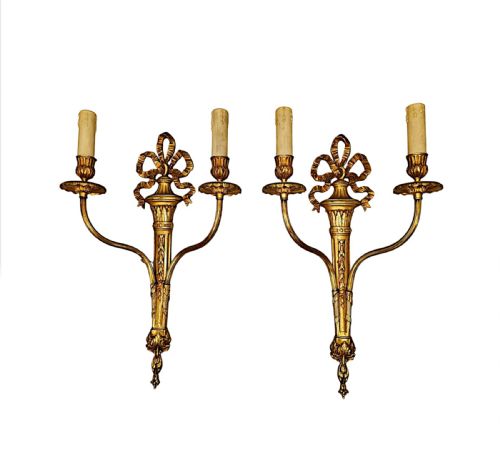
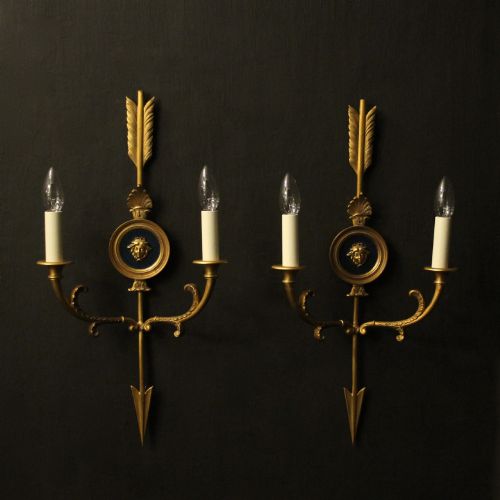
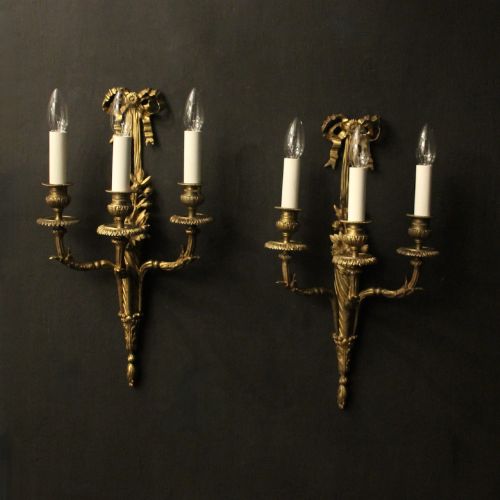
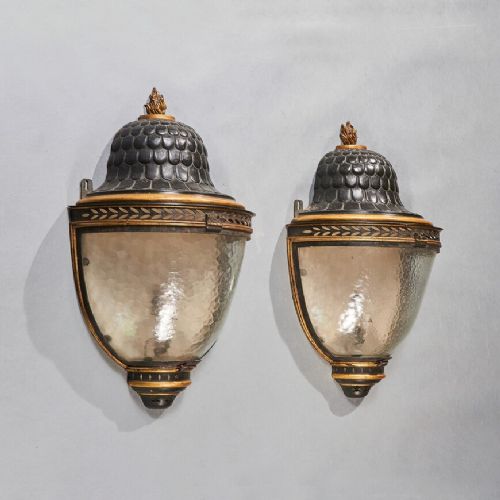
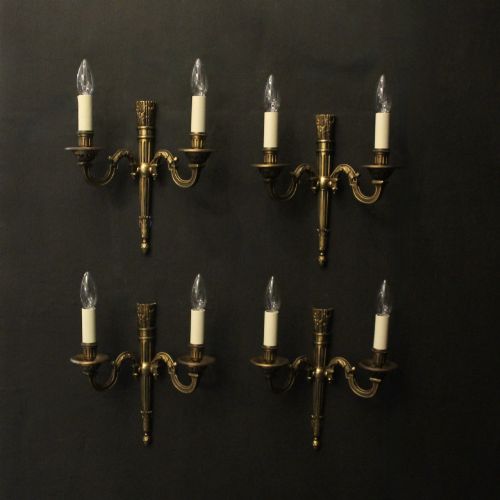
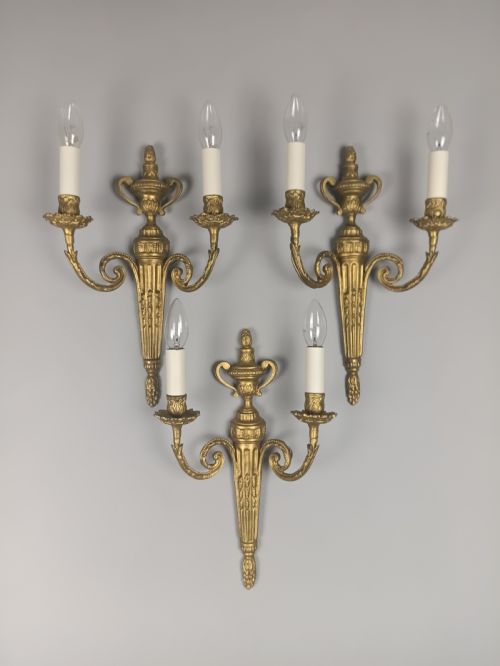
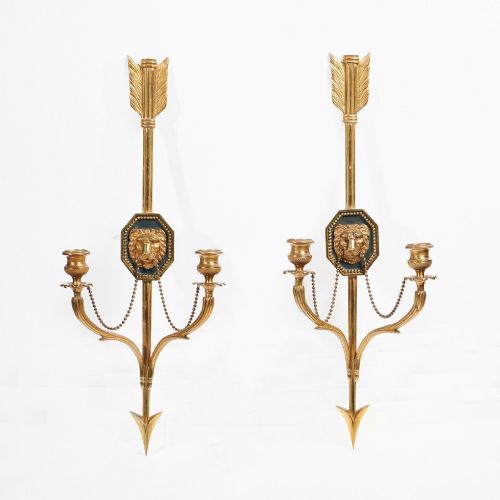
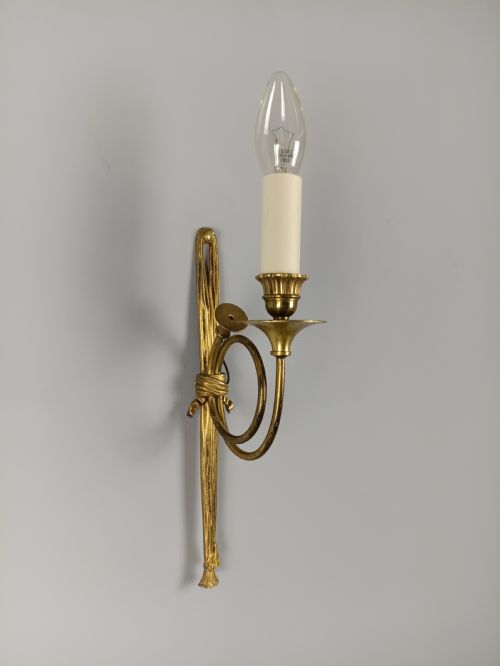
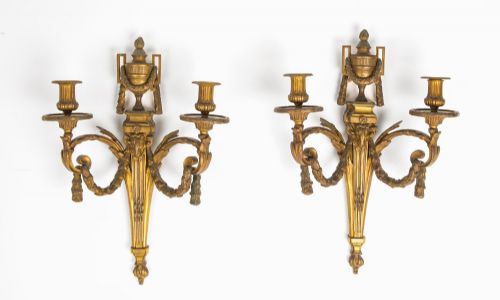
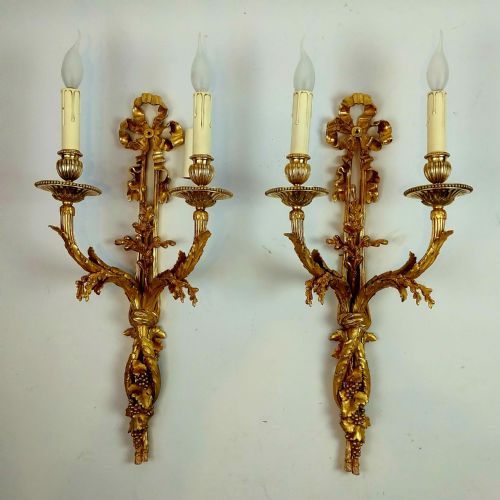
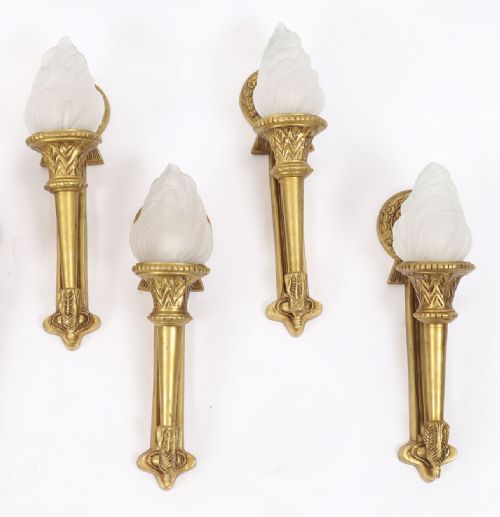
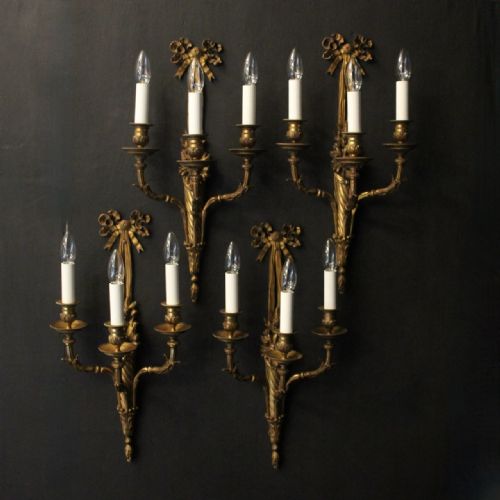
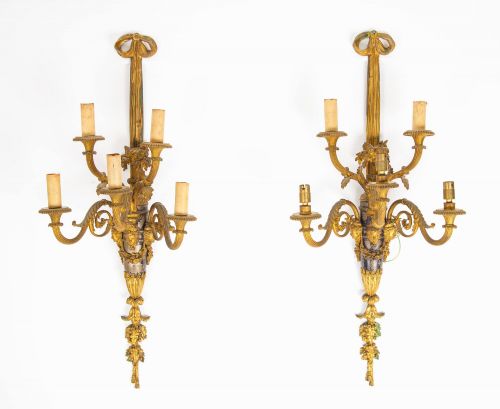
Neoclassical gilt wall lights draw upon classical motifs like torch forms, urns and ram's head masks to provide ambient illumination in reception rooms and corridors. You will frequently encounter pairs and larger sets arranged for symmetrical placement beside mirrors or fireplaces.
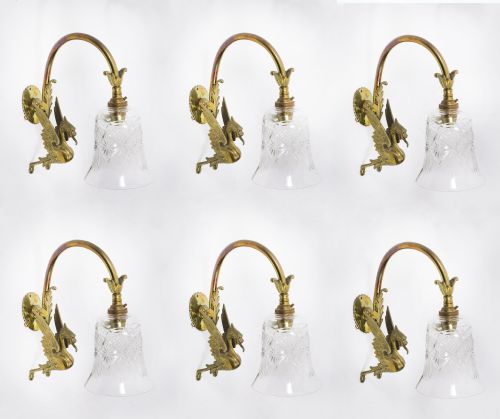
The selections span simple single arm configurations up to impressive five-light and six-light sconces, wall lanterns and mirror back formats. Originating largely from French, English and Italian workshops, these pieces cross the nineteenth century and extend into the early decades of the twentieth century under Louis XVI, Empire and Adam revivals.
Materials and Construction
Foundry workers shaped these fixtures using cast bronze, brass and ormolu, applying gold leaf or gilding to elevate the surface sheen. Many examples incorporate glass drops, panels or tole peinte components to diffuse the light.
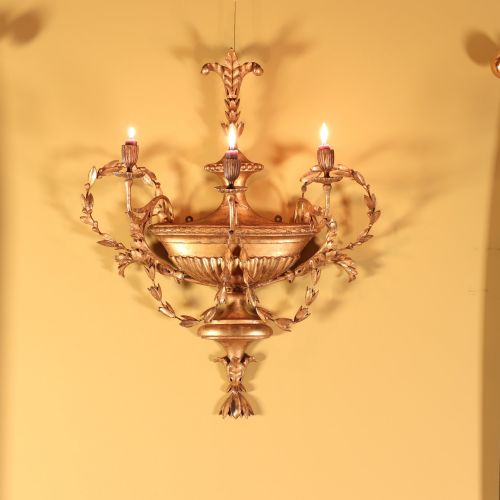
Makers employed detailed chasing and parcel gilt techniques on giltwood and gesso frames, combining metalwork with carved timber to achieve depth and texture in the classical ornament.
Neoclassical Gilt Wall Lights Retail Price Guide 2026
Typical asking prices for neoclassical gilt wall lights among the pieces listed under this phrase on Sellingantiques today, from the lower quarter to the upper quarter. They describe what is for sale here now, not the wider market.
Several sconces stare back with watchful ram's head masks, guarding the hallway with classical vigilance.
Assessing Quality
Quality rests upon the crispness of the metal casting and the depth of the chased detail, where sharper motifs indicate superior workshop output. Heavier gauge brass and bronze components maintain structural integrity better than lighter stamped alternatives.
The preservation of the original gilding or gold leaf surface dictates the visual character of each piece. Retaining the authentic finish without heavy over-cleaning preserves the subtle tonal variation valued by collectors.
Henri Vian·Maison Baguès
The Neoclassical Gilt Wall Lights Glossary
- Ormolu
- Gilt bronze produced by applying a mercury and gold amalgam to a bronze base and firing it to leave a rich gold layer. This technique creates a distinct warm metallic lustre on nineteenth-century French pieces.
- Sconce
- A wall-mounted lighting fixture designed to hold candles or electric lamps. These fixtures project outward from the wall surface.
- Tole peinte
- Painted sheet metal used in decorative objects and lighting elements. It provides contrasting colour and surface texture alongside gilt metal components.
- Gesso
- A plaster-like mixture applied to wood surfaces as a base for gilding. It allows craftsmen to carve intricate low-relief ornamentation before applying gold leaf.
- Applique
- A wall-fixed light fitting, often synonymous with a wall sconce in continental European terminology. The term frequently appears in descriptions of French and Italian pieces.
Neoclassical Gilt Wall Lights: Frequently Asked Questions
How do I wire antique wall lights?
Most period wall lights accommodate modern internal wiring by threading slim cables through the existing hollow arms or backplates without altering the exterior metalwork.
Qualified electricians should handle the installation to ensure the vintage brass and bronze components earth correctly and meet current safety standards.
Where should I place wall sconces?
Position wall sconces at eye level, roughly one and a half metres from the floor, to provide balanced ambient light in hallways, staircases or dining rooms.
Mounting them on either side of a mirror, fireplace or large piece of furniture creates focal points that echo classical interior proportions.
What defines the Neoclassical style?
The Neoclassical style draws inspiration from the art and architecture of ancient Greece and Rome, prioritising symmetry, restraint and classical ornament.
Look for decorative elements such as flaming torches, urns, acanthus leaves and geometric laurel wreaths cast in ormolu and brass.