


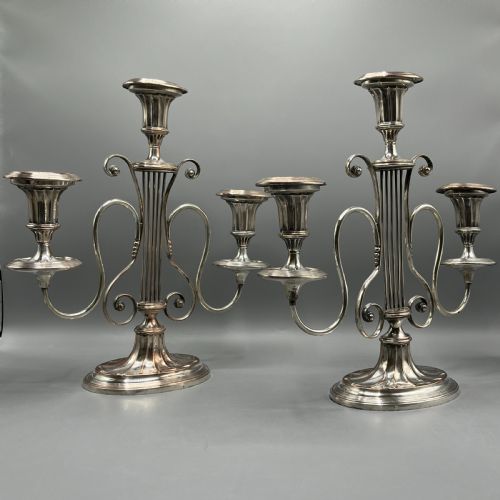

Neoclassical Column Candle Holders
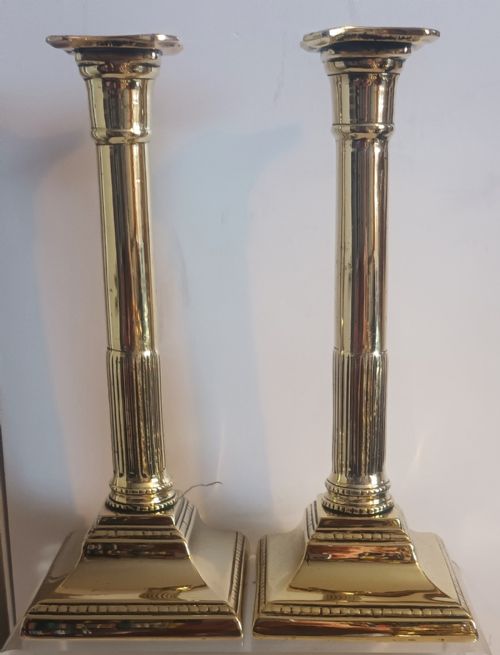
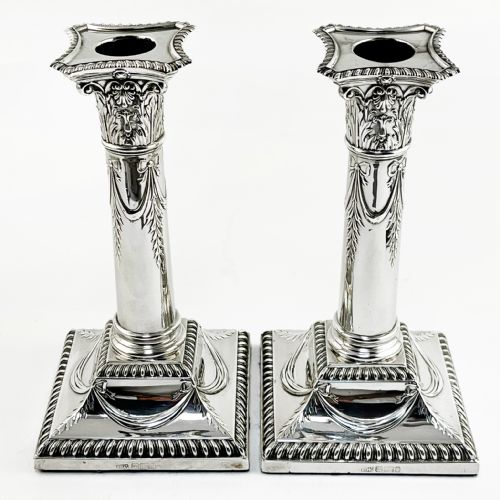
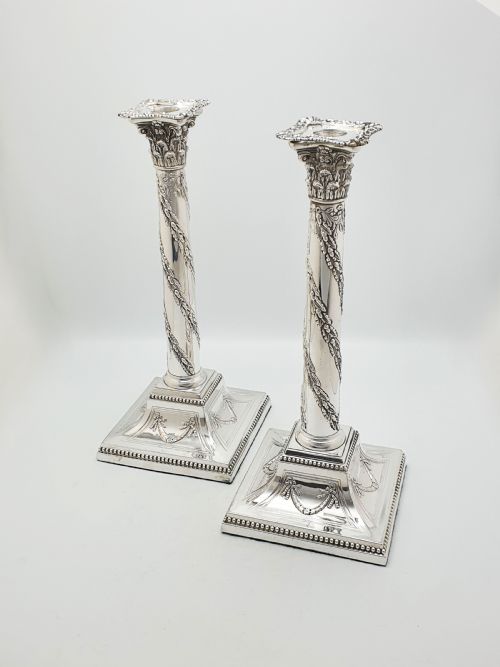
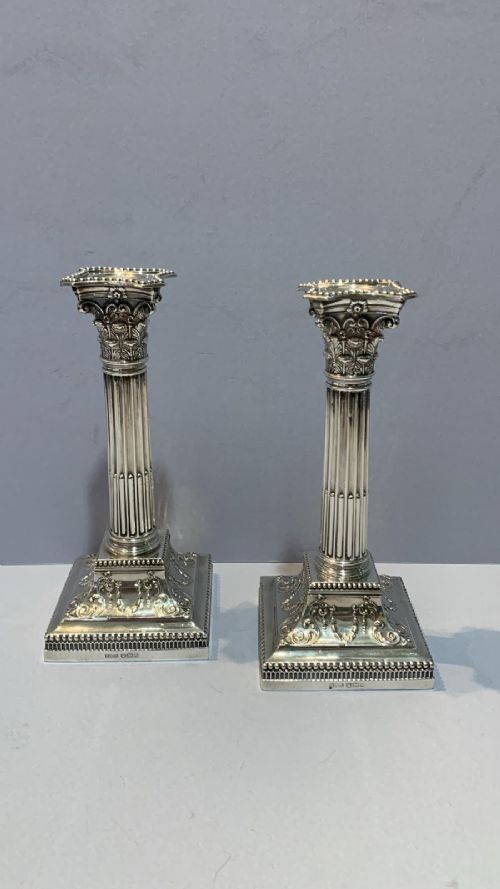
These neoclassical column candle holders bring architectural order to a dining table, combining the proportion of ancient temples with the utility of domestic lighting.
Neoclassical Column Candle Holders
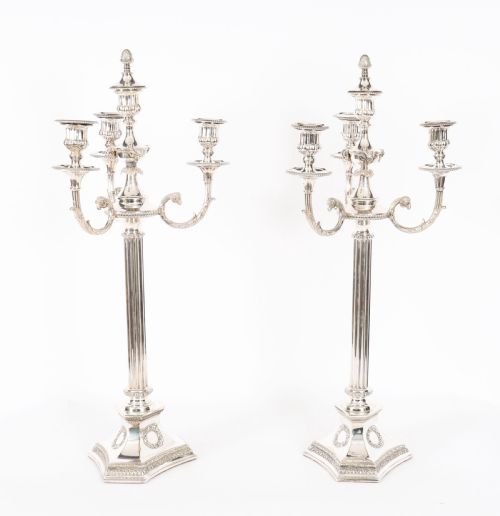
When buyers search for neoclassical column candle holders, they encounter lighting equipment modeled on classical orders, most frequently taking the form of paired candlesticks and candelabra. The examples available here span the eighteenth, nineteenth, and early twentieth centuries, reflecting revivals from Georgian eras through Edwardian times.
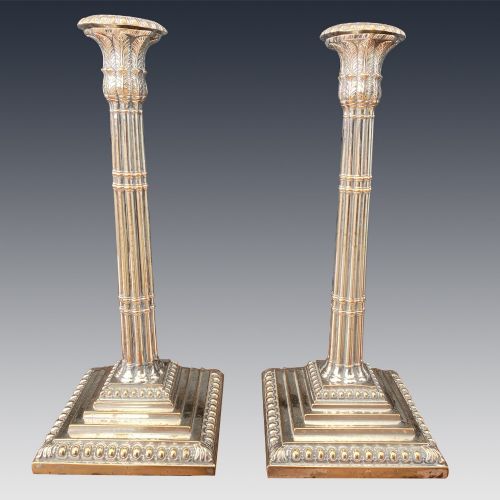
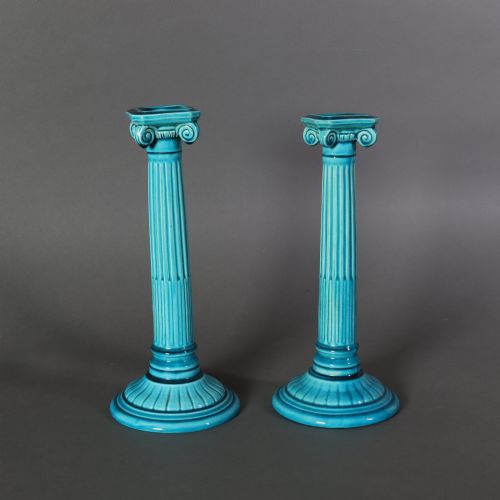
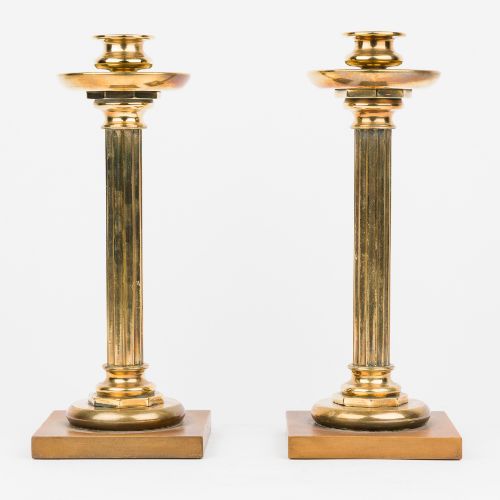
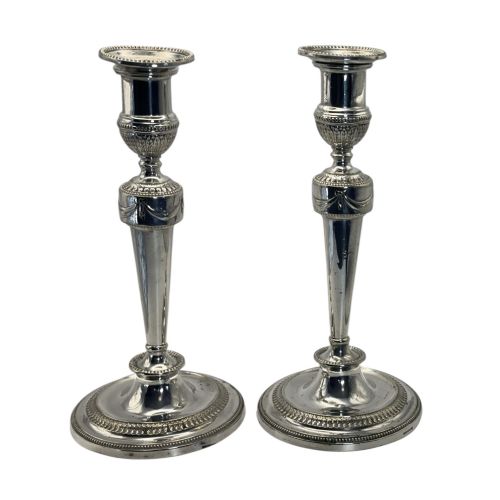
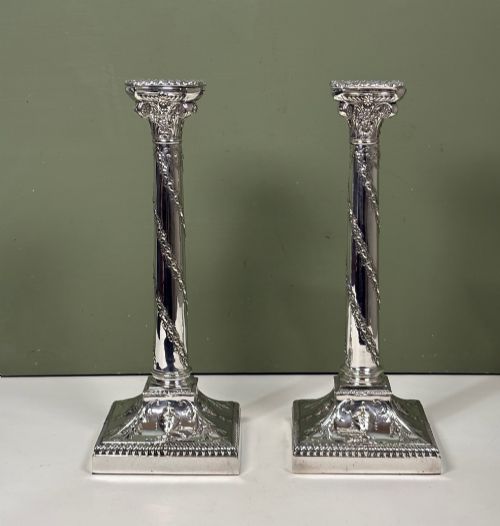
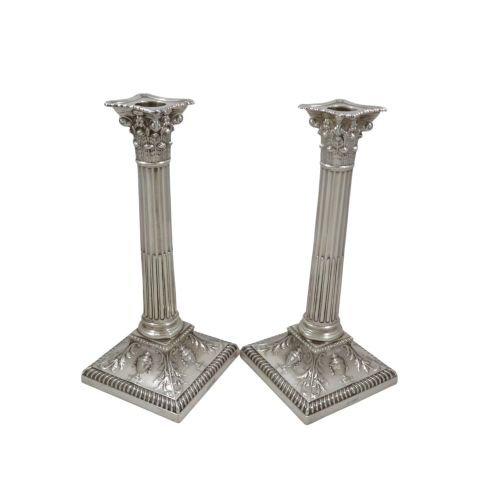
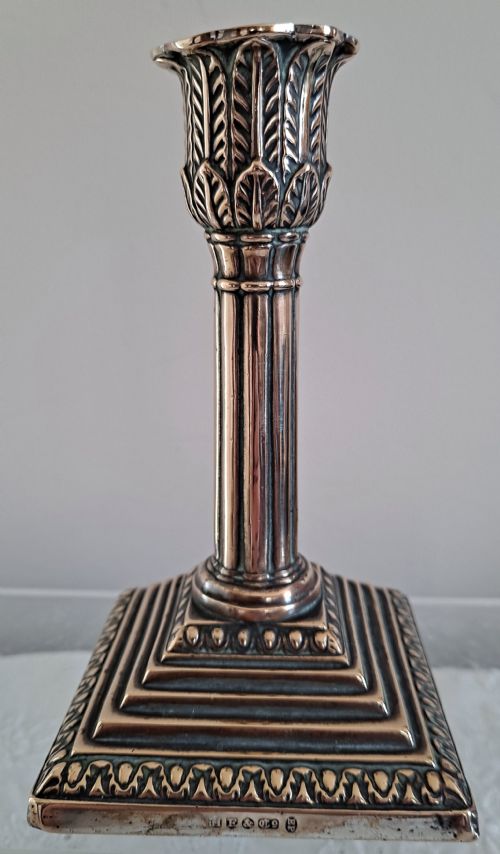
The dominant forms emulate fluted or smooth columns with architectural capitals, often Corinthian or Doric, supporting a candle nozzle above a stepped square or round base. These objects served both practical illumination and decorative symmetry in period interiors, commonly displayed in pairs on mantelpieces, sideboards, and dining tables.
Materials and construction
Makers utilised a range of metals according to the period and budget of production, spanning brass, bronze, copper, and cast or sheet silver. Many eighteenth-century and nineteenth-century pieces employ Old Sheffield Plate or later silver plating over a base metal core, whilst others utilise solid sterling silver bearing assay marks.
Casting techniques allowed workshops to produce distinct column shafts and ornate leaf-carved capitals separately before assembling them into a rigid structure. Brass and bronze pieces frequently show cast component construction with threaded fixings, whereas plated examples combine rolled sheet metal with weighted bases for stability.
Masonic lodges commissioned specialised tall Corinthian column candlesticks, proving that even Freemasons appreciated strict classical architecture during their rituals.
Variations in quality
The standard of a pair rests primarily in the crispness of the casting and the fidelity of the classical details on the capitals and bases. Finer examples exhibit deep, clean fluting and sharply defined acanthus leaves, whereas lesser production shows softened contours and blurred ornamentation.
Weight and balance also distinguish superior pieces, as high-grade metalwork maintains a solid feel and sits level without rocking. The integrity of the plating or the depth of the original metal finish dictates how well the surface ages over centuries of handling and polishing.
Mappin & Webb·J. Miller·Humphrey Hopper·Thomas Bradbury & Sons Ltd·Ferdinand Barbedienne
The Neoclassical Column Candle Holders Glossary
- Capital
- The uppermost member of a column, usually decorated with carved foliage or scrolls in classical designs. This part receives the most detailed ornamental work from the metalcaster.
- Old Sheffield Plate
- An early fusing technique where a thin sheet of silver is fused to a thicker copper core by heat and pressure. It predates electroplating and leaves characteristic edges where the underlying copper shows through.
- Torchere
- A tall stand or candlestick designed to hold a light source above eye level. These pieces offer greater height than standard tabletop candle holders.
- Candelabra
- A branched candlestick holding multiple lights from a single central stem. They provide wider illumination than single candle holders and suit formal table settings.
Neoclassical Column Candle Holders: Frequently Asked Questions
Were these column candle holders made individually or in sets?
Most surviving examples were produced as symmetrical pairs to flank mirrors or fireplaces in formal rooms.
Larger configurations, such as matched sets of three or four, appear less frequently and were intended for expansive dining tables.
How can I tell the difference between Georgian and Edwardian neoclassical revivals?
Georgian originals and early revivals display hand-finished casting details and heavier gauge metals appropriate for eighteenth-century domestic use.
Later Edwardian and twentieth-century interpretations often exhibit machine smoothing and standardised components characteristic of industrial manufacturing.
What kind of candles fit these antique holders?
Most period candle holders require standard taper candles, though inner socket diameters vary slightly between eighteenth-century and later nineteenth-century sizes.
It is advisable to measure the nozzle diameter before purchasing candles to ensure a secure, upright fit without excessive shaving.