



Neoclassical Clock Garniture
These neoclassical clock garniture sets bring architectural symmetry and classical ornamentation to a room, combining a central timepiece with matching decorative companions.
Neoclassical Clock Garniture
A neoclassical clock garniture typically comprises a central mantel clock accompanied by a pair of matching side pieces such as candelabras or urns, designed to create a balanced decorative display on a fireplace or sideboard. The pieces draw directly from classical antiquity and later revivals, adhering to strict architectural proportions and formal symmetry.
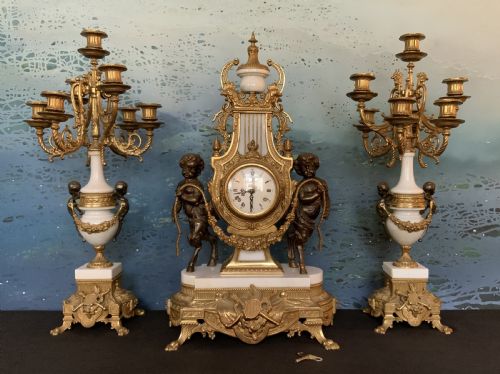
Buyers browsing this selection will frequently encounter sets produced in the nineteenth century, ranging from late Victorian examples to earlier French pieces executed in the Louis XVI style. These configurations often pair contrasting elements like white marble or Sienna marble with gilded brass, ormolu, and bronze.
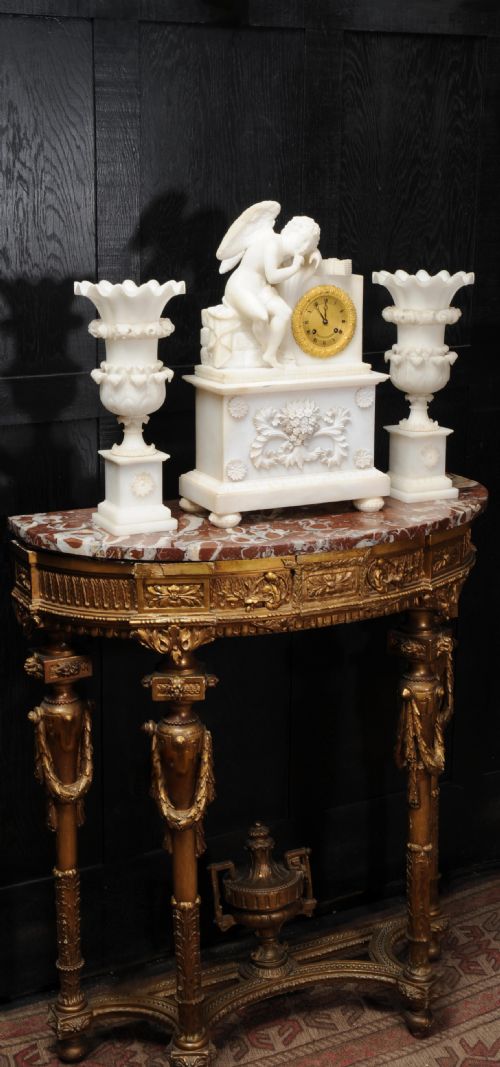
The forms vary from grand three-piece sets featuring towering candelabras to more restrained mantel clock garnitures, occasionally incorporating figural subjects after classical sculptors. Such groupings reflect the enduring nineteenth-century appetite for formal French interior decoration and classical design motifs.
What varies in quality
Quality in a garniture set is determined by the precision of the cast metal ornamentation and the select quality of the stone used for the body. Finer examples display crisply chased ormolu and detailed bronze work that retains its original gilding, paired with unblemished marble or finely turned alabaster.
The sophistication of the clock movement and the harmony of the matched side pieces further distinguish superior sets. When the proportions between the central clock and its flanking candelabras form a cohesive architectural composition, the overall artistic merit rises.
Keep an eye out for small bronze cupids after Etienne Maurice Falconet keeping watch over the mantel.
AD Mougin Paris·Ferdinand Berthoud
The Neoclassical Clock Garniture Glossary
- Garniture
- A set of decorative mantel pieces consisting of a central clock flanked by matching urns or candelabras. They were designed to sit harmoniously upon a fireplace mantel or console table.
- Ormolu
- Gilded bronze used extensively for decorative mounts on furniture and clock cases. The technique involves applying a gold amalgam to a bronze base.
- Louis XVI Style
- A neoclassical design movement characterised by straight lines, classical antiquity motifs, and symmetrical restraint. It experienced revivals throughout the nineteenth century.
- Enamel
- A glassy substance fused to a metal dial face through firing, commonly used for legible clock numerals and painted decoration. It provides a smooth, durable surface for timepieces.
- Candelabra
- A branched candlestick designed to hold multiple candles, frequently included as the matching side pieces in a garniture set. They mirror the architectural style of the central clock.
Neoclassical Clock Garniture: Frequently Asked Questions
What is included in a clock garniture?
A standard garniture consists of a central mantel clock accompanied by two matching side pieces, typically formed as candelabras, urns, or vases. These side pieces repeat the decorative motifs and materials of the clock to create a unified display.
Such sets were intended to occupy a prominent position on a mantelpiece or a large sideboard, providing both a functional timepiece and balanced decorative ornaments.
Where were these clock sets made?
Many of the surviving sets originate from French workshops and Parisian makers who specialised in the Louis XVI revival styles during the nineteenth century. Other examples reflect Italian production utilising native marbles and heavy bronze castings.
Makers often combined imported movements with locally carved stone bases, exporting these balanced groupings across Europe and Britain for grand domestic interiors.
How do I care for marble and ormolu?
Marble surfaces benefit from gentle dusting with a soft cloth and should be kept away from acidic liquids that can etch the stone. Ormolu and gilt metal mounts require similar care, avoiding harsh chemical cleaners that might strip the historic gilding.
Maintaining a stable room temperature prevents the natural expansion and contraction that can stress both the stone bodies and the delicate internal clock mechanisms.
How can I tell the period of a garniture?
Dating relies on examining the style of the cast mounts, the composition of the marble, and the mechanics of the clock movement. Nineteenth-century revivals often reinterpret eighteenth-century Louis XVI forms through heavier casting techniques and specific dial signatures.
Inscribed maker marks on the movement backplates or dials can also anchor a piece to a specific decade or active workshop period.