




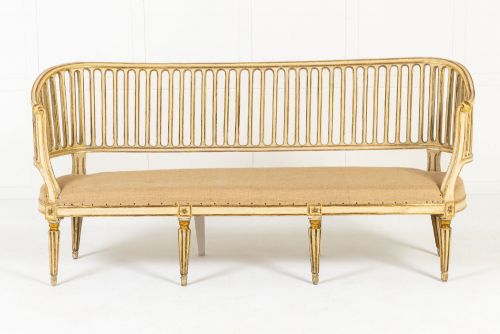


Neoclassical Carved Wooden Bench
A neoclassical carved wooden bench brings symmetry and restrained classical ornament into a hallway or drawing room.
Neoclassical Carved Wooden Bench
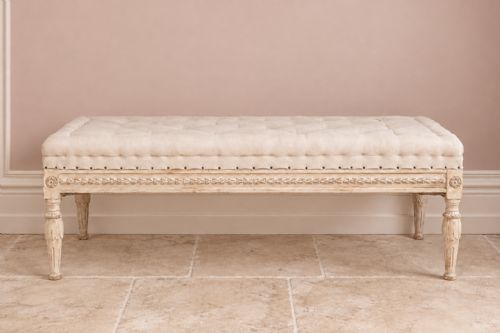
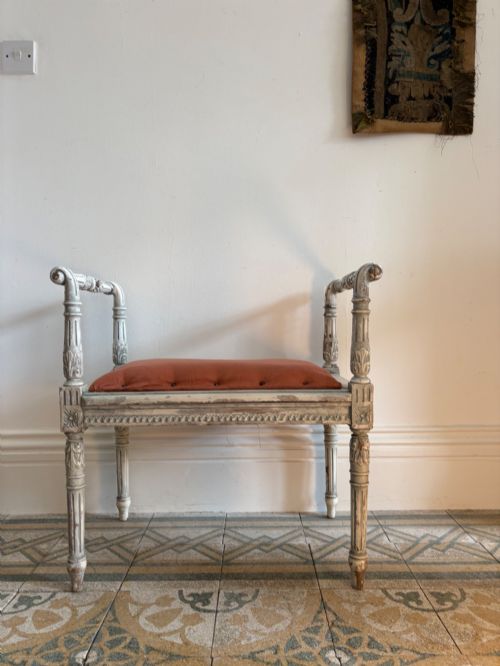
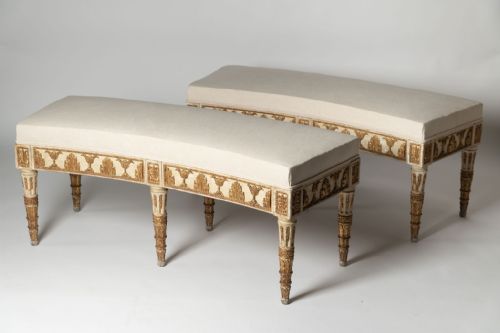
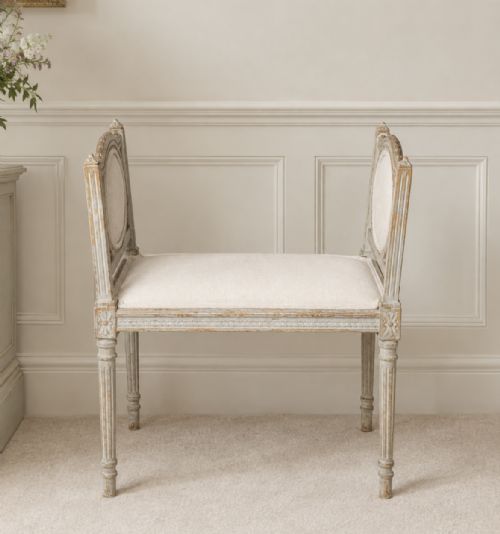
A neoclassical carved wooden bench is a formal seat drawing on classical antiquity, taking the form of settees, window seats, and stools. These pieces range from substantial eighteenth-century Swedish and Italian settees to lighter nineteenth-century French and Edwardian examples.
The versions met most often on this page include painted wooden settees and stools executed in Gustavian, Empire, and Louis XVI styles. They frequently display linear frames, architectural details, and upholstered seats covered in linen, silk, or modern fabric.
How they were made
Cabinetmakers and joiners built these frames from solid timbers such as mahogany, satinwood, walnut, and pine, shaping them with carved ornament. Carving ranges from crisp running foliage to simpler fluted legs and symmetrical borders.
Surfaces received specialised treatments, including giltwood finishes, brass mounts, and layered paint schemes, often in white or muted tones. Upholstery techniques progressed from traditional horsehair stuffing on webbing to silk and linen top covers.
Neoclassical Carved Wooden Bench Retail Price Guide 2026
Typical asking prices for neoclassical carved wooden bench among the pieces listed under this phrase on Sellingantiques today, from the lower quarter to the upper quarter. They describe what is for sale here now, not the wider market.
Listings span the eighteenth, nineteenth, and early twentieth centuries, featuring Swedish, French, and Italian regional interpretations of the neoclassical style.
What varies in quality
The quality of a neoclassical carved wooden bench rests on the crispness of the timber carving and the architectural integrity of the frame. Superior examples demonstrate deeply undercut ornament, well-proportioned symmetry, and tight joinery that maintains rigidity without excessive modern reinforcement.
Surface preparation also dictates distinction, separating factory-produced revivals from master-carved seating. Original painted or gilt surfaces retain a depth of patina that mechanical sanding or heavy modern repainting obscures.
The Neoclassical Carved Wooden Bench Glossary
- Gustavian
- A Swedish adaptation of French neoclassical style, characterised by lighter proportions, pale painted finishes, and understated classical motifs. It emerged during the late eighteenth century under King Gustav III.
- Empire Style
- A decorative movement spanning the late eighteenth and early nineteenth centuries, drawing inspiration from the classical architecture of ancient Rome and Greece. It favours dense mahogany, gilt bronze mounts, and martial symbols.
- Giltwood
- Timber coated with a thin layer of gold leaf over a prepared gesso and bole ground. This technique creates a luminous, reflective surface frequently applied to formal seating frames.
- Settee
- A long wooden or upholstered seat with a back and arms, designed to accommodate multiple people. In neoclassical interiors, these pieces served both decorative and functional roles in public rooms.
- Satinwood
- A durable, yellowish-grey timber with a lustrous, shimmering grain used extensively for fine cabinetmaking and inlay work. It provides a smooth, contrasting surface for classical marquetry.
Neoclassical Carved Wooden Bench: Frequently Asked Questions
How do I date a neoclassical wooden bench?
Dating relies on examining the timber species, joinery methods, and the specific nuances of the neoclassical style applied. Eighteenth-century pieces often show hand-cut joinery and aged patination, whereas revival pieces from the nineteenth and twentieth centuries display mechanical tool marks and different secondary woods.
Style indicators also help narrow the period, as Gustavian pieces from Sweden differ markedly from French Empire or Italian neoclassical designs. Comparing the decorative motifs against documented historical examples confirms the likely era of manufacture.
Where should I place a neoclassical bench?
These benches suit grand entryways, hallways, and drawing rooms where their architectural lines and symmetrical forms can be appreciated. Window seats fit neatly into deep window recesses, while larger settees anchor the walls of formal reception rooms.
Because many examples feature delicate painted or gilt surfaces, placing them away from direct sunlight and heavy foot traffic preserves the finish. Pairing them with complementary period furniture enhances their aesthetic impact.
Are these benches comfortable for daily use?
Neoclassical benches were designed primarily for formal posture rather than lounging, meaning their seats are generally firm and upright. Settees with padded backs offer reasonable support, while stools and window seats function best for short periods of sitting.
Many surviving pieces have been re-upholstered over time to improve comfort while retaining the historic frame. Checking the internal webbing and padding provides a clear indication of how the seat will feel.
How do I care for a painted wooden frame?
Painted and gilt wooden frames require gentle dusting with a soft, dry cloth to prevent the accumulation of abrasive particles. Avoid commercial liquid polishes, which can degrade historic paint layers and soften traditional gesso grounds.
Maintaining a stable indoor humidity prevents the underlying timber from expanding or contracting, which otherwise causes paint and gilt to crack and flake. Professional conservation is recommended for any structural repairs or surface consolidation.