
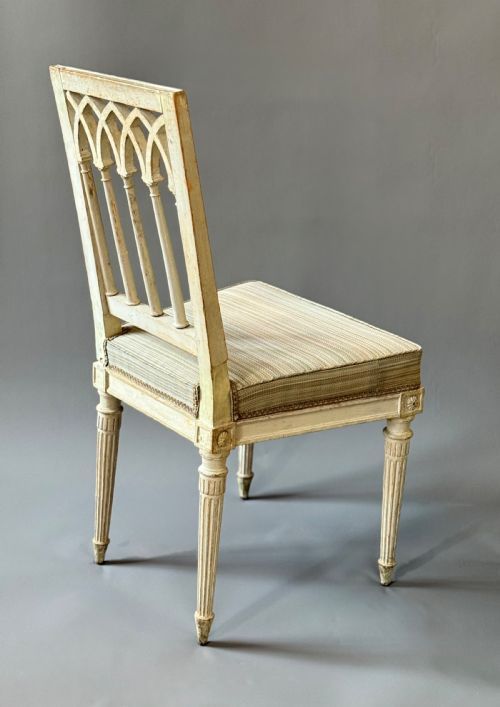
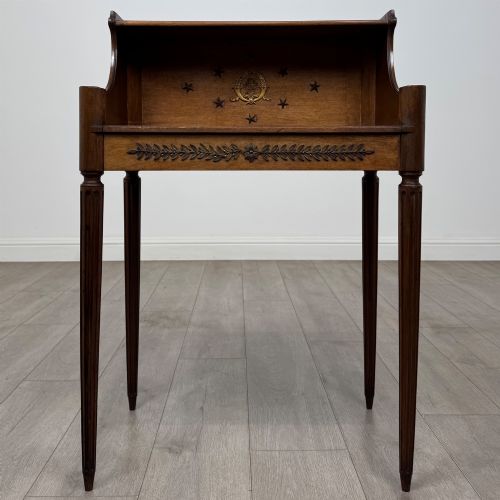
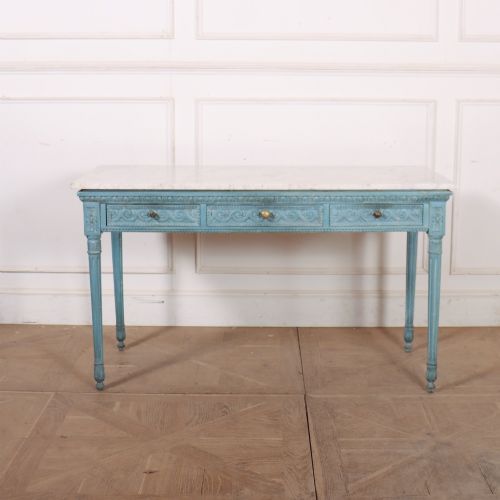


Neoclassical Carved Side Desk
These neoclassical carved side desks combine classical restraint with enduring utility, offering refined surfaces that anchor a room without demanding it.
Neoclassical Carved Side Desk
When you search for a neoclassical carved side desk, you encounter furniture that draws directly upon the architectural vocabulary of antiquity, featuring symmetrical lines and disciplined ornament. The examples appearing on this page range from nineteenth-century Italian console tables to earlier British writing pieces.
Most items you meet here display classical motifs such as carved dolphins or strict geometric framing, rendered in mahogany, walnut, or painted wood. These tables served primarily for display or writing in principal rooms, combining functional surfaces with decorative carving.
The styles present span Italian, French, and Georgian interpretations of the neoclassical idiom, showing how diverse makers adapted classical symmetry. Such pieces suit both traditional libraries and contemporary interiors seeking architectural anchor points.
Materials and construction
Carpenters utilised dense timbers such as mahogany and walnut to sustain crisp, low-relief carving without splintering. These woods took polish well, accentuating the natural grain beneath classical mouldings.
Marble frequently formed the top surface, providing a cool, durable plane that contrasted with the carved wooden aprons and legs below. Ormolu and brass mounts occasionally reinforced structural joints while adding metallic contrast.
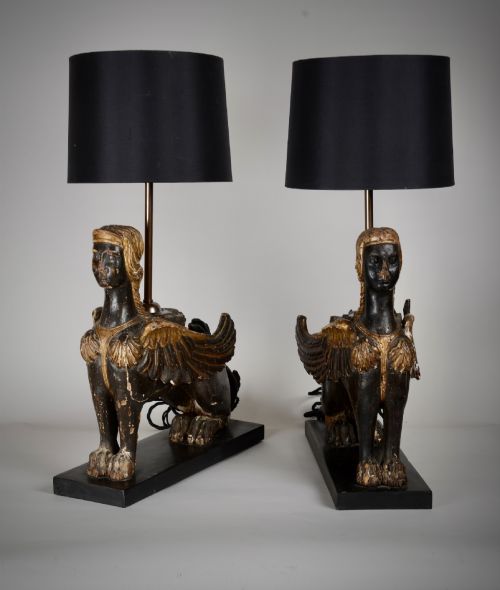
Hand carving required precise chiselling to define acanthus leaves, fluting, and figural supports like dolphins or sphinxes. Painted finishes on wood surfaces offered an alternative to exposed timber, often executed in muted grey or white.
Current listings feature pieces spanning the eighteenth, nineteenth, and early twentieth centuries, constructed in mahogany, walnut, marble, and painted wood.
Assessing quality in carved side furniture
Depth and crispness of the hand carving separate standard commercial work from superior examples. Master carvers retained sharp edges in walnut and mahogany, whereas lesser pieces show softened details and shallower relief.
The integration of secondary materials, such as fitted marble slabs and cast brass mounts, dictates the tier of the piece. High-grade items employ heavy, genuine marble and finely chased metalwork rather than cast composites.
Proportion and structural honesty also distinguish finer examples, where the legs and aprons maintain balanced weights that support the upper surface naturally. Well-balanced proportions reflect the deliberate design ethos of neoclassical makers.
The Neoclassical Carved Side Desk Glossary
- Neoclassical
- A style reviving classical Roman and Greek architectural forms, emphasising straight lines, symmetry, and restrained ornament. It dominated European design in the eighteenth and nineteenth centuries.
- Console Table
- A table fixed to a wall or freestanding with front legs, designed to stand against a vertical surface. They frequently served decorative roles in formal entryways and reception rooms.
- Ormolu
- Gilt bronze ornamentation applied to furniture and lighting, created by amalgamating gold and mercury onto a bronze base. This technique produces a rich metallic lustre characteristic of luxury pieces.
- Acanthus
- A carved ornamental motif derived from the Mediterranean plant of the same name, widely utilised on furniture legs and capitals. It represents classical foliage translated into wood or stone.
- Klismos
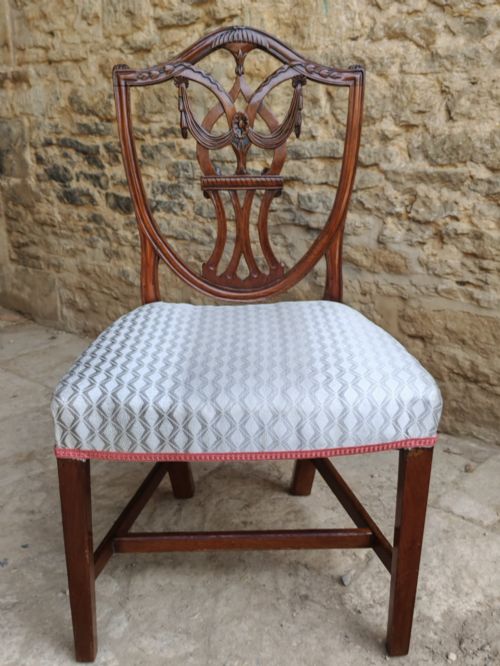
- An ancient Greek chair design distinguished by curved, tapering legs and a concave backrest. Nineteenth-century revival pieces adopted this silhouette for seating. It remains a benchmark of classical grace.
Neoclassical Carved Side Desk: Frequently Asked Questions
What is a neoclassical carved side desk?
A neoclassical carved side desk is a formal surface designed for writing or display, characterised by classical motifs such as fluting, carved foliage, and symmetrical proportions. These tables draw inspiration from ancient Greek and Roman architecture.
They function effectively as accent furniture in hallways, studies, or living spaces, offering a disciplined aesthetic that complements traditional and modern interiors alike.
How do I style a side desk at home?
Place your side desk against a prominent wall where its carved apron and legs remain visible. Keep surface objects minimal to let the timber grain and classical motifs command attention.
Pair the desk with a matching side chair or leave it unencumbered beneath a mirror or painting to maintain clean architectural lines in the room.
How do I identify the materials?
Inspect the surfaces closely under natural light to distinguish solid hardwoods like mahogany and walnut from painted finishes or secondary veneers. Hardwoods exhibit distinct grain patterns and substantial weight.
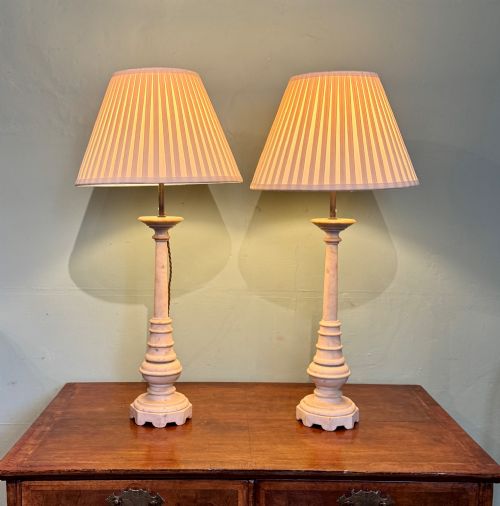
Marble tops feel cold to the touch and display natural veining, whereas alabaster presents a softer, translucent quality often found on nineteenth-century lighting and small stands.
How do I distinguish Italian and French styles?
Italian neoclassical pieces frequently incorporate dramatic figural carvings like dolphins or white marble inserts, reflecting classical Mediterranean sculpture. French equivalents tend toward refined painted finishes and gilt accents.
Both traditions share a commitment to symmetry, yet the Italian versions often lean into bolder sculptural forms while the French maintain lighter, restrained profiles.