


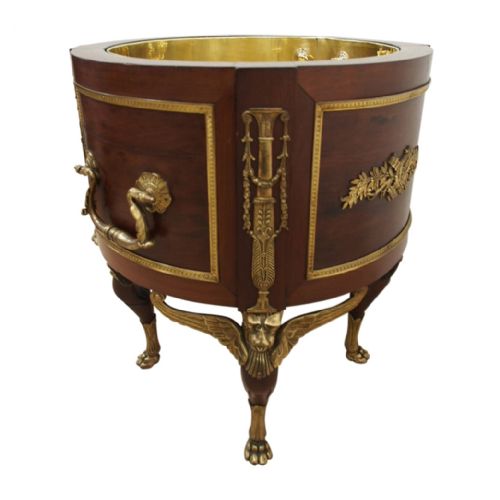
Neoclassical Bronze Planter
A neoclassical bronze planter brings classical antiquity into a room, offering a heavy, sculptural vessel to house plants or stand alone.
Neoclassical Bronze Planter
A neoclassical bronze planter is a vessel designed for botanical display or decorative impact, drawing directly upon ancient Greek and Roman forms. These pieces take shapes such as the campana urn, the Warwick vase, or the wine cistern, frequently associated with the Grand Tour or nineteenth-century revivals.
Buyers will encounter items spanning the nineteenth century, including Regency, Edwardian, and Empire Revival periods. Materials extend beyond pure bronze to include gilt bronze, ormolu, cut glass, marble, and faux marble.
The objects function as jardinieres, wine coolers, and decorative vases, serving both practical horticultural roles and formal interior decoration.
What varies in quality
Quality depends upon the crispness of the cast detailing and the depth of the classical relief work. Superior pieces display sharply rendered foliage, classical figures, and handles that reflect disciplined foundry work.
The choice and combination of secondary materials dictate the tier of a piece, distinguishing standard metalwork from examples incorporating finely turned marble bases, cut glass bodies, or fire-gilt ormolu mounts.
The inventory spans Regency, Edwardian, and Empire Revival styles, alongside Grand Tour souvenir pieces.
Clodion
The Neoclassical Bronze Planter Glossary
- Campana-shaped
- An inverted bell form derived from ancient pottery and metalwork. This silhouette widens gracefully toward the rim.
- Ormolu
- Finely ground high-carat gold applied to a bronze base using a mercury amalgamation technique. It produces a rich, durable golden surface.
- Grand Tour
- A cultural journey undertaken by wealthy young Europeans to study classical antiquities. Souvenirs from these travels included bronze reductions of famous ancient vases.
- Jardiniere
- An ornamental receptacle designed to hold plants or flowers. These vessels often sit on tables or pedestals within formal rooms.
Neoclassical Bronze Planter: Frequently Asked Questions
What is a neoclassical bronze planter used for?
These vessels serve primarily as jardinieres for holding plants or as standalone decorative urns and wine coolers within a room. Their substantial weight and classical ornamentation make them focal points on tables or pedestals.
Historically, larger examples functioned as wine cisterns during formal dining, while smaller bronze and marble versions decorated libraries and drawing rooms.
How do I identify a Grand Tour piece?
Grand Tour pieces typically replicate famous ancient monuments, such as the Warwick vase or campana urns seen in Italian collections. They date predominantly from the nineteenth century and reflect the classical tastes of travellers exploring Europe.
Look for dense bronze casting, patination that simulates ancient metal, and direct references to classical sculpture or architecture.
What is the difference between bronze and ormolu?
Bronze is an alloy of copper and tin used to cast the primary body and structural elements of the vessel. Ormolu refers to gilt bronze, where a layer of gold is bonded to the bronze surface to provide a bright metallic finish.
Many pieces combine dark patinated bronze with gilded ormolu mounts to create visual contrast on handles, rims, and classical reliefs.
Are these planters suitable for live plants?
While originally designed to hold plantings or cut flowers, many antique pieces feature delicate interior surfaces, cut glass, or mixed media such as alabaster and wood. Using a removable inner liner protects the historic material from moisture and soil.
Consider the interior depth and material construction before placing damp earth or water directly inside any antique vessel.