




French Cast Bronze Urn
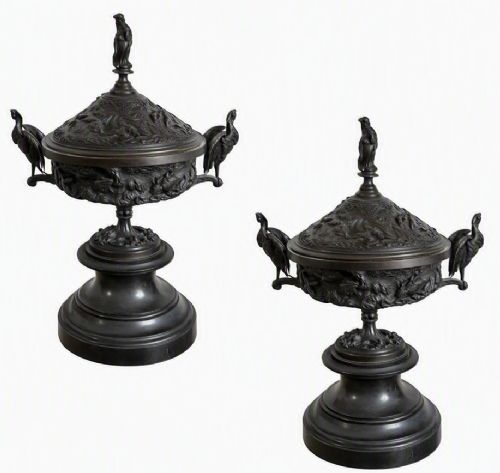
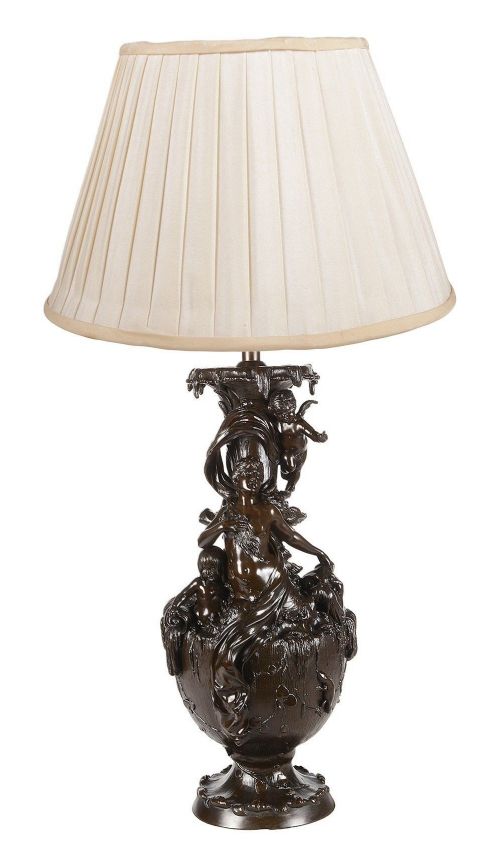
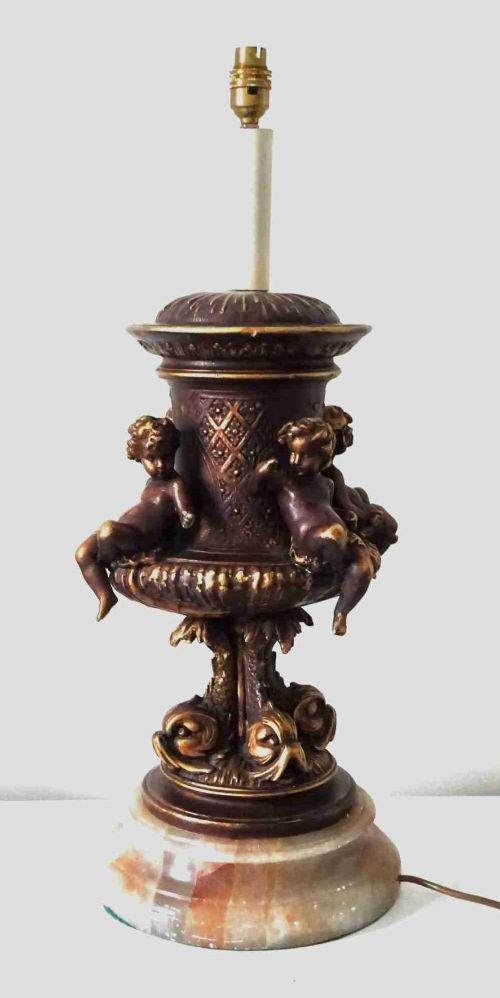
These french cast bronze urn pieces offer classical weight and sculptural form, bringing enduring presence to a room.
French Cast Bronze Urn
A french cast bronze urn represents a tradition of decorative metalwork spanning the nineteenth and early twentieth centuries. These pieces encompass ornamental vessels, campana-shaped vases, wine-coolers, and lamps.
The objects appearing here draw on Neoclassical, Rococo Revival, and Art Nouveau styles, often echoing classical antiquity through Grand Tour influences. Collectors encounter works modelled after makers like Clodion or produced by workshops such as Barbedienne in Paris.
Forms range from lidded urns and ewers to figural vases featuring cherubs, dolphins, or mythological figures like the Goddess Amphitrite. Many survive as converted table lamps mounted on marble bases.
How they were made
Foundries utilised traditional casting methods to shape molten metal into intricate sculptural forms, applying chased details by hand after the cast cooled. Artisans employed bronze, brass, and cast metal as the primary structural bodies.
Surface finishes include gilt bronze, ormolu, patinated bronze, and gilt metal, sometimes paired with contrasting porcelain or mounted on solid marble bases. This variety of finishing techniques allowed makers to achieve both bright gilded highlights and subtle dark patination.
Listings feature bronze, brass, porcelain, and marble materials across Neoclassical, Rococo Revival, and Art Nouveau styles.
What varies in quality
The integrity of the surface finish distinguishes finer examples, whether through the preservation of original fire gilding, ormolu, or a controlled patination. Heavier metal gauge and substantial mounts also contribute to the lasting solidity of the piece.
Barbedienne Paris·Jean Dunand
The French Cast Bronze Urn Glossary
- Campana
- A bell-shaped vessel form inspired by ancient Roman pottery. This profile is frequently seen in classical metal vases and wine-coolers.
- Ormolu
- Finely ground high-carat gold applied to a bronze base using a mercury amalgamation technique. The method creates a durable, luminous golden surface.
- Grand Tour
- A cultural journey undertaken by nineteenth-century travellers who collected classical antiquities and bronze souvenir replicas. These items heavily influenced contemporary decorative arts.
- Chasing
- The manual tooling of a metal surface with punches and hammers after casting. This process refines details and removes casting imperfections.
- Patination
- The surface coloration developed naturally over time or applied chemically by an artisan. It adds visual depth to bronze and other metals.
French Cast Bronze Urn: Frequently Asked Questions
What is a french cast bronze urn?
These decorative metal vessels emulate classical antiquity and later revival styles, serving as ornamental centrepieces or converted lamps.
Foundries produced them across the nineteenth and early twentieth centuries in France, utilising traditional casting and chasing techniques.
How were these urns originally used?
Most functioned purely as decorative objects, displaying classical motifs and sculptural scenes in grand interiors.
Some large examples were cast as wine-coolers, while many later survivors were adapted into lighting during the twentieth century.
How do I style a bronze urn at home?
Position heavier campana or lidded pieces on sturdy side tables, mantelpieces, or pedestals where their sculptural weight anchors the space.
Paired examples work well symmetrically, while lamp conversions provide functional illumination alongside period character.
How can I tell the period of a bronze piece?
Examine the style, mounting materials, and casting sharpness to gauge the era, noting influences such as Neoclassical severity or Art Nouveau fluidity.
Base materials like marble and wiring styles often help distinguish nineteenth-century works from early twentieth-century productions.