


Neoclassical Brass Column Light
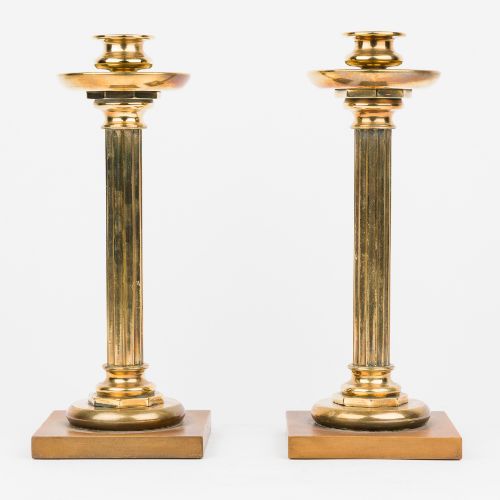
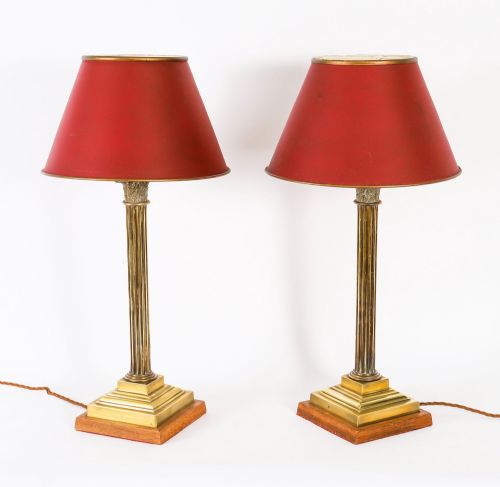
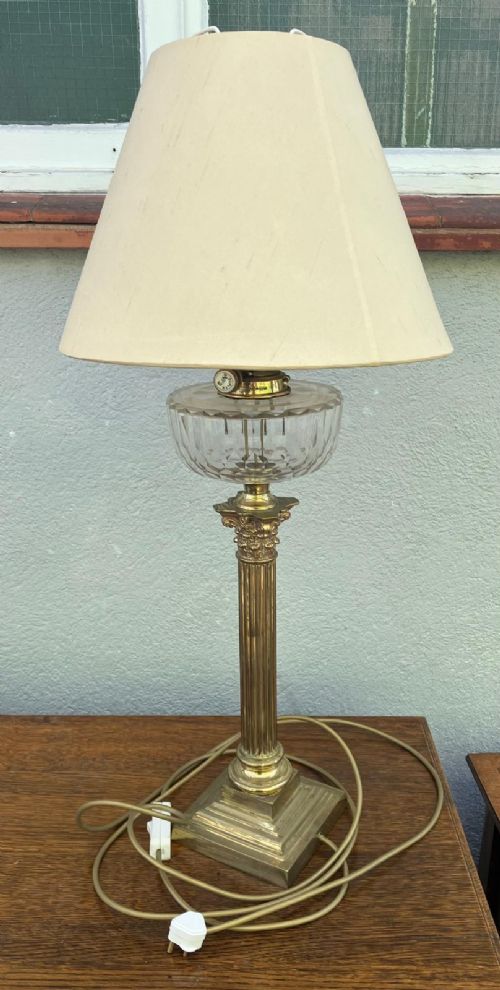
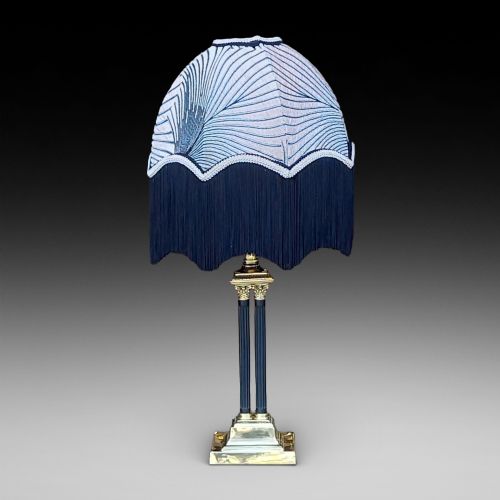
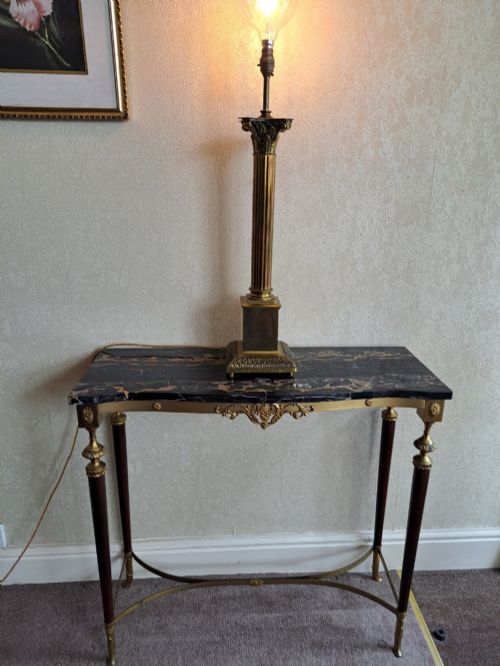
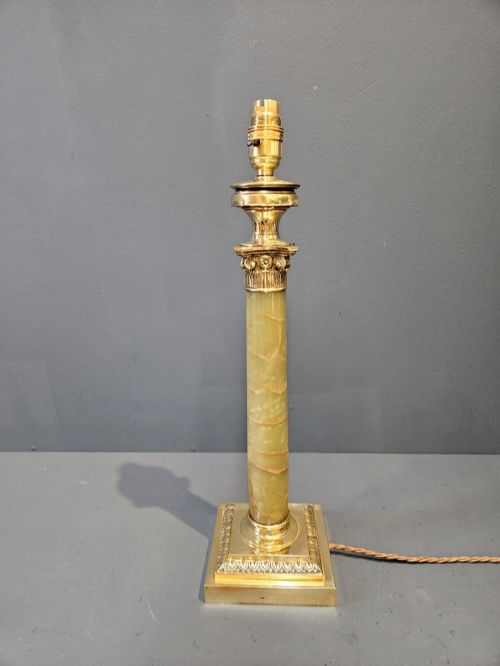
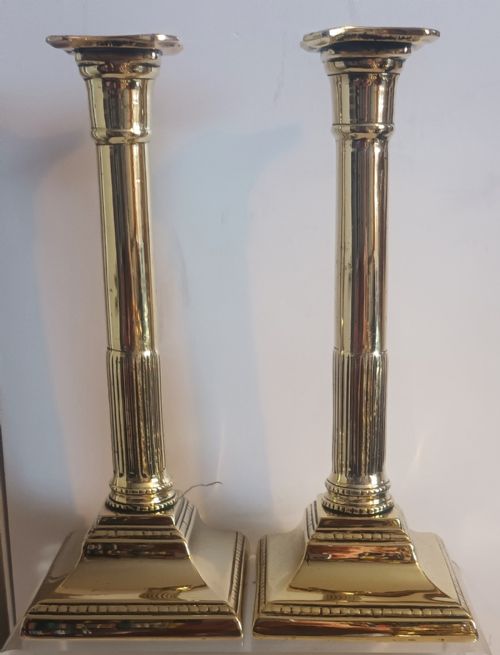
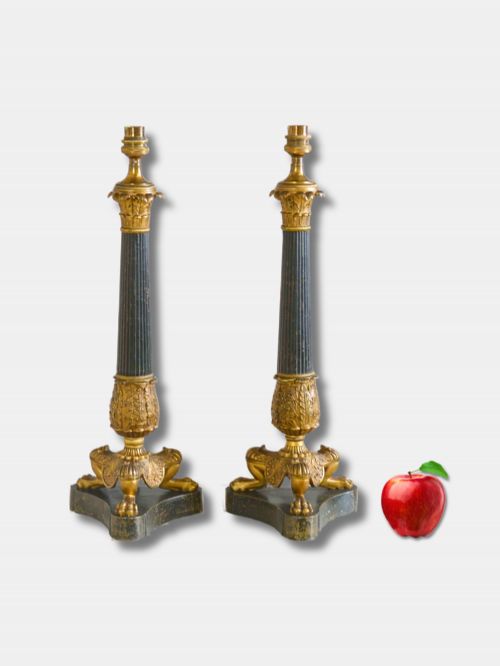
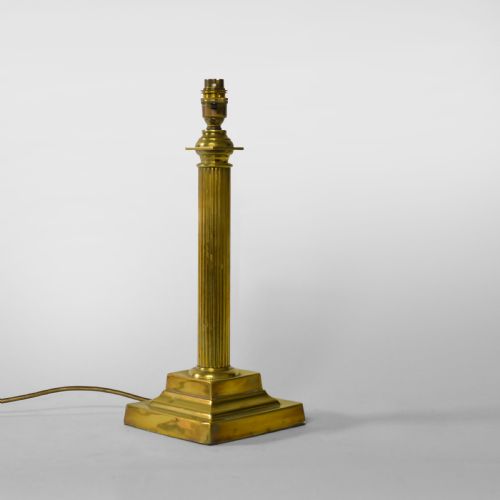
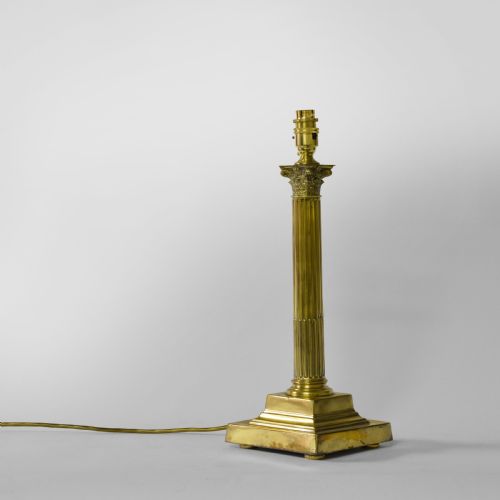
These neoclassical brass column light examples bring classical architecture into domestic interiors through fluted shafts and Corinthian capitals.
Neoclassical Brass Column Light
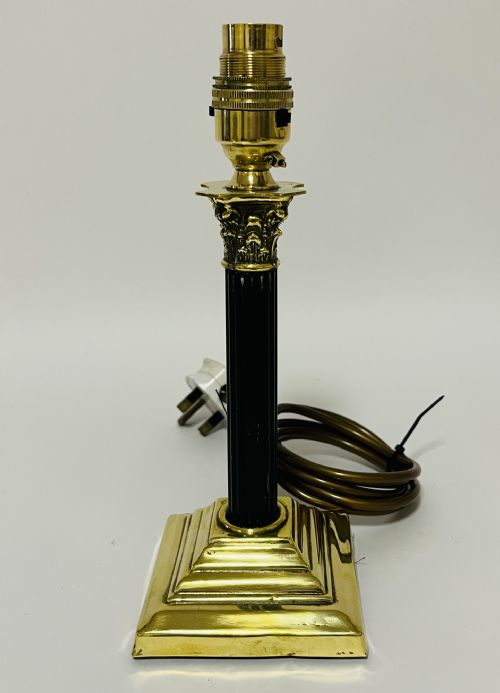
A neoclassical brass column light takes inspiration from ancient Greek and Roman architecture, translating stone columns into domestic illumination. The form commonly appears as table lamps and floor-standing standard lamps adapted from earlier candlesticks.
Most pieces on this page date from the nineteenth century and the early twentieth century, spanning Victorian and Edwardian periods. Makers utilised classical orders such as Corinthian, Doric and Ionic capitals atop fluted shafts.
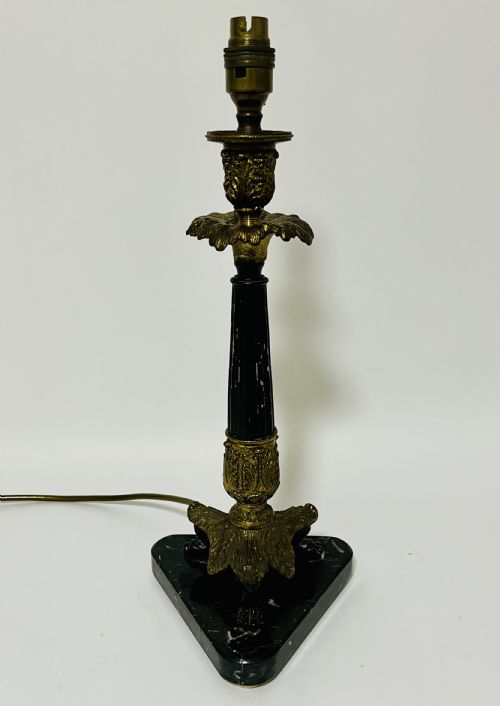
Origin influences appearance, with English pieces displaying restrained proportions while French examples incorporate ormolu, gilt bronze and marble bases. Pairs frequently occur, alongside individual standard lamps designed for floor placement.
Materials and Construction
Foundry work relies heavily on cast brass, often combined with heavy marble plinths to provide stability for tall column shafts. Ormolu and gilt bronze surface treatments appear on French Empire designs.
Component parts are cast separately and assembled with internal threaded rods, allowing columns, capitals and stepped bases to lock tightly together. Surface enrichment includes fluting, beaded collars and acanthus leaf detailing.
Table lamps and floor-standing standard lamps represent the primary functional forms within this category.
Judging Quality
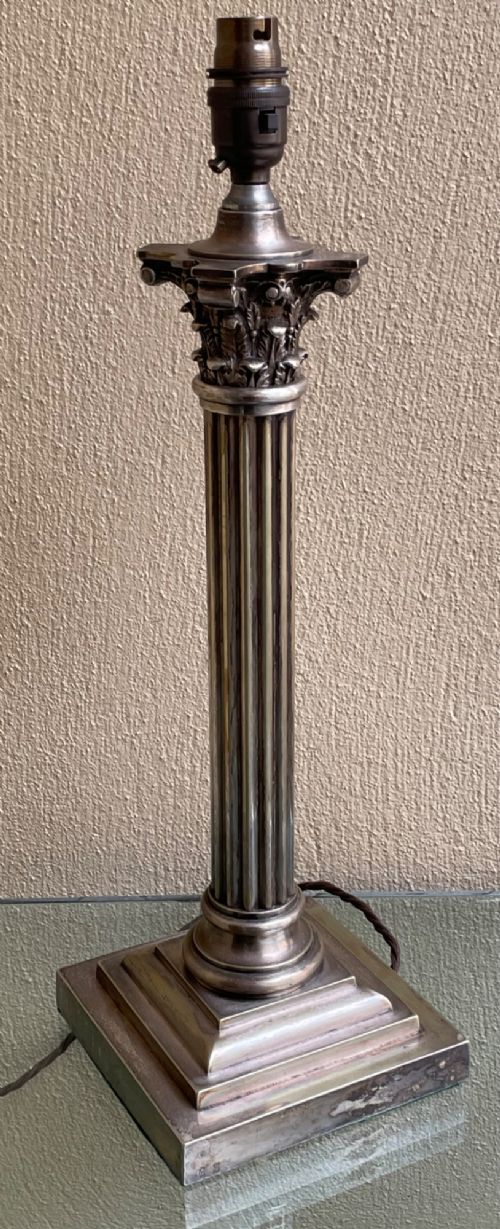
Quality rests in the crispness of the casting, particularly within the acanthus leaves and volutes of the Corinthian capitals. Heavy gauge metal creates substantial weight, distinguishing superior examples from lighter commercial production.
Proportion dictates visual success, where the diameter of the column balances harmoniously against the height of the stepped base. Integrated details such as lions paw feet or multi-tiered marble plinths elevate the status of the piece.
J. Miller·Hinks
The Neoclassical Brass Column Light Glossary
- Corinthian capital
- The uppermost member of a column, decorated with carved or cast acanthus leaves and delicate scrolls known as volutes. This order appears most frequently on tall brass table lamps.
- Ormolu
- Finely ground high-carat gold mercury-gilded onto a bronze object. The technique produces a rich, warm surface lustre found on French neoclassical pieces.
- Standard lamp
- A tall floor-standing lighting fixture designed to illuminate a room from standing height. These often replicate monumental architectural columns.
- Ionic capital
- A classical column head characterised by two opposing spiral scrolls called volutes. It provides a more restrained alternative to the ornate Corinthian style.
Neoclassical Brass Column Light: Frequently Asked Questions
How do I wire an old column lamp?
Rewiring requires feeding modern flex through the central channel previously occupied by weighting rods or burner mechanisms. Qualified electricians can accomplish this without damaging the historical metal structure.
Patination should remain untouched during rewiring to preserve the authentic surface character accumulated over decades of use.
Are these lamps converted candlesticks?
Many nineteenth-century examples begin life as heavy brass or bronze candlesticks before conversion to electricity later in their lifespan. This conversion process often involves drilling through the base or stem to accommodate electrical cord.
Original candlesticks converted during the early twentieth century carry their own historical authenticity as lighting technology advanced.
How do I clean brass columns?
Dusting with a soft dry cloth removes surface particles without disturbing the protective aged patina. Avoid aggressive chemical polishes that strip away historical darkening and bright highlights.
Gentle application of microcrystalline wax protects the metal surface from future tarnishing while maintaining its visual depth.
What shade suits a column lamp?
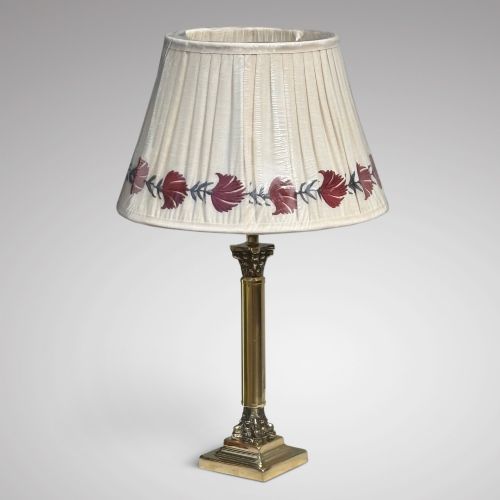
Fabric shades with simple tailored lines balance the architectural severity of fluted brass columns. Tapered empire or drum shapes complement the vertical emphasis of the shaft.
proportion dictates that the shade width should match the base diameter to maintain visual equilibrium.