


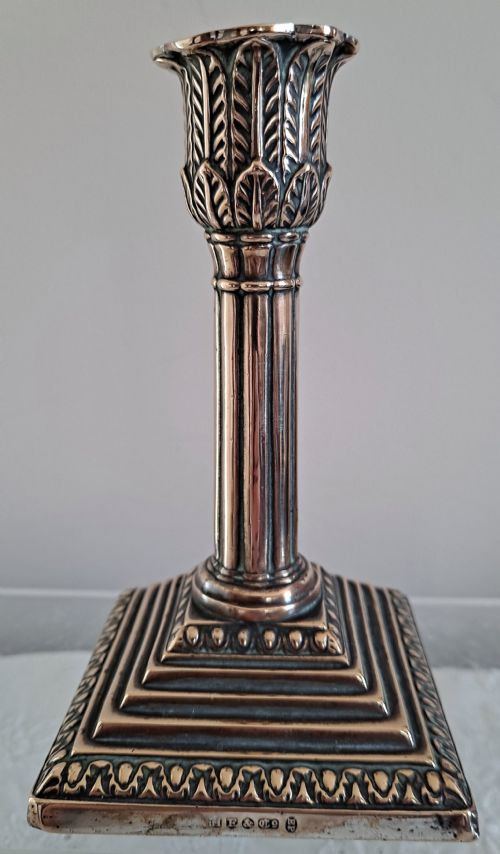


Neoclassical Brass Candle Holders
Neoclassical brass candle holders combine formal symmetry with classical motifs, offering enduring light and architectural presence for a room.
Neoclassical Brass Candle Holders
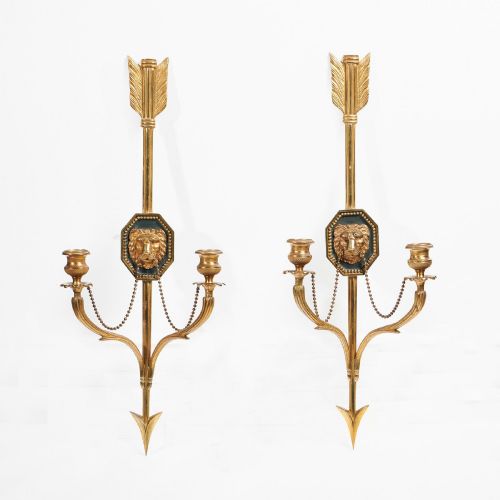
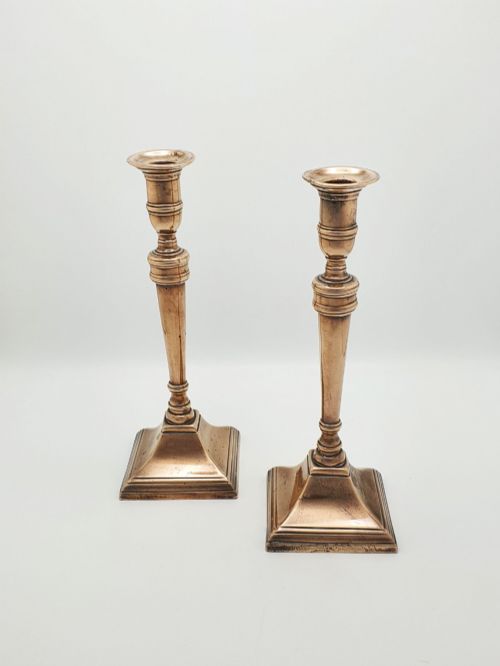
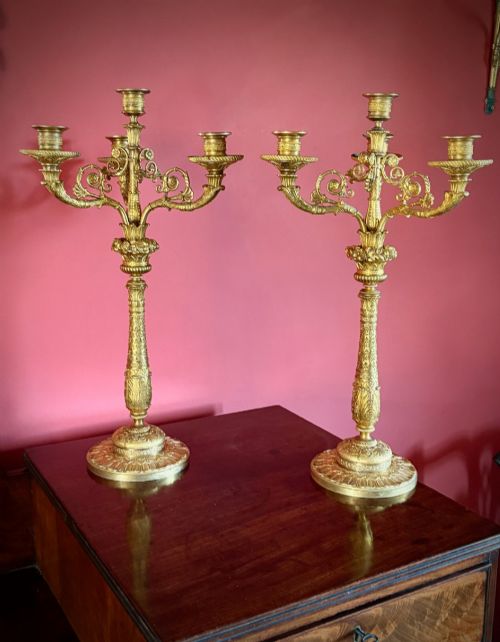
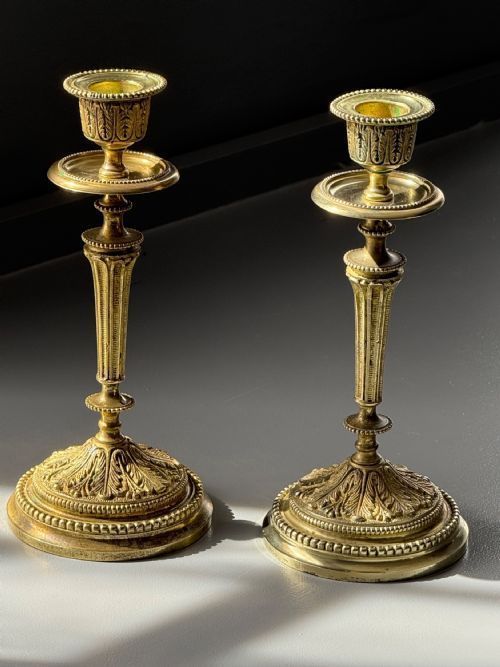
When searching for neoclassical brass candle holders, buyers encounter lighting designed with classical restraint, symmetry, and architectural proportion. The selection spans several centuries, drawing heavily on Georgian, Regency, and French Empire aesthetics.
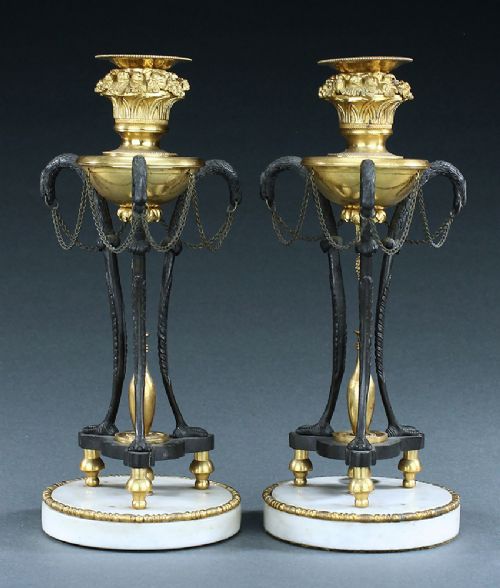
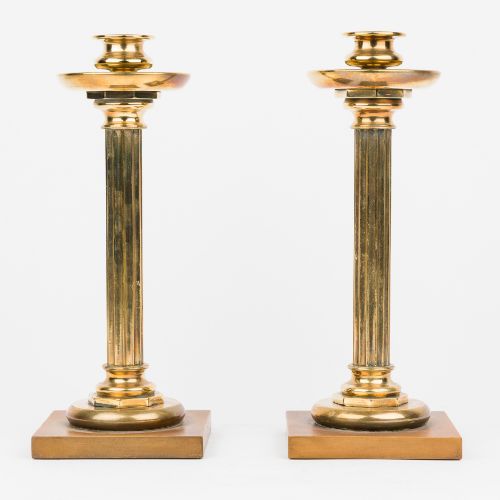
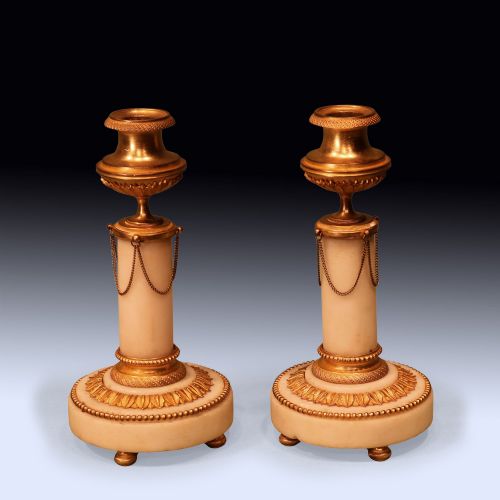
Most examples appearing here take the form of pairs of candlesticks, multi-branched candelabra, and wall sconces. These objects often incorporate brass alongside ormolu, bronze, marble, and glass to achieve a balanced decorative effect.
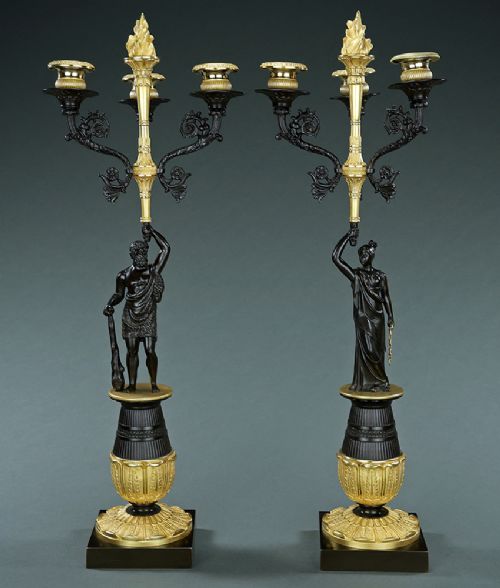
Origins stretch across English, French, Italian, and Swedish workshops, reflecting broad European interpretations of classical antiquity. Pieces range from simple column forms to elaborate figural compositions involving cherubs and mythological subjects.
Materials and Construction
Makers utilised cast brass, bronze, and ormolu, frequently combining metalwork with white marble bases to add weight and visual contrast. Surface finishes involve both polished brass and fire-gilding, creating varied reflective qualities on the metal parts.
Assembly often relied on threaded components and pinned joints to secure multi-part cast sections, such as columns, drip pans, and branching arms. Wall lights and girandole mirrors integrate cut glass crystals and mirrored plates to amplify candlelight within an interior.
Neoclassical Brass Candle Holders Retail Price Guide 2026
Typical asking prices for neoclassical brass candle holders among the pieces listed under this phrase on Sellingantiques today, from the lower quarter to the upper quarter. They describe what is for sale here now, not the wider market.
Certain nineteenth-century columns incorporate Masonic symbols into their brass decoration, lighting the lodge with architectural precision.
Assessing Quality
Quality rests primarily in the crispness of the casting and the depth of the chased detail across the brass and bronze surfaces. Superior examples retain sharp acanthus leaves, defined fluting on columns, and cleanly articulated figural elements without softness from worn moulds.
Material integration also dictates distinction, such as the use of solid marble plinths, heavy gauge metal, and well-preserved gilding or original patination. The structural integrity of multi-branch candelabra and the precise alignment of the sconces reveal the competence of the original maker.
J. Miller
The Neoclassical Brass Candle Holders Glossary
- Ormolu
- Gilded bronze produced by applying a mercury and gold amalgam to a bronze base and heating it. This technique creates a durable, warm metallic surface found on French and English decorative pieces.
- Candelabra
- Lighting fixtures with multiple branching arms designed to hold several candles simultaneously. They often feature central shafts decorated with classical figures or foliate motifs.
- Girandole
- A branched wall-mounted candle holder featuring a mirrored backplate to reflect and multiply the light. These pieces combine reflective glass with gilt metal frames.
- Applique
- A wall-mounted light fitting or sconce secured directly to a vertical surface. They commonly project outward with one or more candle nozzles.
- Patinated metal
- Metal treated with chemicals or heat to alter its surface colour and tone. This process darkens raw brass or bronze to produce an aged appearance.
Neoclassical Brass Candle Holders: Frequently Asked Questions
What is a candelabra?
A candelabra is a branched lighting fixture designed to hold multiple candles at once. These objects provide both functional illumination and a decorative focal point on tables or sideboards.
Most examples split into several arms extending from a central stem. They frequently incorporate classical motifs such as columns, urns, and figures.
How do I clean antique brass?
Antique brass requires gentle dusting and minimal interference to preserve its historic surface appearance. Aggressive chemical polishing can strip away aged patination and diminish the character of the metal.
Light cleaning with a soft, dry cloth is usually sufficient for maintenance. Specialist metal cleaners should be used sparingly and only when necessary to remove active corrosion.
How do I identify French Empire style?
French Empire pieces display heavy classical influences inspired by ancient Rome and Greece. Common decorative elements include military trophies, sphinxes, laurel wreaths, and winged figures.
The materials frequently combine polished dark bronze with bright ormolu mountings. This high-contrast pairing creates a striking visual presence typical of the early nineteenth century.