

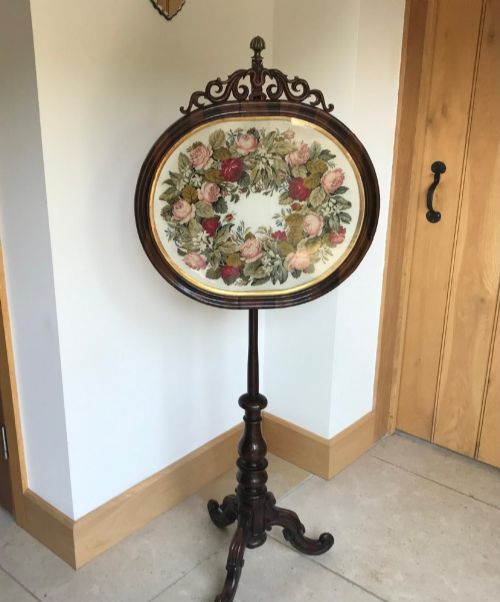


Needlework Tapestry Screen
Needlework tapestry screens bring warmth and hand-stitched artistry to period interiors while cleverly shielding you from radiant hearth heat.
Needlework Tapestry Screen
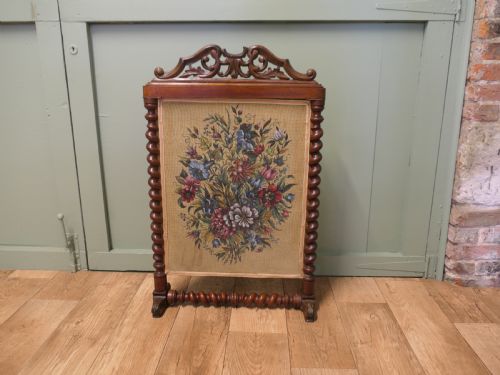
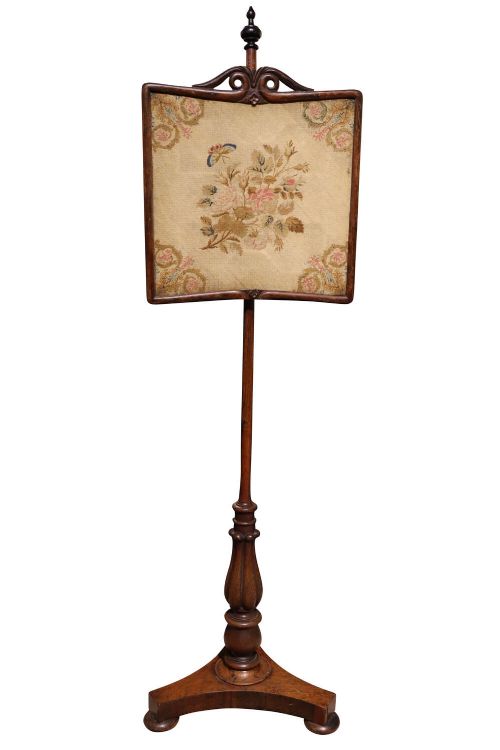
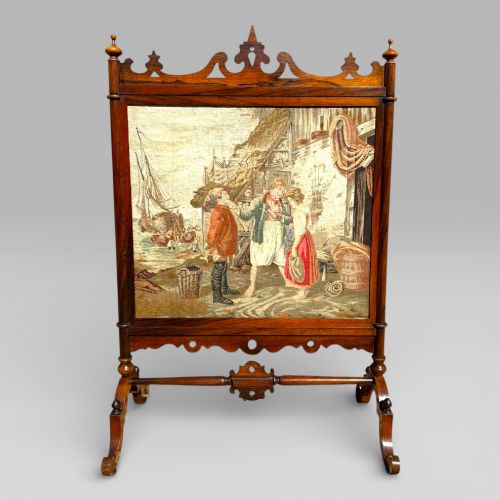
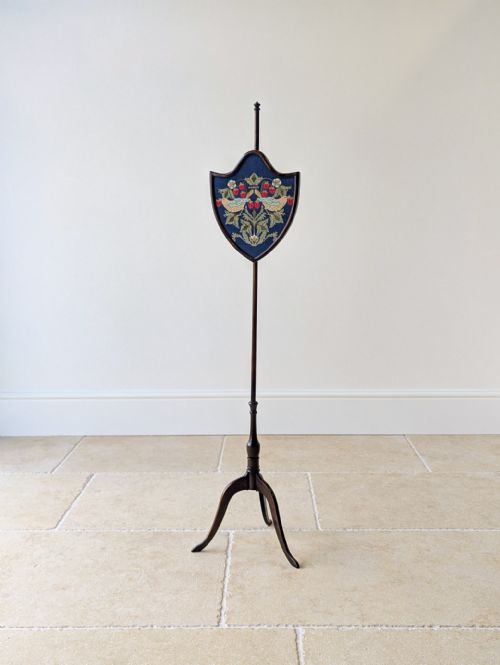
A needlework tapestry screen is primarily encountered on this page as a pole screen, fire screen, or room divider originating from Georgian, Regency, and Victorian periods. These pieces combine functional household protection with elaborate textile panels.
The most common formats include floor-standing pole screens with adjustable needlework faces, larger folding fire screens, and tall multi-panel room dividers. Mahogany and rosewood form the main structural framing for these textile works.
The panels themselves feature wool, silk, and traditional needlepoint or embroidery, often displaying pictorial scenes, samplers, or floral motifs. Their origins span the eighteenth and nineteenth centuries, reflecting domestic crafts of those eras.
How they were made
Cabinetmakers utilised dense timbers such as mahogany, rosewood, and satinwood to construct the sturdy tripod bases, frames, and upright poles. These woods were often turned, carved, or gilded to suit prevailing Georgian, Regency, and Victorian tastes.
Needlework panels were stitched by hand using wool and silk threads onto textile foundations, employing techniques like needlepoint and embroidery. These finished textile faces were then mounted securely into wooden frames or fitted to sliding pole mechanisms.
Needlework Tapestry Screen Retail Price Guide 2026
Typical asking prices for needlework tapestry screen among the pieces listed under this phrase on Sellingantiques today, from the lower quarter to the upper quarter. They describe what is for sale here now, not the wider market.
Victorian ladies utilised adjustable pole screens primarily to save their heavy wax makeup from melting beside roaring coal fires.
What varies in quality
Quality rests heavily on the crispness of the timber carving and the complexity of the frame construction, particularly around tripod legs and adjustment mechanisms. Superior pieces exhibit precise joinery and well-balanced proportions that support the weight of the screen.
The finesse and density of the needlework panel dictate the artistic merit of the piece, with finely detailed silkwork and intricate wool tapestry standing apart from simpler work. The harmonious integration between the textile panel and its wooden mount defines the overall standard.
The Needlework Tapestry Screen Glossary
- Pole screen
- A vertical floor-standing screen featuring an adjustable panel mounted on a slender pillar with a tripod base. It was traditionally placed near a fireplace to deflect radiant heat from a person's face.
- Needlepoint
- A type of canvas work embroidery stitched with yarn in a counted thread technique. It provides the rigid, durable surface seen on many period fire screens.
- Tripod base
- A three-legged support structure commonly found beneath the upright pillars of pole screens. This design ensured stability on uneven floorboards.
- Silkwork
- Embroidery executed primarily using silk threads, resulting in a lustrous pictorial surface. These panels often appeared in framed wall art or specialised table screens.
- Cheval screen
- A standing screen supported by two sturdy side pillars and feet rather than a central pole. This form allowed for larger panel displays.
Needlework Tapestry Screen: Frequently Asked Questions
What is a pole screen?
A pole screen is a slender standing fixture with an adjustable textile panel mounted on a vertical shaft. It allowed occupants to slide the screen up or down to block fireplace heat.
These versatile items served both practical climate control functions and decorative purposes in period sitting rooms.
How were fire screens used?
Fire screens were positioned between seated guests and open hearths to protect complex face cosmetics from melting in the intense heat. They acted as movable shields in grand reception rooms.
Over time, their protective role diminished, and they became primarily decorative furnishings displaying intricate needlework.
How do I date a screen?
Dating relies on identifying the prevailing furniture styles and timber choices visible in the frame and base construction. Georgian and Regency pieces typically show lighter woods and refined classical lines, while Victorian examples often feature heavier carved mahogany or rosewood.
The style of the embroidery or tapestry work also provides strong stylistic clues regarding the period of manufacture.
Where should I place a screen?
These screens suit traditional living spaces, studies, or hallways where their timber frames and textile panels can be appreciated without obstruction. Tall room dividers work well for partitioning larger open spaces.
Smaller pole screens function effectively as corner accents or beside period seating arrangements.