



Needlepoint Dining Armchairs
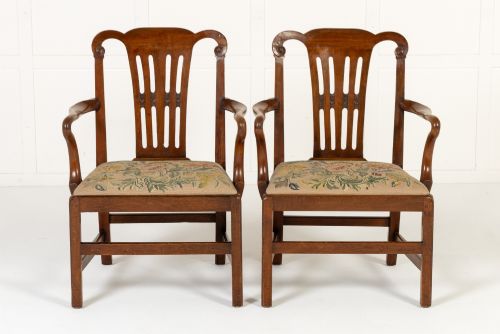
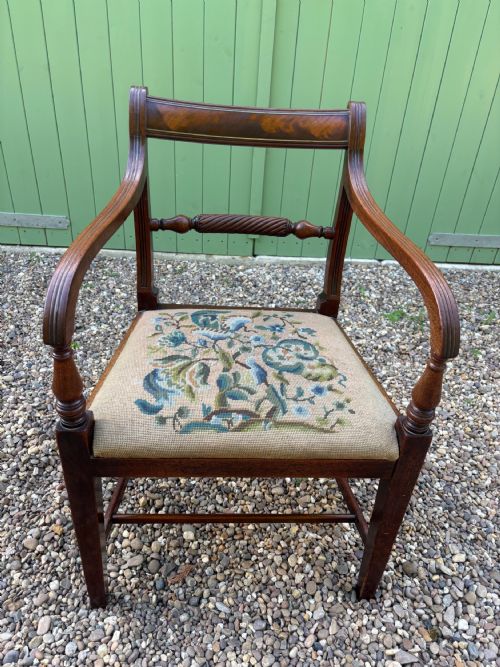
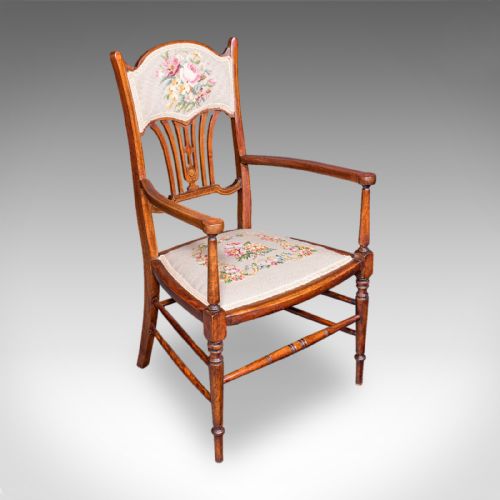
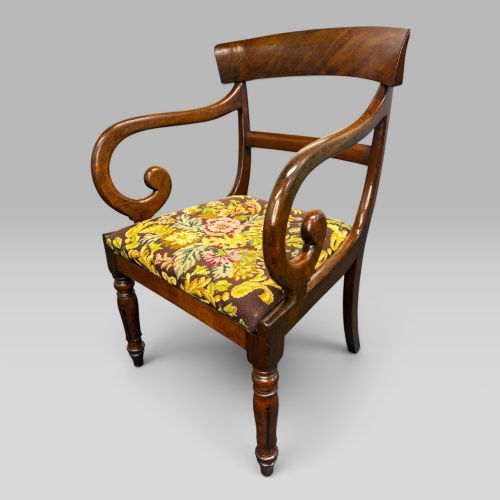
These needlepoint dining armchairs bring tactile warmth and structured comfort to a table, combining firm wooden frames with worked textile seats.
Needlepoint Dining Armchairs
Needlepoint dining armchairs combine a timber frame with a worked wool textile seat or back, serving as carver chairs at the head of a dining table or as individual elbow seats in a morning room. The evidence shows these seating forms spanning the eighteenth, nineteenth, and early twentieth centuries, drawing on George II, George III, Regency, Victorian, Edwardian, and Art Nouveau styles.
You are most likely to encounter nineteenth-century mahogany or beech frames fitted with drop-in needlepoint or tapestry upholstery. These pieces range from single elbow chairs to matched sets of dining chairs incorporating carvers, often built in mahogany with vernacular beech variants also appearing.
How they were made
Makers constructed the structural frames primarily from mahogany and beech, employing timber that offered sufficient tensile strength to support arms and upright stiles. Brass elements occasionally reinforced joints or decorated the structure.
Upholstery relied on wool worked in needlepoint or tapestry techniques over textile backings, creating dense pictorial or floral surfaces designed for sustained friction and daily weight.
Needlepoint Dining Armchairs Retail Price Guide 2026
Typical asking prices for needlepoint dining armchairs among the pieces listed under this phrase on Sellingantiques today, from the lower quarter to the upper quarter. They describe what is for sale here now, not the wider market.
The listings here feature mahogany and beech frames paired with wool needlepoint and tapestry textiles across Georgian and Victorian periods.
What varies in quality
Quality rests in the sculptural authority of the timber frame, where crisp carving on the arms, legs, and back rails distinguishes a bespoke workshop production from a simpler provincial output. The density and tightness of the needlepoint wool stitching dictate the longevity and definition of the textile design.
Proportion and scale separate exceptional seating from standard examples, particularly in the sweep of the elbow supports and the rake of the back legs.
Warings·Robert Strahan Dublin
The Needlepoint Dining Armchairs Glossary
- Needlepoint
- A type of counted-thread embroidery worked on an open-weave canvas mesh. It provides a durable, flat surface traditionally used for heavy-use upholstery.
- Elbow chair
- An armchair featuring lower arm rests, often used informally in a parlour or as a single seating piece beside a desk.
- Carver
- A dining armchair designed to match a set of single chairs, traditionally placed at the head of the table.
- Drop-in seat
- A removable wooden frame upholstered separately and dropped into a recess in the chair rails. This construction allowed for straightforward reupholstery.
Needlepoint Dining Armchairs: Frequently Asked Questions
How do I use them at a dining table?
These armchairs typically serve as carver chairs placed at the head and foot of a dining table. Their arms provide added support while requiring sufficient clearance under the table rim.
Ensure the height of the arms aligns with your table apron to allow the chair to push in properly when not in use.
Are needlepoint seats durable for daily meals?
Traditional wool needlepoint is tightly worked and withstands regular friction remarkably well. The heavy yarn composition resists everyday wear from seating.
Keep them away from direct sunlight to preserve the dyed wool colours over years of domestic use.
How do I tell Regency from Victorian chairs?
Regency frames lean toward architectural lines, sabre legs, and classical restraint derived from ancient models. Victorian examples often introduce heavier proportions, bolder scroll arms, and more exuberant carving.
Examine the turning on the legs and the profile of the top rail to spot these stylistic shifts.
Can I mix different wood tones in a dining set?
Mahogany and walnut pieces share warm reddish-brown undertones that anchor a dining space naturally. Mixing similar timber species adds character rather than clashing.
Pay attention to the height of the backs and the style of the arms to maintain visual harmony around the table.