

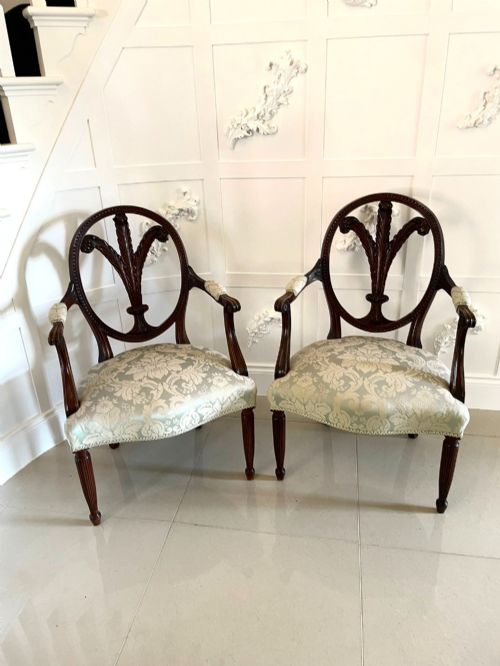
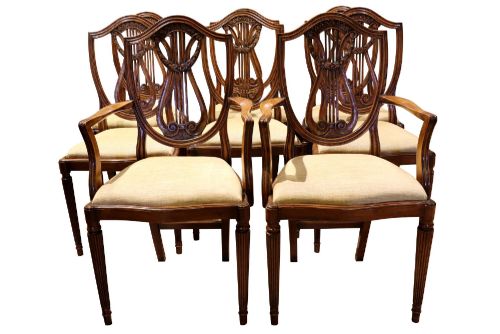
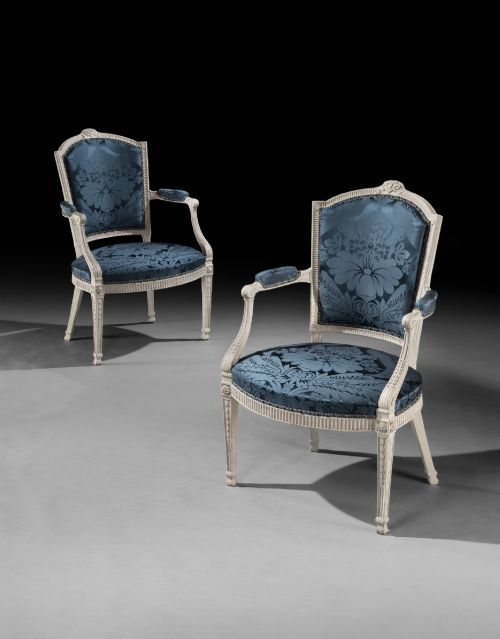


Fluted Leg Carver Chair
These fluted leg carver chair pieces bring period elegance and craftsmanship to a room, offering both history and utility.
Fluted Leg Carver Chair
When you search for a fluted leg carver chair, you encounter seating dating from the eighteenth century through to the Edwardian period and nineteen-thirtieths reproductions. These examples span mahogany, painted timber, and giltwood constructions with upholstery ranging from leather and silk damask to tapestry.
The form encompasses armchairs and dining chairs designed in Regency, George III Neoclassical, Louis XVI, and Hepplewhite styles. Mahogany versions from the Georgian and nineteenth-century periods are among the most frequently encountered options on this page.
Construction and materials
Cabinetmakers built these chairs primarily using solid mahogany, painted timber, and giltwood frames. Artisans shaped the structural timber to form the characteristic vertical channels on the legs.
Upholstery techniques involved securing fabrics such as silk damask, leather, and tapestry to the frame, frequently finished with brass tacks.
Fluted Leg Carver Chair Retail Price Guide 2026
Typical asking prices for fluted leg carver chair among the pieces listed under this phrase on Sellingantiques today, from the lower quarter to the upper quarter. They describe what is for sale here now, not the wider market.
Listings feature mahogany, painted timber, and giltwood framed pieces spanning the eighteenth century to the nineteen-thirtieths.
Assessing quality in execution
Superior examples demonstrate crisp definition in the carved fluting on the legs and precision in the joinery of the arm supports. Finer pieces often feature decorative elements like brass inlay or sophisticated carved details that reflect the stylistic ambitions of periods such as the Regency and Georgian eras.
The integrity of the timber and the authenticity of the period upholstery materials also distinguish higher-tier examples from later reproductions and heavily altered pieces.
The Fluted Leg Carver Chair Glossary
- Carver chair
- An armchair, typically designed to sit at the head of a dining table or serve as an occasional seat. These pieces feature arms that match the dining chairs of a set.
- Fluting
- Shallow, U-shaped vertical grooves carved into wood, commonly found adorning chair legs in Neoclassical and Georgian furniture.
- Giltwood
- Timber that has been coated with a thin layer of gold leaf or gilt powder. This finish appears frequently on pieces executed in the Louis XVI style.
- Damask fabric
- A reversible, figured fabric traditionally woven on a jacquard loom with patterns formed by contrasting warps and wefts.
Fluted Leg Carver Chair: Frequently Asked Questions
What is a carver chair?
A carver chair is an armchair traditionally placed at the ends of a dining table. It differs from standard dining chairs by including armrests.
These chairs were designed for the head of the household or honoured guests during meals.
How do I style these chairs?
You can integrate a single carver chair into a study or bedroom as an occasional seat. Pairs work effectively as desk chairs or flanking a fireplace.
Matching sets can also be paired with a dining table to create a cohesive period interior scheme.
Are these chairs comfortable?
Comfort varies depending on the upholstery and padding materials used in the seat and backrest. Many period examples feature sprung or stuffed upholstery covered in leather, silk damask, or tapestry.
Adding a loose cushion can also enhance daily seating comfort.
How do I date a chair?
Dating relies on examining the timber species, construction methods, and stylistic details such as leg shape and carving techniques. Georgian and Regency pieces show specific regional joinery practices and decorative motifs.
Comparing the piece to documented examples from eras like the eighteenth century or Edwardian period clarifies its age.