


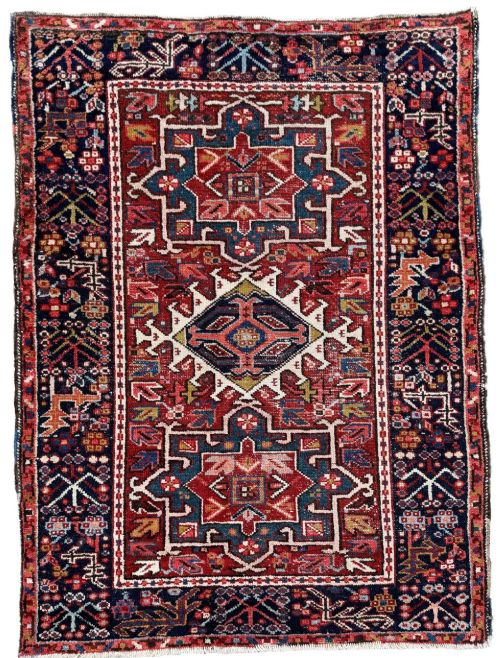
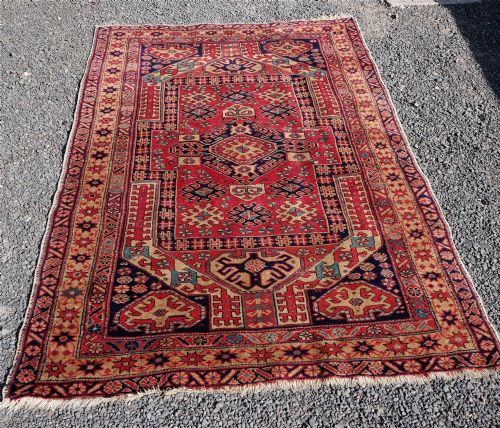
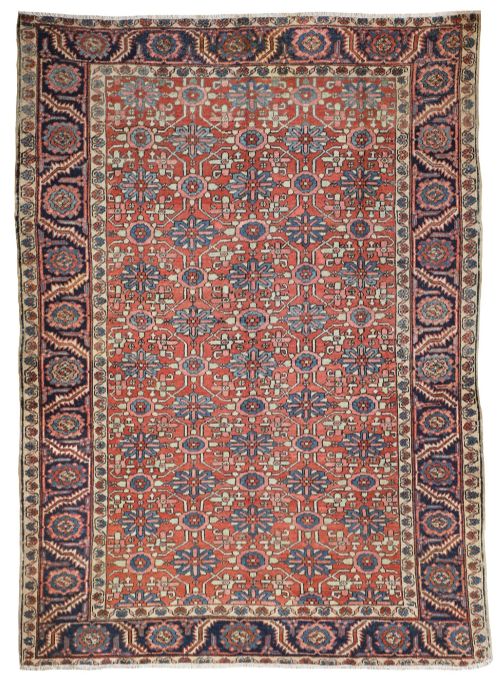
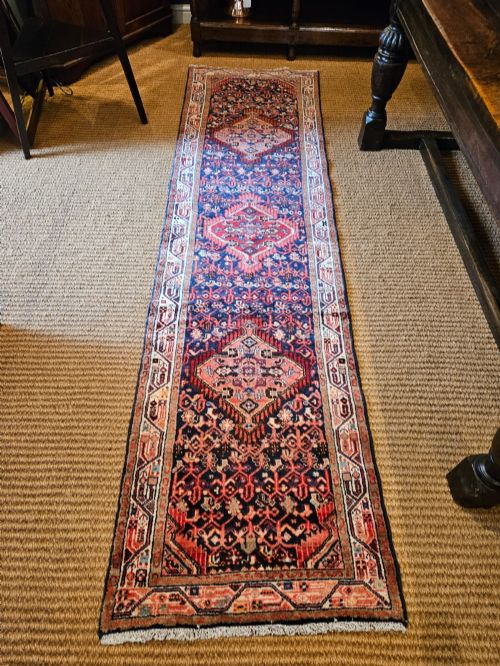
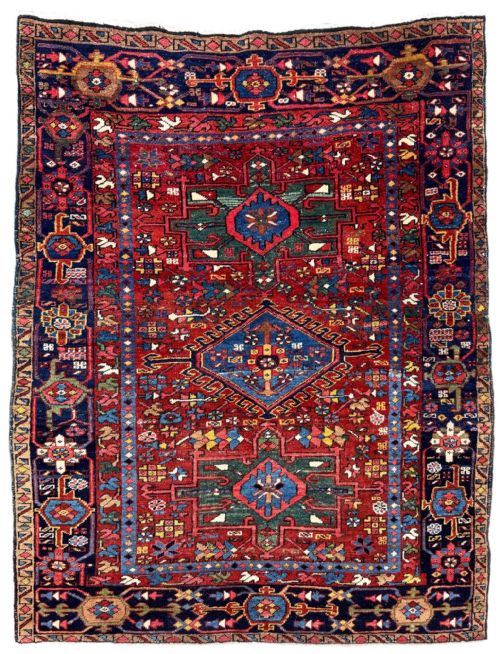
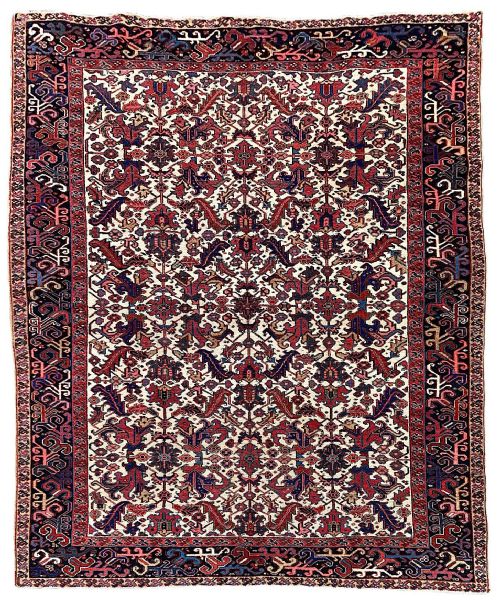
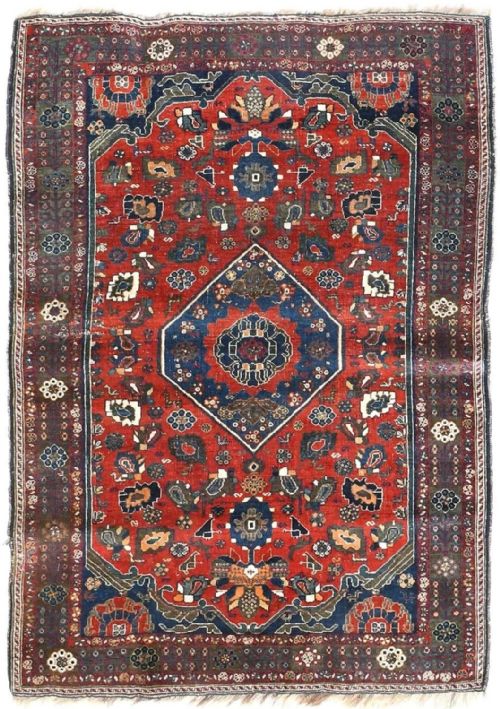


Navy Wool Heriz Rug
These navy wool heriz rug pieces are heavy Persian floor coverings valued for distinct geometric medallions and robust durability in busy rooms.
Navy Wool Heriz Rug
A navy wool heriz rug search brings up hand-knotted Persian carpets and runners originating from north-west Persia. The pieces listed now span several decades from the late nineteenth century through to the early twentieth century.
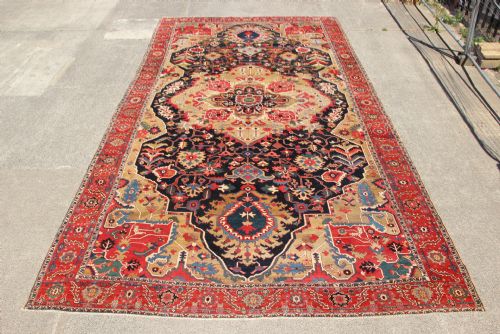
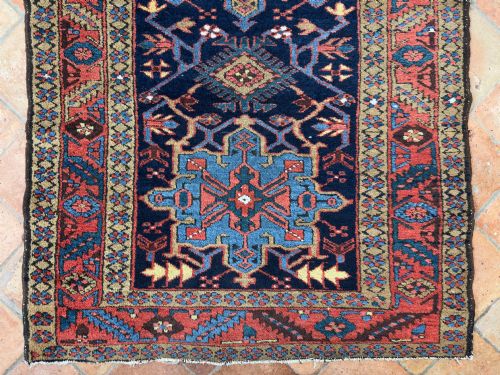
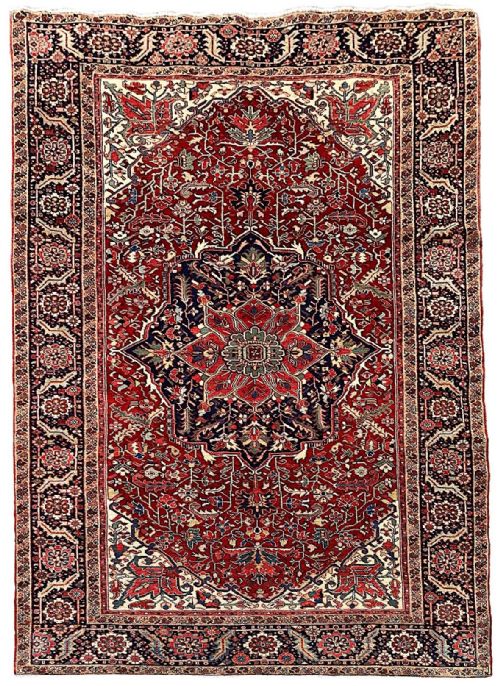
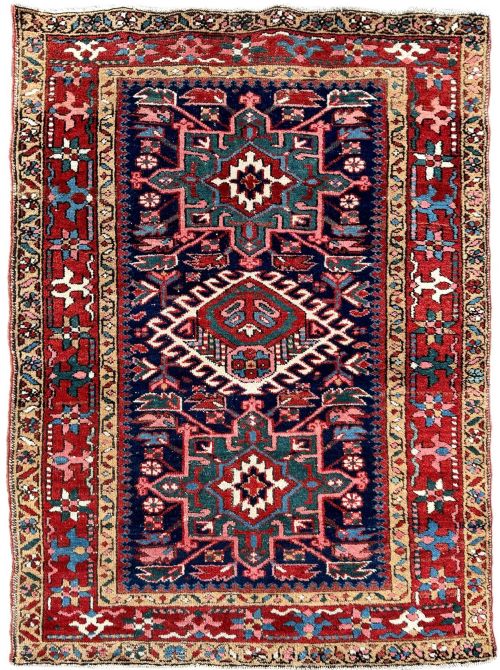
Buyers meet large room-size carpets alongside smaller scatter rugs and elongated runners. Alongside Heriz examples, the selection includes related regional weaves from Karaja, Karadja, Gorevan and Serapi.
Most entries display traditional Persian village designs rather than fine city patterns. These heavy textiles were woven to anchor substantial rooms and withstand generations of heavy foot traffic.
Materials and construction
Production relies entirely on natural wool pile knotted onto sturdy cotton foundations. This pairing provides the characteristic heavy handle and structural rigidity expected in Persian village carpets.
Weavers utilised hand-spun wool dyed with rich regional pigments to create dense pile surfaces. The foundation warps and wefts use cotton cords to keep large geometric carpets square and stable.
Many village weavers worked from memory, meaning left and right medallion corners rarely match.
Judging the quality
Quality rests on the crispness of the geometric drawing and the saturation of the indigo ground colour. Finer examples show precise knot density and well-balanced secondary borders that frame the central medallion.
Earlier nineteenth-century pieces often demonstrate superior wool quality and more luminous vegetable dyes than later examples. The scale of the design relative to the format dictates the visual balance of the piece.
The Navy Wool Heriz Rug Glossary
- Serapi
- A sub-category of Heriz carpet known for broader proportions and more open, relaxed geometric designs. These pieces often date to the nineteenth century.
- Karaja
- A village weave originating near Heriz, characterised by smaller formats and bold medallion or geometric formats. The palette typically includes deep indigos and terracotta.
- Runner
- A long, narrow carpet format designed specifically for hallways and corridors. These pieces follow the same geometric construction as larger floor carpets.
- Gorevan
- A trade term often applied to Heriz-adjacent carpets with slightly more geometric and open field patterns. They share the robust cotton and wool construction of standard Heriz weaves.
- Medallion
- The central ornamental motif dominating the field of the carpet. In these village rugs, it usually takes a bold geometric or angular octagonal form.
Navy Wool Heriz Rug: Frequently Asked Questions
How do I clean a wool rug?
Regular gentle vacuuming without a beater bar removes surface grit and dust. Professional specialist cleaning is necessary for deep washing to protect the natural wool pile and cotton foundation.
Avoid harsh chemical treatments or excessive water immersion at home. Proper drying prevents shrinkage and distortion of the heavy geometric field.
Where should I place a runner?
Runners suit narrow hallways, entryways and corridors where traditional room carpets are too wide. Their robust construction handles high foot traffic while adding warmth to transitional spaces.
Ensure you use a suitable underlay to prevent slipping on smooth wooden or tiled floors. This also protects the cotton foundation from uneven wear.
Are these rugs suitable for dining rooms?
Large room-size Persian carpets provide a stable, durable foundation underneath dining tables. The heavy wool pile resists crushing from chair legs and absorbs sound effectively.
Choose dimensions that allow chairs to remain on the rug when pulled out. Dark indigo grounds help conceal minor daily debris from dining.
How do I tell Serapi from Heriz?
Serapi carpets typically display slightly coarser knotting, larger scale designs and a more open field than standard Heriz weaves. They often date to the nineteenth century and feature softer, highly prized dye patination.
Heriz pieces generally present denser geometric ornamentation and more rigid rectilinear borders. Both share the same fundamental wool-on-cotton village construction.