
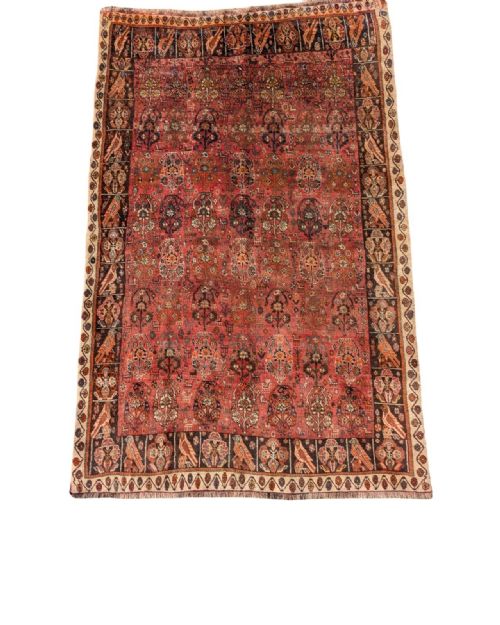
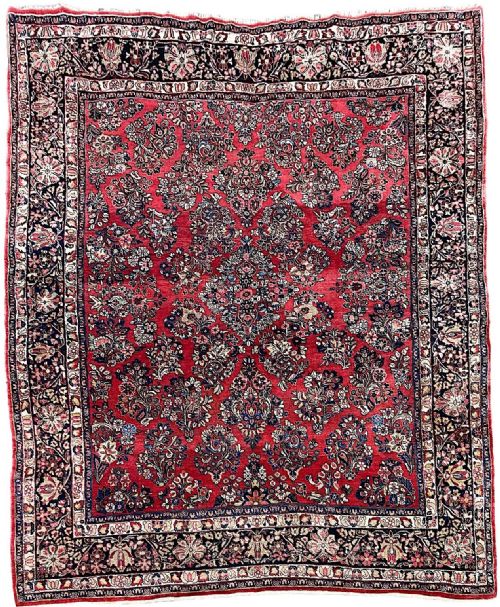


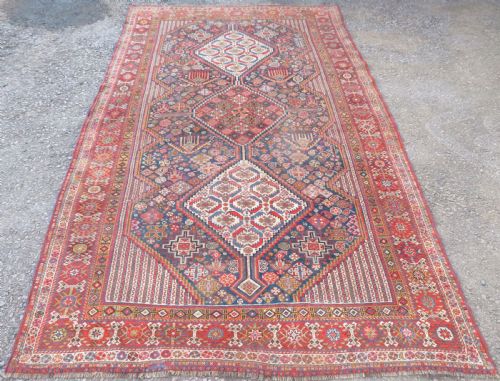


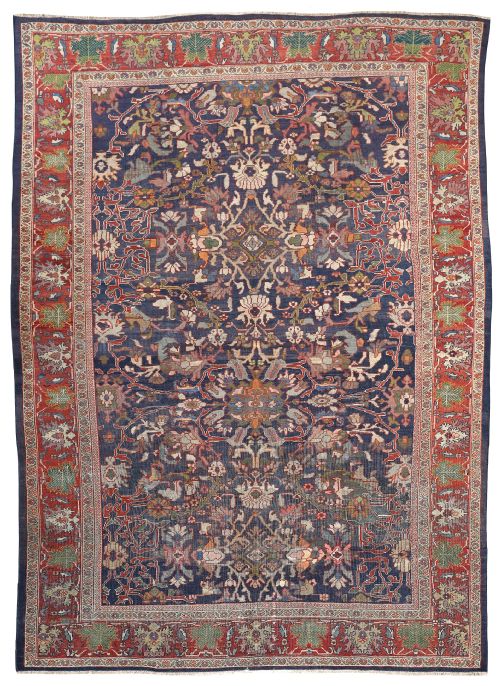
Navy Border Rug
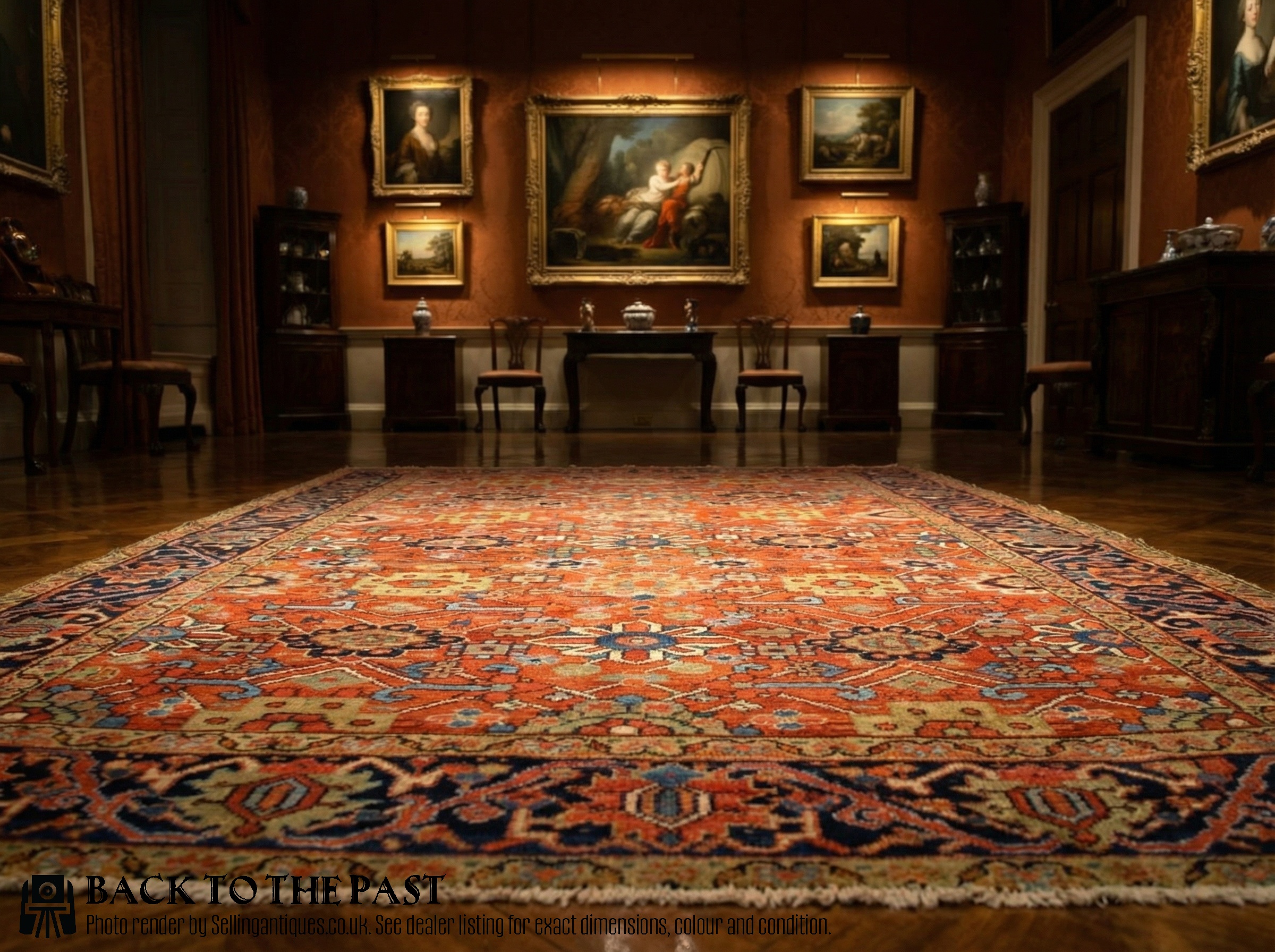
A navy border rug anchors a room with a defined edge and grounds traditional Persian and Caucasian motifs in deep indigo tones.
Navy Border Rug
A navy border rug brings together room-size carpets, runners, and smaller formats originating from Persian and Caucasian workshops across the nineteenth and early twentieth centuries. These pieces display distinct framing bands in dark blue that contrast with terracotta, madder, or neutral fields.
The selections span traditional village and tribal structures including Heriz, Serapi, Kashgai, and Shirvan weaves. Buyers encounter formats ranging from square room-size carpets down to long narrow runners suited for hallways.
Materials and construction
The pieces rely on wool, hand-spun wool, and cotton foundations formed into knotted pile or flatweave structures. Hand-spun fleece brings varied absorption for natural dye indigo and madder components.
Weavers constructed these floor coverings on vertical looms, tying symmetrical or asymmetrical knots by hand. Cotton warps and wefts frequently support dense wool piles across room-size formats.
Listings incorporate Persian and Caucasian regional styles including Heriz, Serapi, Shirvan, and Kashgai across the nineteenth and early twentieth centuries.
Variations in quality
Quality rests in the crispness of the border drawing and the depth of the indigo dye. Superior examples show precise handling of geometric or curvilinear motifs within the dark framing bands.
Pila density and handle dictate the tier of a piece. Tighter knotting and resilient hand-spun wool yield greater longevity under foot traffic.
The Navy Border Rug Glossary
- Border
- The outer decorative band framing the central field of a rug. It defines the visual boundary of the composition.
- Field
- The main central background enclosed by the borders. This area often contains medallions, boteh, or all-over repeat patterns.
- Runner
- A long, narrow carpet format designed for hallways and corridors. These pieces measure significantly longer than they are wide.
- Kilim
- A flatwoven carpet produced without a pile. These items use interlocking weft techniques to create crisp geometric patterns.
Navy Border Rug: Frequently Asked Questions
How do I clean an antique rug?
Professional specialist cleaning is essential for maintaining natural dyes and wool pile safely. Avoid harsh household detergents and excessive moisture.
Regular gentle vacuuming without a beater bar removes surface grit before it damages the foundation threads.
Are these carpets suitable for hallways?
Long runner formats function well in corridors and high-traffic circulation spaces. Their sturdy wool construction absorbs wear effectively.
Underlays help keep them stable on smooth wooden or stone floors.
How do I identify a Heriz weave?
Heriz carpets typically display bold geometric medallions and heavy, durable wool structures. Their border designs often incorporate distinct stylized rosettes and angular leaf motifs.
They originate from the Northwest region of Persia.
What period do these rugs come from?
The available inventory dates from the nineteenth and early twentieth centuries, spanning periods from the 1850s to the 1930s.
Each era reflects traditional village and regional weaving practices.