

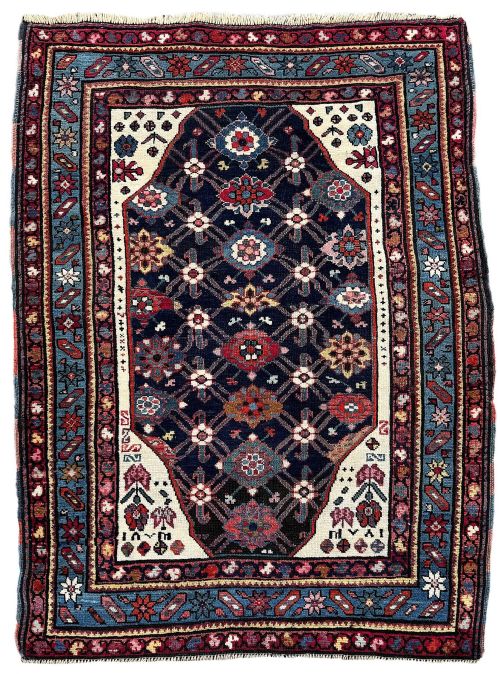
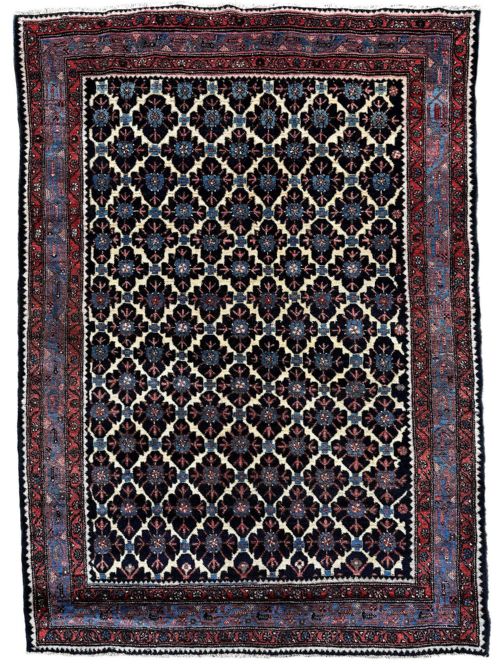


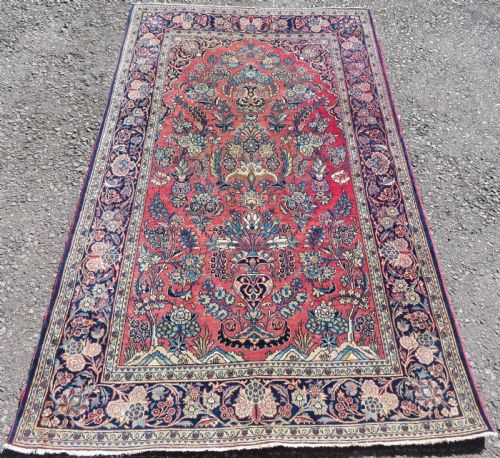

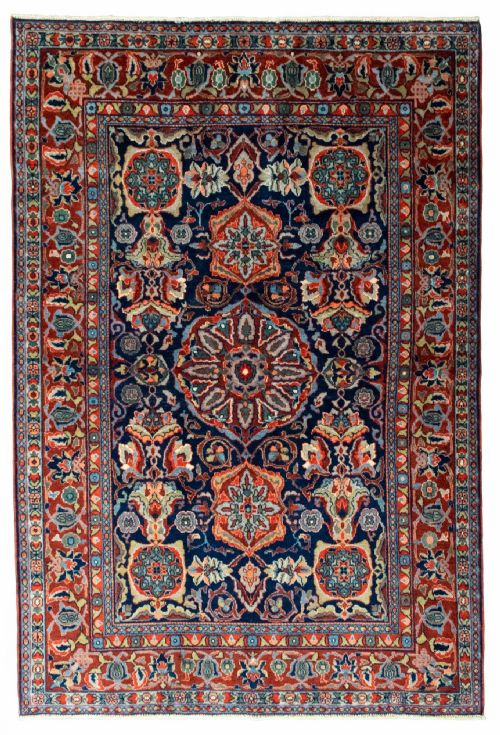


Navy Blue Floral Rug
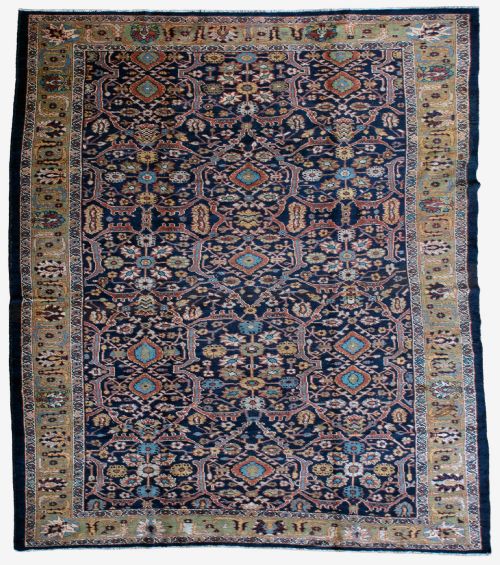
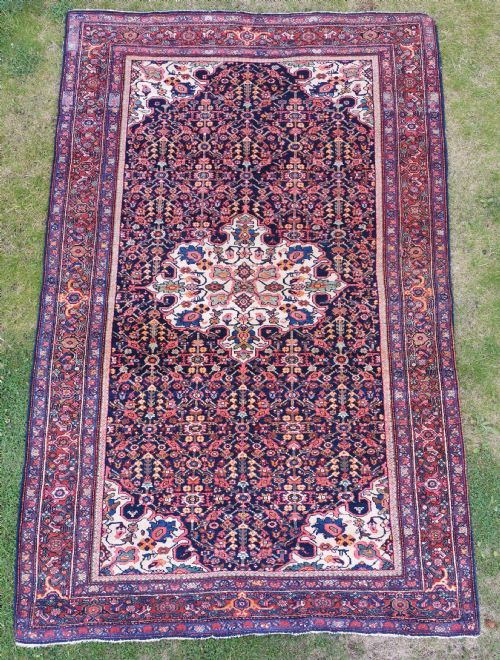
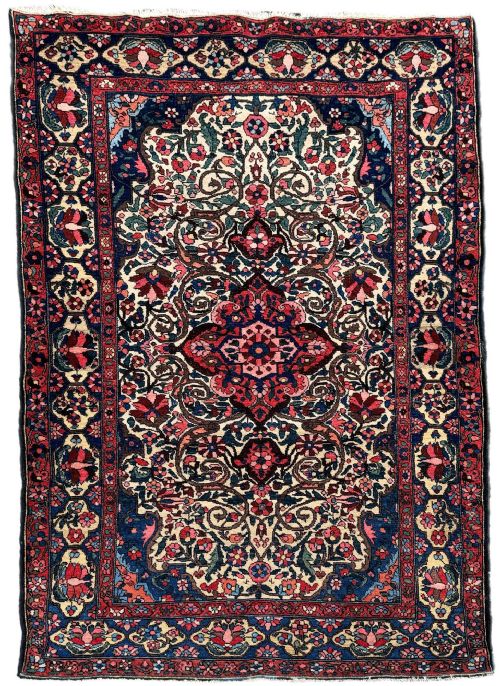
A navy blue floral rug brings deep indigo tones and botanical motifs into a room, offering durability through traditional Persian weaving traditions.
Navy Blue Floral Rug
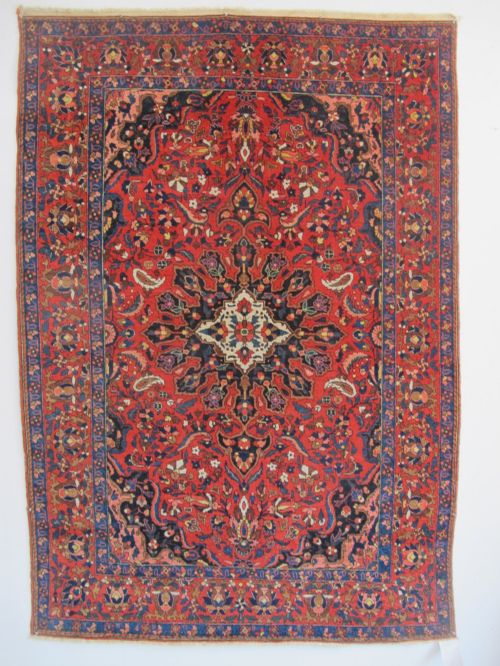
When you search for a navy blue floral rug, you encounter hand-knotted room-size carpets, area rugs, and narrow runners originating from Persian weaving centres and Caucasian regions. The inventory spans periods from the mid-nineteenth century through the early twentieth century, showing regional styles such as Bakhtiar, Kirman, Sarouk, and Mahal. These floor coverings combine dark blue fields with intricate botanical and floral designs.
The versions met most frequently on this page include room-sized carpets and smaller scatter rugs dating around 1900 to 1920. Pieces from towns and villages like Malayer, Hamadan, and Tabriz dominate the selection, each carrying distinct patterns rooted in local weaving traditions.
How they were made
Weavers constructed these pieces using natural materials, predominantly wool for the pile and foundation, supplemented by cotton and occasionally silk. Wool provided resilience for high-traffic areas, while cotton served for strong warp and weft threads.
Dyers utilised natural dyes to achieve deep indigo and navy blue shades alongside botanical hues for the floral motifs. Artisans tied individual knots by hand onto vertical looms, securing the rows with sturdy wool or cotton foundations.
Some runners measure over four metres long, designed centuries ago for grand corridors where footsteps followed endless rows of hand-knotted flowers.
What varies in quality
Knot density and the precision of the floral design separate finer examples from simpler village work. Tighter knot counts allow for sharper botanical outlines and more intricate medallion or all-over patterns.
The handling of the wool fleece and the depth of the natural navy blue dye also distinguish the work. Superior pieces retain supple foundations and rich, uniform saturation across the field.
The Navy Blue Floral Rug Glossary
- Kelleh
- A long, rectangular format of carpet, typically narrower than standard room sizes. These runners and extended pieces suited specific hallway or gallery layouts.
- Warp
- The vertical threads stretched on the loom that form the structural foundation of the rug. Weavers tie the pile knots around these parallel strands.
- Weft
- The horizontal threads passed back and forth across the warp after each row of knots to compact the weave. This technique secures the pile in place.
- Pile
- The vertical yarn surface of the rug formed by the cut ends of knots. Wool, cotton, and silk comprise this visible and tactile layer.
Navy Blue Floral Rug: Frequently Asked Questions
Where were these rugs made?
The pieces originate primarily from Persia, including regions such as Kurdistan, Ferahan, and the Chahar Mahal district, alongside Caucasian workshops.
Specific towns like Tabriz, Kashan, and Sarouk contributed distinct weaving patterns and palette preferences to the tradition.
How do I clean an antique rug?
Gentle surface vacuuming without a beater bar removes loose dirt from the wool pile without stressing the foundation threads.
Professional textile conservators should handle wet cleaning to protect natural dyes and fragile cotton or wool foundations.
Can I place these rugs in heavy traffic areas?
Many examples utilise durable wool pile and sturdy cotton foundations suited for everyday domestic use in moderate traffic zones.
Placing a breathable pad underneath reduces friction against hard flooring and prevents slipping.
How are different regional styles identified?
Examinations of border motifs, medallion structures, and palette combinations reveal the specific village or city workshop.
Regional signatures often appear in the knotting density and the particular blend of floral and geometric elements.