
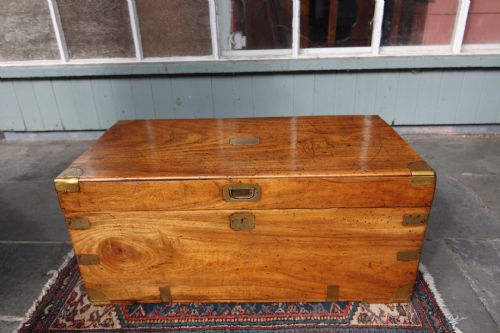
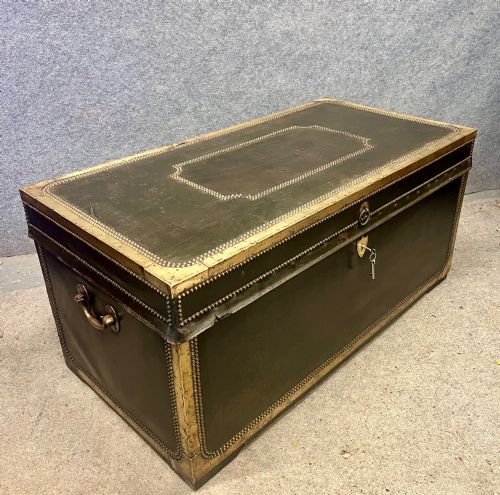
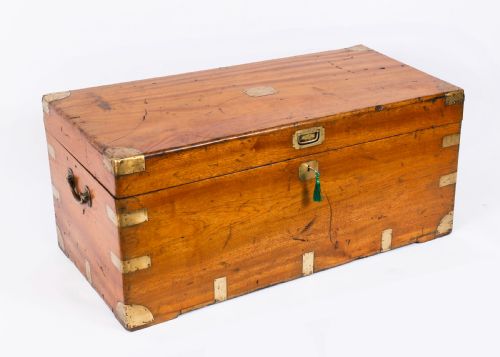

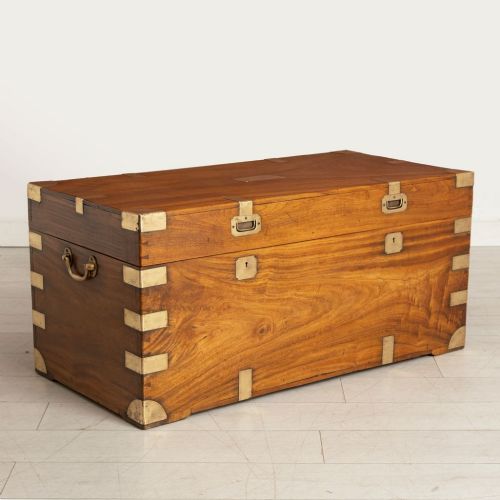




Naval Officers Chest
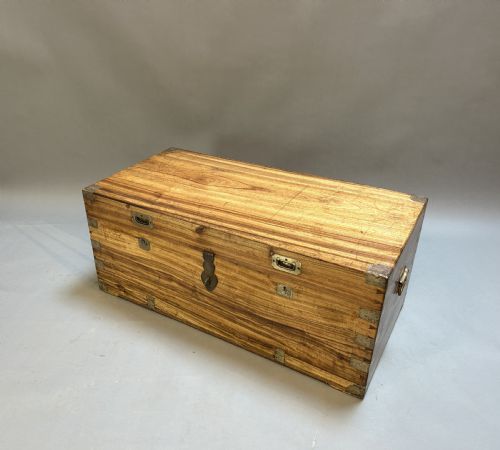
Naval officers chest forms a sturdy type of military storage designed for life at sea and travel.
Naval Officers Chest
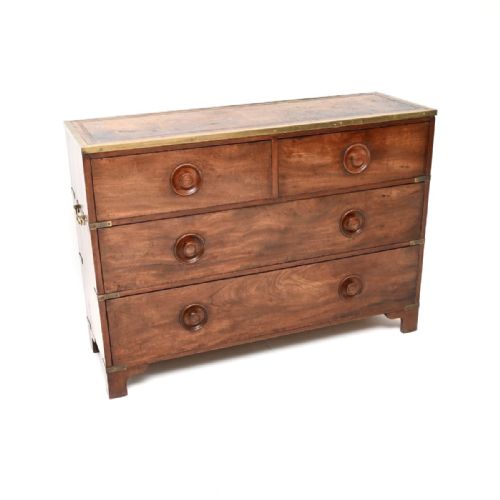
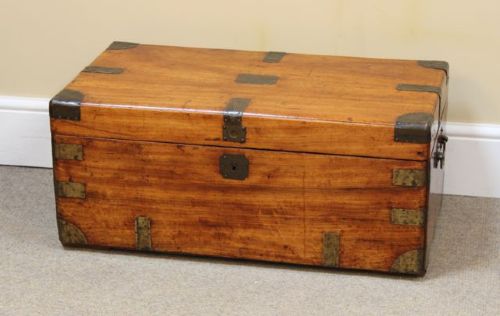
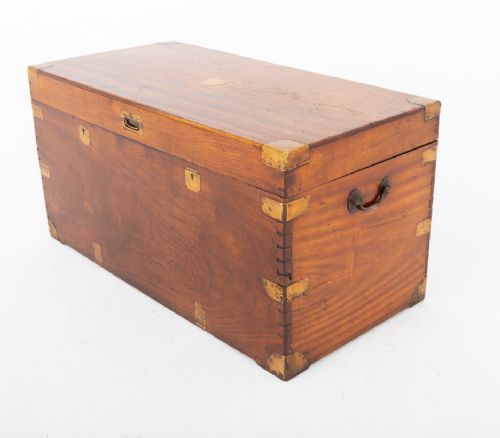
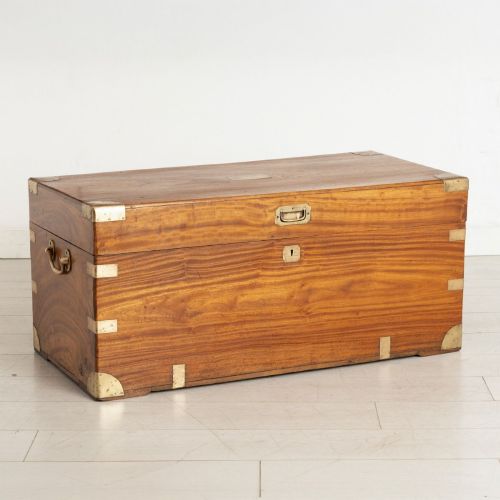
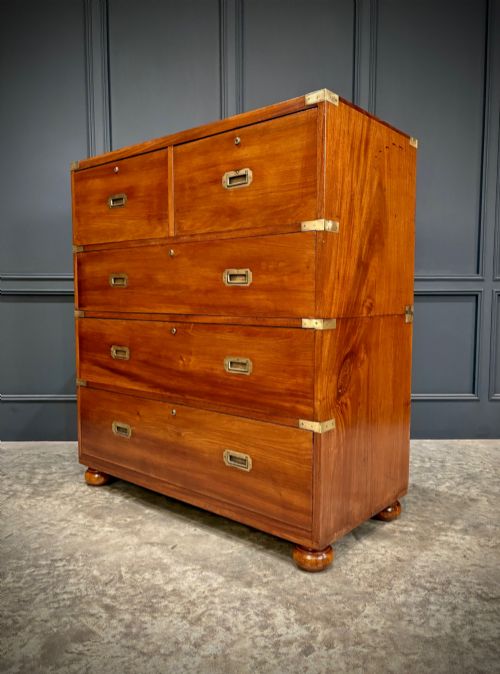
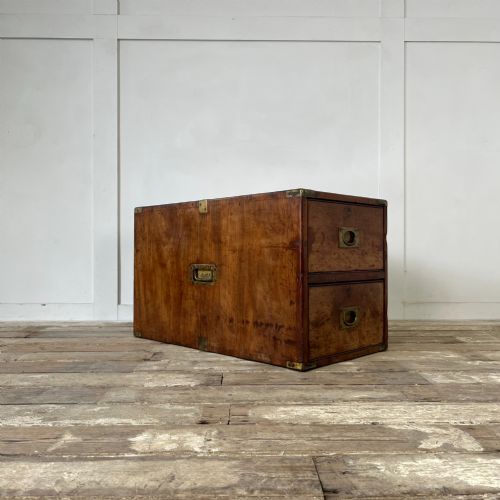
Naval officers chest items span the nineteenth century, including Victorian periods, Regency eras, and Edwardian years. These pieces appear mostly as campaign chests of drawers, trunks, coffers, and secretaire variants built for practical relocation.
Most examples originate from British Colonial environments, China Trade routes, and domestic workshops. The form divides frequently into a two-part chest to ease transport through tight ship hatches and narrow quarters.
Materials and construction
Makers utilised durable timbers such as camphor wood, mahogany, teak, and occasional ebony to withstand maritime humidity and heavy travel. Camphor wood brought natural insect-resistant properties suited to storing uniforms and papers.
Brass corners, strapwork, flush handles, and iron reinforcements protected vulnerable edges from impact. These metal fittings allowed units to stack securely without catching during rough movement.
Listings feature camphor wood, mahogany, and teak across nineteenth century Victorian and Regency periods.
Quality factors
Fine examples feature tight joinery, dense timber grain, and heavy brass hardware countersunk flush into the wood. Inferior versions show simpler joints and lighter, stamped metal components.
Integrated secretaire drawers with fitted writing surfaces and secret compartments elevate a piece above standard storage trunks. The precision of the two-part dismantling mechanism distinguishes superior cabinet work.
Barker, Negretti and Zamba
The Naval Officers Chest Glossary
- Campaign chest
- A modular chest of drawers built in sections with recessed brass handles to facilitate military travel. These pieces separate into distinct stacked boxes.
- Secretaire chest
- A chest featuring a pull-out drawer with a fitted writing surface and small interior compartments. This drawer drops down to reveal pigeonholes and inkwell spaces.
- Camphor wood
- An aromatic timber traditionally used for campaign furniture because its scent deters moths. It exhibits a distinctive grain and pale golden tone.
- Brass bound
- Furniture edged and reinforced with brass strips and corner brackets. This reinforcement protected the timber from heavy knocks during transit.
Naval Officers Chest: Frequently Asked Questions
What is a naval officers chest?
A naval officers chest is a robust box or chest of drawers designed for sea travel and military campaigns. These units provided secure storage for uniforms, instruments, and personal documents aboard ships.
Built to endure harsh maritime conditions, they utilise durable woods and protective metal hardware. Their modular design allowed officers to pack and move their belongings efficiently.
Why are some chests in two parts?
Two-part construction allowed officers to transport heavy storage units through narrow ship doorways and hatches. Each section stacked securely upon the other for stability during voyages.
This modular design remains a defining characteristic of campaign furniture. It reduced the physical strain of moving bulky furniture across changing terrain.
How do I identify camphor wood?
Camphor wood is recognised by its distinct, aromatic scent and characteristic pale grain patterns. It resists insects naturally, making it ideal for storing woollen uniforms at sea.
Over time, the timber darkens slightly while retaining its smooth texture. It appears frequently in pieces associated with trade routes in the East.
Where were these chests used?
These chests travelled extensively on Royal Navy vessels and merchant ships across global trade routes. Officers kept them in cramped cabins during long voyages and subsequent land postings.
Their practical construction suited colonial outposts and temporary military quarters. They functioned as both transport trunks and permanent bedside storage.