


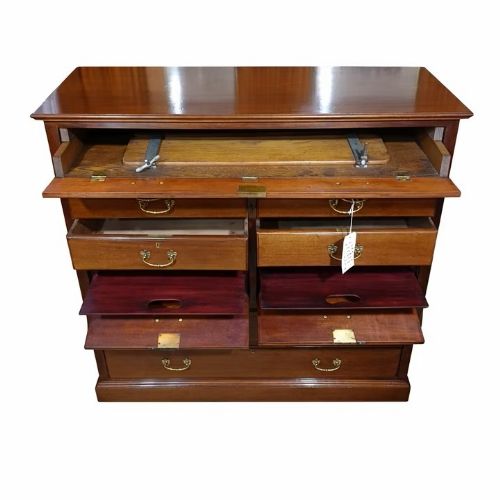


Nautical Storage Chest
These nautical storage chests are practical trunks and boxes from the Georgian, Victorian and Edwardian eras built for life at sea.
Nautical Storage Chest
When you search for a nautical storage chest, you look at trunks, sea chests and ship's chests originating from the Georgian period through to the nineteen-thirties. These pieces include maritime painted pine boxes, camphorwood trunks and fitted ship's chests of drawers.
The versions you meet most frequently on this page are camphorwood trunks and pine seaman's chests dating from the nineteenth century. They span utilitarian work-boxes, painted folk art trunks and brass-bound travel chests.
Forms range from small coal boxes with galleon designs to large tool chests and sloped sailors' chests. Each object served a specific function aboard ship or within maritime households.
How they were made
Maker construction relies heavily on durable timbers such as pine, pitch pine and camphorwood, chosen for their resilience against marine environments. Camphorwood offered the practical advantage of repelling insects during long voyages.
Metalwork played a crucial structural role, utilising brass binding, iron reinforcement and rope handles for secure lifting and transport. Paint finishes and ebonising provided further protection to the wood surfaces.
Nautical Storage Chest Retail Price Guide 2026
Typical asking prices for nautical storage chest among the pieces listed under this phrase on Sellingantiques today, from the lower quarter to the upper quarter. They describe what is for sale here now, not the wider market.
Object types vary from sea chests and camphorwood trunks to ship's chests of drawers and coal boxes.
What varies in quality
Quality reveals itself in the selection of timbers and the precision of the joinery, distinguishing utilitarian work-trunks from fine camphorwood sea chests. Superior pieces often feature meticulous brass binding and original painted decoration rather than plain surfaces.
The integrity of the construction and the presence of original hardware, such as rope beckets and brass locks, separate standard storage boxes from exceptional maritime pieces.
The Nautical Storage Chest Glossary
- Camphorwood
- An aromatic timber native to Asia, prized in nineteenth-century sea chests for its insect-repelling qualities and resistance to humidity.
- Pitch pine
- A resinous softwood utilised for heavy-duty shipboard joinery and robust storage chests.
- Seaman's chest
- A personal trunk built to accommodate a sailor's belongings during extended voyages.
- Ebonised
- Wood finished with a dark stain or polish to imitate the appearance of ebony.
- Beckot
- A braided rope handle fitted to the sides of a sea chest for lifting.
Nautical Storage Chest: Frequently Asked Questions
What are nautical storage chests?
These pieces are maritime trunks, sea chests and storage boxes constructed from wood like pine and camphorwood for use on ships.
They range from simple seaman's chests to brass-bound travel trunks and painted boxes dating from the Georgian era to the nineteen-thirties.
How were nautical chests used?
Sailors and officers utilised these chests to store personal clothing, navigational instruments and tools during long voyages at sea.
Their robust construction allowed them to withstand damp conditions and heavy movement aboard vessels.
How do I date a sea chest?
Dating relies on examining the timber types, construction methods, and hardware styles characteristic of periods like the Georgian, Victorian or Edwardian eras.
Painted inscriptions, original brass bindings and specific wood choices often provide clear clues to the age of the piece.
How do I live with a sea chest?
These chests function well as coffee tables or blanket boxes in living spaces while providing practical enclosed storage.
Their durable construction makes them resilient for daily household use.