
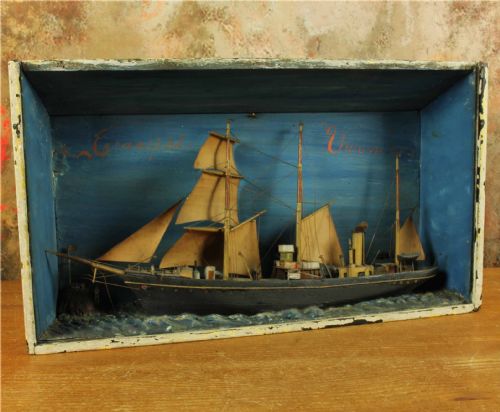


Nautical Folk Art Display
A nautical folk art display captures the enduring romance of the sea through the inventive hands of makers working in wood, glass, and canvas.
Nautical Folk Art Display
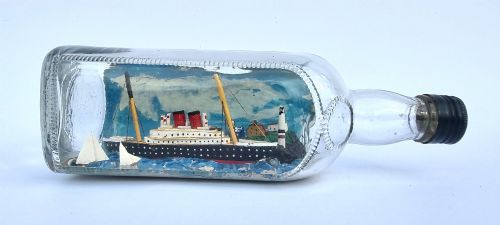
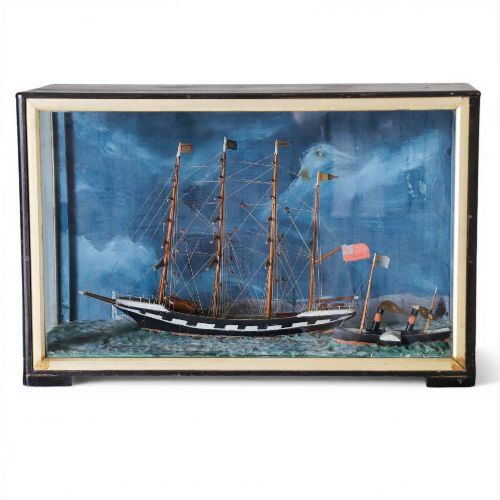
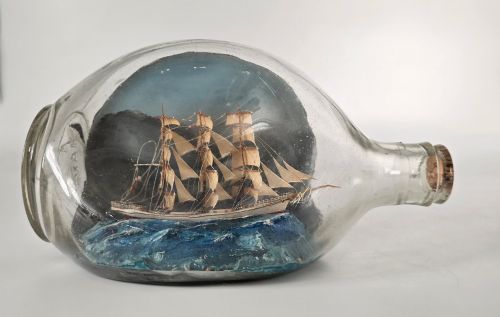
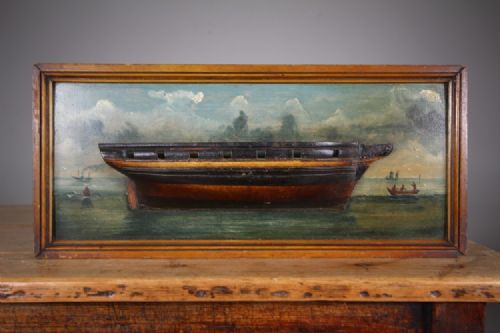
A nautical folk art display encompasses shadow box dioramas, ship models, and vessels encased in glass bottles. These pieces represent maritime history through the creative vision of makers who worked outside the formal academies of art.
The nineteenth century provides the majority of these examples, ranging from Cornish and Welsh pieces to French handmade boat models. Shadow box dioramas and cased vessel arrangements form the core of what collectors encounter.
Makers utilised humble materials like cork, thread, and plaster alongside carved wood and painted canvas to build convincing ocean scenes. Each display captures specific vessels, such as the named sailing ship Glynllifon or racing vessels at sea.
Construction and materials
Makers constructed the primary hulls and miniature rigging from carved wood, often adding painted canvas and paper to create textured waves and distant skies. Straw work and shell applications frequently decorated the interior framework of nineteenth century and early twentieth century examples.
Glass preservation played a crucial role, whether through fitted shadow boxes or narrow bottle necks that required collapsible masts and careful thread manipulation. Paint and plaster brought depth and realism to the enclosed seascapes.
A nineteenth century maker laboriously glued tiny pieces of straw to construct an entire ship diorama.
Factors of distinction
The complexity of the interior rigging and the depth of the perspective separate standard shadow boxes from exceptional dioramas. Scale and proportion within the confined space of a box or bottle demonstrate the maker's spatial skill.
Original paint surfaces and untouched protective cases preserve the historical integrity of the piece. Named vessels with identifiable maritime histories add a layer of documentary value to the physical craftsmanship.
The Nautical Folk Art Display Glossary
- Maritime diorama
- A three dimensional representation of ships at sea, typically enclosed in a glazed wooden box to protect delicate rigging. These scenes often depict named vessels or specific racing events.
- Ship in a bottle
- A miniature sailing vessel constructed so that its masts fold down to pass through a narrow bottle neck, then raised upright using attached threads. This technique showcases remarkable patience and dexterity.
- Shadow box diorama
- A deep picture frame designed to house layered objects and painted backgrounds, creating an illusion of true perspective. In maritime examples, this style protects detailed models of barques and sailing ships.
- Naive wood construction
- Working methods relying on basic hand tools and domestic materials rather than professional marine architecture standards. This approach defines the honest charm of folk art objects.
Nautical Folk Art Display: Frequently Asked Questions
How were ships placed inside bottles?
Makers constructed hulls small enough to pass through the neck of a glass bottle while engineering folding masts and rigging controlled by threads. Once inside, the builder pulled the strings to raise the sails into position.
Sealing the bottle preserved the delicate paper, wood, and thread components from dust and moisture. This method required immense patience and specialised miniature carpentry skills.
How do I care for a diorama?
Keep glazed shadow boxes and bottle displays away from direct sunlight to prevent the fading of painted canvas and fabric components. Stable room temperatures protect fragile wood, cork, and straw work from expansion and cracking.
Avoid opening sealed shadow boxes or cleaning painted interior surfaces with moisture. Gentle dusting of the exterior glass maintains clarity without risking internal damage.
How can I tell the period of a piece?
Dating relies on the style of the wooden framing, the type of glass used in the case, and construction methods of the miniature hulls. Nineteenth century examples often feature deep pine or mahogany shadow boxes with hand painted backdrops.
Early twentieth century pieces may incorporate shell work or distinct scratch built techniques. Inscriptions on the hulls or framing, such as named ships, frequently provide historical anchors.