


Nautical Folk Art Carving
Nautical folk art carving encompasses handmade maritime objects created by sailors and shore-bound makers, offering a tangible connection to nineteenth- and early twentieth-century seafaring life.
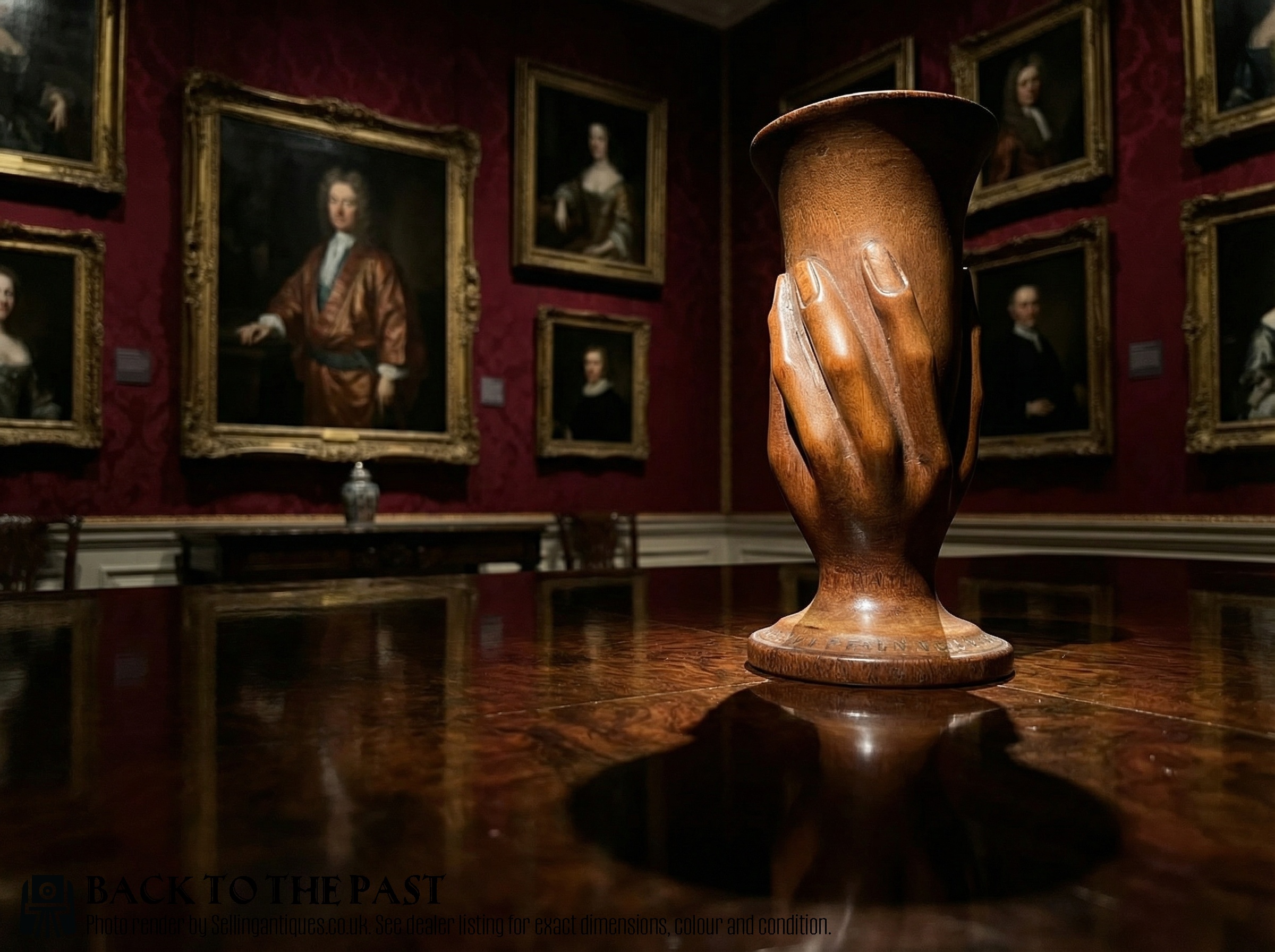
Nautical Folk Art Carving
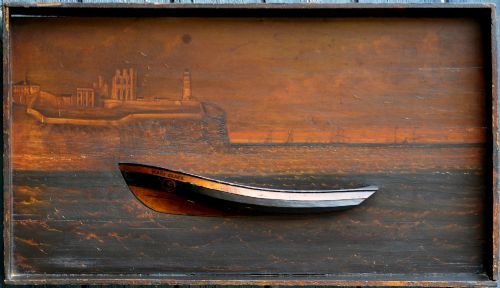
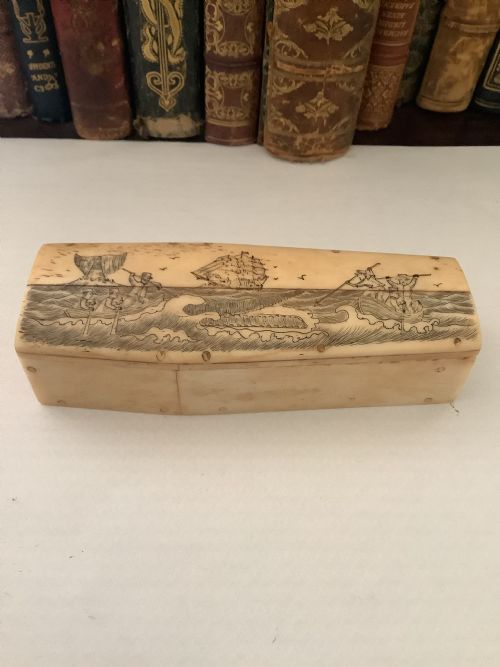
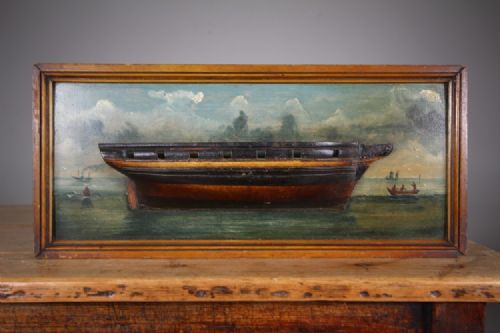
When searching for nautical folk art carving, you encounter a diverse range of maritime objects, from intricately detailed sailing ship dioramas and cased shadow boxes to carved whalebone walking sticks and wooden sailors fids. The nineteenth-century pieces dominate this selection, alongside early twentieth-century scratch-built models and Pacific Island folk art.
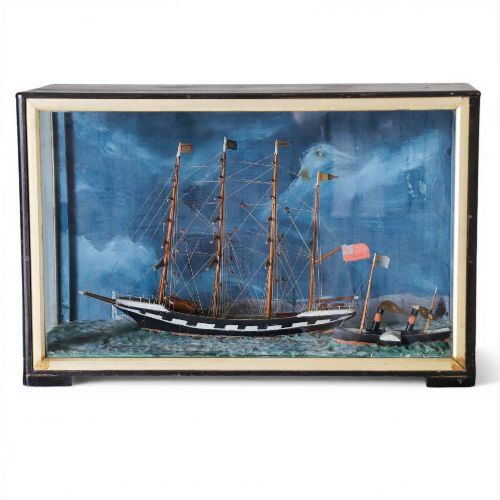
The most common forms on this page are framed marine dioramas depicting named vessels like the Glynllifon and the Queen Anne, as well as utilitarian objects transformed by carving such as rosewood and whalebone walking sticks. These pieces bridge the gap between practical seafaring tools and expressive decorative objects shaped by maritime experience.
Materials and construction
Carvers utilised readily available materials found at sea or in port, working primarily with wood, hardwood, bone, and whalebone. Many objects incorporate painted surfaces, glass panels to protect delicate dioramas, and threaded elements.
Techniques range from the scratch-built construction of multi-masted model ships housed inside glass bottles or wooden cases to the detailed scrimshaw and carving seen on walking sticks and functional tools like wooden fids.
Sailors occasionally spent long voyages coaxing multi-masted sailing ships into narrow glass bottles, leaving viewers to wonder how the rigging was ever tensioned.
Distinctions in craftsmanship
Quality in these carvings rests upon the precision of the maritime detail and the fidelity of the vessel rigging or animal form. Superior examples display a high degree of anatomical accuracy in fish or figures, and meticulous execution in miniature ship models.
The ambition of the composition also separates standard items from exceptional ones, such as multi-vessel racing scenes within cased dioramas versus simpler single-ship representations. The survival of original paint and untouched material surfaces further elevates the standing of a piece.
The Nautical Folk Art Carving Glossary
- Diorama
- A three-dimensional scene housed within a display case, frequently depicting sailing ships at sea with painted backdrops. These cases protect fragile rigging and paper or painted wave structures from damage.
- Fid
- A conical wooden or bone tool used by sailors to splice rope or open grommets. When carved as folk art, these utilitarian items often display decorative incised patterns or polished surfaces.
- Memento mori
- An artistic or symbolic reminder of the inevitability of death, occasionally found in bone carvings from this period. Such objects reflected the perilous nature of nineteenth-century seafaring.
- Scratched-built
- Describing a model constructed entirely from raw materials by hand rather than from a commercial kit. These pieces rely on the maker's direct observation and ingenuity.
- Whalebone
- Material derived from the baleen plates of whales, commonly utilised by nineteenth-century sailors for walking sticks and decorative items. Its workability allowed for intricate turning and carving.
Nautical Folk Art Carving: Frequently Asked Questions
What is a marine diorama?
A marine diorama is a cased three-dimensional model of a sailing ship, often set against a painted seascape backdrop. These pieces were constructed to commemorate specific vessels or maritime races.
Protective wooden and glass cases preserved the delicate rigging, painted waves, and miniature sails from dust and moisture over generations.
How were sailors fids used?
A fid served as a heavy wooden or bone pin employed by sailors to separate strands of rope during splicing. Their presence among decorative carvings reflects the transition of everyday shipboard tools into personal crafts.
Carved examples often show smoothed patination from handling aboard nineteenth-century vessels, distinguishing them from purely ornamental items.
Where did Pitcairn Island carvings originate?
Pitcairn Island carvings were produced by descendants of the Bounty mutineers and Polynesian islanders living in the South Pacific. These objects reached collectors through trading vessels passing through remote island waters.
Items such as flying fish and chalices showcase distinct regional woodworking traditions combined with nineteenth-century British decorative influences.
How do I date a model ship?
Dating a model ship involves examining the hull construction, rigging style, and materials used within the diorama or bottle. Nineteenth-century examples typically feature hand-stitched sails and specific vessel rigging configurations.
Accompanying documentation or painted names on the hull, such as nineteenth-century barques or steam barges, help narrow the period of creation.