


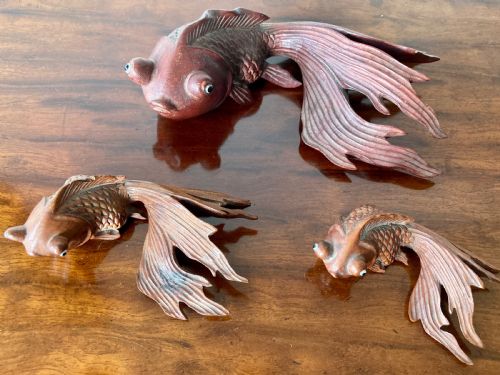


Brown Wooden Fish Carving
These brown wooden fish carving examples bring tactile aquatic charm indoors, prized by collectors for their sculptural presence and artisan craftsmanship.
Brown Wooden Fish Carving
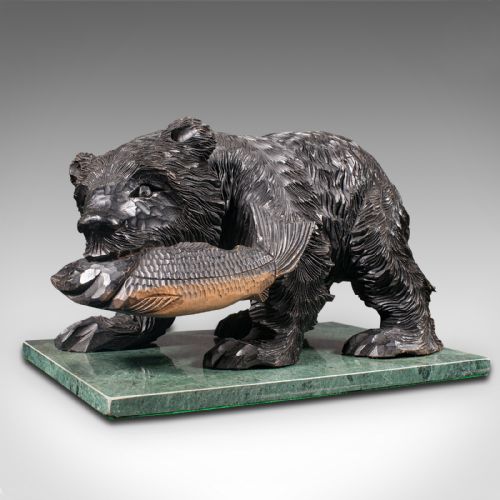
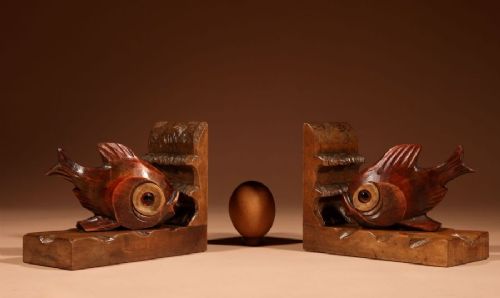
A brown wooden fish carving represents aquatic life rendered through traditional woodworking techniques, often taking the form of decorative sculptures, bookends, or figures. When exploring this selection, buyers encounter pieces originating from diverse traditions, including nineteenth-century European folk art and Asian export works.
The objects span multiple eras, notably the nineteenth century, the Edwardian period, and the early twentieth century. Common aquatic subjects include goldfish, koi, shubunkin, and flying fish, reflecting both Western interpretations like Black Forest carving and Eastern artisan styles.
How they were made
Makers shaped these items primarily from wood, utilising carved linden wood, pine, and various hardwoods to establish the initial aquatic form. Artisans applied hand-carving methods to define scales, fins, and naturalistic textures directly into the timber.
Details were often heightened through surface treatments such as dark stains to achieve the rich brown tones characteristic of the period. Some sculptural works incorporated mixed media elements, pairing carved timber components with brass, glass, or silver plate.
Pitcairn islanders carved flying fish from local wood to sell to passing nineteenth-century whalers and merchant ships.
What varies in quality
Quality rests upon the sculptural depth and the precision of the hand-carved details, distinguishing fluid, lifelike anatomy from stiff or generic execution. The sensitivity shown in rendering fins, gills, and scales dictates the overall artistic success of the piece.
The selection of the timber and the preservation of the original surface patination further separate standard examples from superior works. Finer items demonstrate a confident handling of form that brings vitality to the carved subject.
Tomochika
The Brown Wooden Fish Carving Glossary
- Black Forest
- A style of wood carving originating from the Swiss mountain region, known for realistic depictions of animals and natural subjects. Pieces from this tradition often utilise linden wood and display deep brown patination.
- Meiji Period
- A Japanese historical era lasting from 1868 to 1912, noted for intricate craftsmanship in wood and ivory. Works from this time frequently exhibit high technical mastery in rendering natural forms.
- Linden wood
- A pale, fine-grained timber favoured by carvers for its even texture and suitability for intricate detail. It accepts dark stains well, allowing makers to achieve rich brown finishes.
- Folk art
- Objects created by self-taught or traditional artisans outside academic traditions, focusing on utilitarian or decorative community items. These pieces prioritise expressive character over strict academic proportion.
Brown Wooden Fish Carving: Frequently Asked Questions
What are brown wooden fish carvings made from?
These pieces are constructed primarily from various woods, including linden wood, pine, and assorted hardwoods chosen for their carving qualities.
Craftsmen occasionally integrated secondary materials such as brass, silver plate, or glass to accent the primary wooden structure.
How do I date a wooden fish carving?
Dating relies on stylistic markers, the specific wood types utilised, and any documented provenance associated with the item.
Comparing the carving style to established regional traditions, such as nineteenth-century European or Japanese Meiji period work, helps narrow the production window.
Where were these fish carvings displayed originally?
Many objects served functional decorative roles as bookends, shop signs, or tabletop sculptures within period interiors.
Others were created as standalone decorative figures or part of larger natural history displays popular in the nineteenth and early twentieth centuries.
How do I care for antique wooden carvings?
Maintain stable indoor humidity levels and keep wooden carvings away from direct heat sources to prevent the timber from splitting.
Dust gently with a dry, soft cloth and avoid applying modern chemical polishes that can alter the historical patination.