


Late Victorian Wood Sculpture
Late victorian wood sculpture brings tactile warmth and ambitious carving into a room, spanning animal groups, architectural figures and functional stands.
Late Victorian Wood Sculpture
Late victorian wood sculpture encompasses figurative works, functional furnishings and architectural fragments originating from the nineteenth century, most frequently taking the form of Black Forest animal studies and carved pedestals. Pieces appearing here reflect a distinct late nineteenth-century appetite for naturalism, exotic regional craft and Revivalist motifs, stretching from European forests to Anglo-Indian workshops.
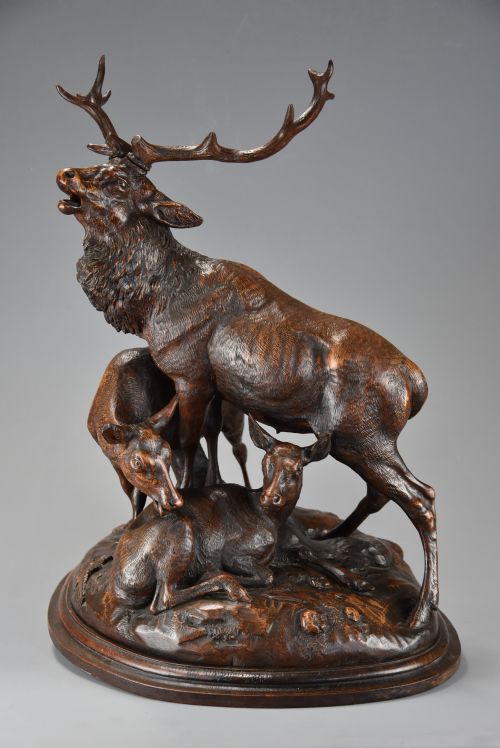
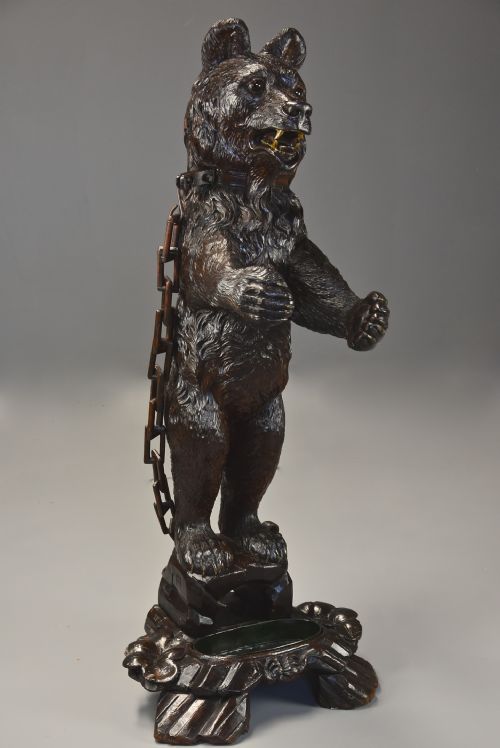
The selection on this page relies heavily on regional specialisms, ranging from linden wood ibexes, bears and deer groups to ebony elephants and root wood lamps. Buyers encounter both domestic display pieces like table lamps and large hall stands alongside architectural carvings and pedestals intended to anchor a room.
Makers and regional carvers of this era drew upon diverse stylistic traditions, including Renaissance Revival, Baroque Revival, Victorian Gothic and Pacific Island folk art. This variety ensures that whether the interest lies in Swiss animalier carving or Chinese root wood, the forms remain distinct to the period.
Materials and methods
Carvers of late victorian wood sculpture utilised a variety of timbers suited to intricate detailing, predominantly employing linden wood, birch, pine and exotic hardwoods such as ebony. Softer, lighter woods like linden allowed for the deep undercut foliage and realistic musculature seen in Black Forest animal groups, whilst denser timbers accommodated the precise lines of architectural carvings and study pieces.
Secondary materials occasionally supplement the woodwork, with brass, metal and bone appearing in structural elements, ornamentation or inlaid details. Surface finishing involved staining, gilding or retaining the natural grain of the carved root wood and hardwood, depending on the regional workshop and the intended decorative effect.
Assessing quality
The distinction between standard and exceptional pieces rests upon the ambition of the carving and the naturalism of the form. Works displaying deep undercutting, anatomical precision in animal figures and well-resolved proportions demonstrate a higher level of workshop competence than stiff or generalised renderings.
Proportion and scale also govern the hierarchy of these works, separating simple decorative items from substantial hall stands, large pedestals and architectural archangels. The integration of secondary materials like brass or bone and the preservation of the original wooden surface without excessive intervention further mark out the finer examples.
The Late Victorian Wood Sculpture Glossary
- Black Forest
- A style of wood carving originating from the Swiss and German mountain regions, characterised by naturalistic animals, particularly bears, deer and cattle, often rendered with great texture. These pieces frequently took the form of functional items like hall stands as well as standalone sculptures.
- Linden wood
- A pale, fine-grained timber favoured by nineteenth-century carvers for its even texture and lack of prominent grain, which permitted extremely sharp and deep undercutting. It remains the primary medium for much European animalier sculpture.
- Root wood
- Timber sourced from the root system of a tree, displaying irregular, knotted and twisting natural growths that carvers shaped into lamps and decorative objects. The grain patterns dictate the final silhouette of the piece.
- Revival
- An artistic movement that revived historical architectural and decorative styles, such as Renaissance, Baroque and Gothic forms. Pieces in this idiom adapt earlier motifs to late nineteenth-century tastes.
- Anglo-Indian
- A descriptive term for nineteenth-century decorative arts produced in India under British colonial influence, frequently utilising dense exotic timbers like ebony for animal studies and figures.
Late Victorian Wood Sculpture: Frequently Asked Questions
What defines Black Forest carvings?
Black Forest carvings are nineteenth-century wooden sculptures originating from Central Europe, famous for highly realistic depictions of forest fauna such as bears, deer and ibexes. They often combine decorative sculpture with practical function, appearing as hall stands, umbrella holders and table ornaments.
These works rely on linden wood and skilled hand-tooling to capture fur, musculature and foliage with striking realism. Their popularity during the late victorian period established a distinct collecting category defined by woodland motifs.
Where should I place a wooden sculpture?
These sculptures suit spaces with stable humidity and moderate temperatures, away from direct sunlight or intense heat sources that might dry out nineteenth-century timber. Larger pieces like hall stands and pedestals naturally anchor entrance halls or principal reception rooms.
Smaller animal groups, figures and lamps work well on side tables, desks or dedicated display cabinets where their carved detail can be closely appreciated. Allowing adequate clearance around larger items ensures the proportions of the room complement the work.
How do I identify the wood type?
Identifying the timber involves examining grain patterns, weight and colouration relative to common nineteenth-century workshop practices. Linden wood appears pale and uniform with minimal grain, making it ideal for detailed animalier work, whilst ebony provides a heavy, dense, dark finish characteristic of Anglo-Indian study pieces.
Root wood displays twisted, organic growth rings unique to each piece, and birch often receives a dark stain to imitate costlier timbers. Consulting the specific textural characteristics helps distinguish European softwoods from imported exotic hardwoods.