

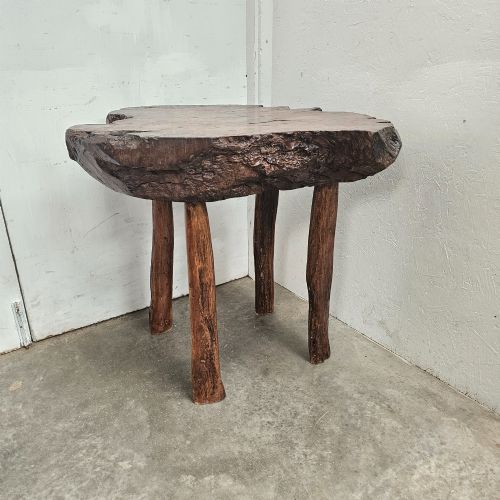


Natural Wood Occasional Table
These natural wood occasional table pieces bring rustic texture and raw grain into a room, offering practical surface space with distinct character.
Natural Wood Occasional Table
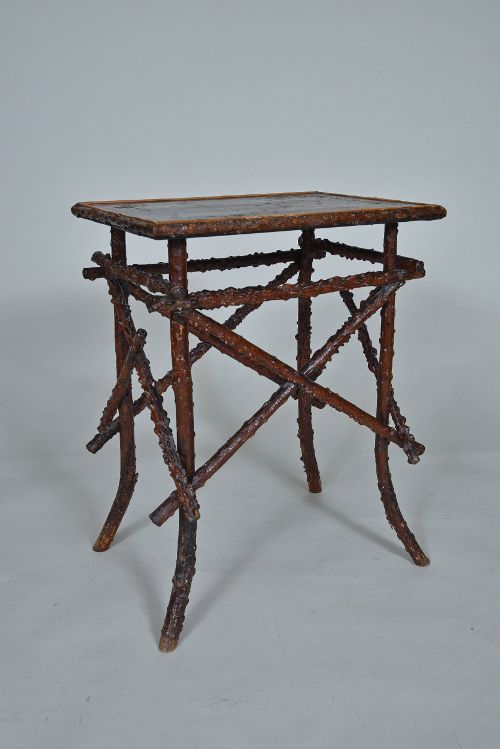
A natural wood occasional table provides a compact surface that serves beside a chair or in a hallway while displaying unvarnished grain, roots, and branches. These pieces span the nineteenth century through the nineteen-thirties, crossing English, Welsh, Swedish, Catalan, and Chinese traditions.
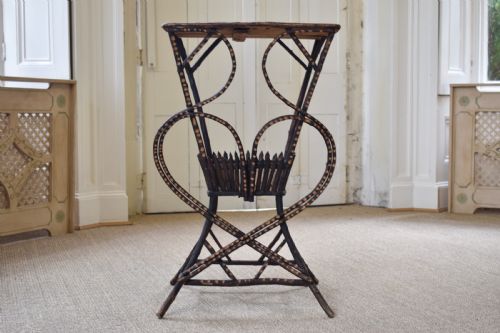
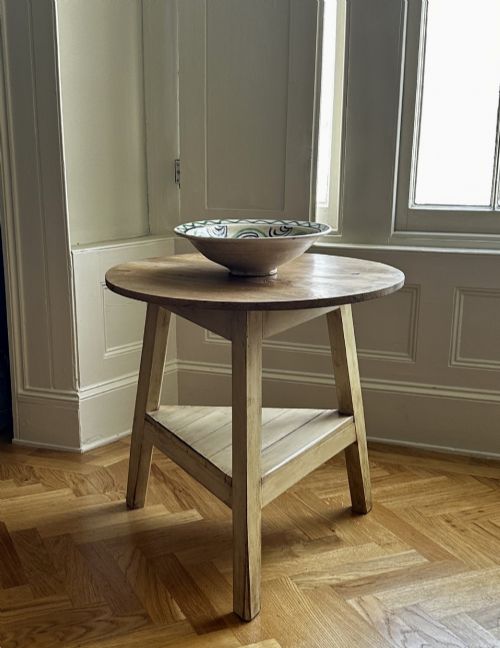
The versions most commonly found here include cricket tables in elm, primitive rootwood stands, and twig or branch constructions. They draw on folk art, industrial, and rustic vernacular styles rather than formal court aesthetics.
Makers utilised local timbers such as pine, elm, burr thuya, and iron combinations to create utilitarian furniture that doubles as sculptural objects. Each item relies on the natural irregularities of timber to set its form.
What varies in quality
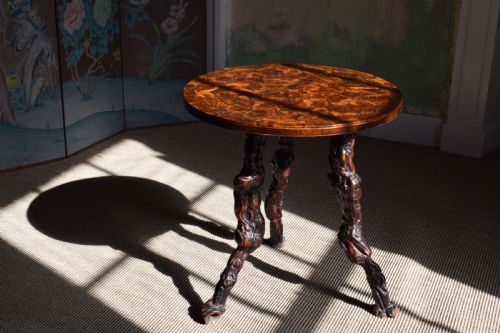
The distinction between ordinary and exceptional examples rests upon the sculptural ambition of the timber and the integrity of the joinery. Tables formed from unusual materials like burr thuya or intricate rootwood demand greater skill from the maker than standard turned legs on simple pine tops.
Condition and originality dictate value among these pieces, particularly where bark, twigs, or scraped historical paint surfaces survive intact. Pieces that integrate geological elements like quartz tops alongside organic wood demonstrate a higher tier of craftsmanship.
Natural Wood Occasional Table Retail Price Guide 2026
Typical asking prices for natural wood occasional table among the pieces listed under this phrase on Sellingantiques today, from the lower quarter to the upper quarter. They describe what is for sale here now, not the wider market.
Current listings span the nineteenth century up to the nineteen-thirties, featuring materials like elm, pine, thuya wood, and iron.
The Natural Wood Occasional Table Glossary
- Cricket table
- A small three-legged round table originating in vernacular English and Welsh interiors. The tripod base provides stability on uneven stone floors.
- Burr wood
- A growth on a tree where the grain has curled upon itself, producing complex patterns when sliced. It was favoured for decorative small tables and boxes.
- Rootwood
- Timber harvested from the underground stump and root system of a tree. Artisans followed its twisted contours to form sculptural stands and furniture bases.
- Scraped pine
- Softwood furniture stripped down to reveal early layers of paint or the raw timber beneath. This finish highlights the age and texture of the wood.
- Folk art
- Objects created by self-trained makers within a traditional community context. These pieces prioritise utility and individual expression over academic design rules.
Natural Wood Occasional Table: Frequently Asked Questions
How do I date a rustic table?
Dating relies on observing construction marks, tool use, timber selection, and stylistic cues such as nineteenth-century folk art traits or nineteen-thirtyish industrial pairings.
Examining the underside and joints often reveals whether the piece belongs to nineteenth-century vernacular production or early twentieth-century revival styles.
Where were these tables made?
These tables originate from diverse regions including Britain, Sweden, China, Spain, and Brazil. Rural makers and regional workshops utilised the timber native to their local landscapes.
Geography dictates the material, ranging from Chinese elm and rootwood to European pine, birch twigs, and tropical burr thuya.
How do I live with a twig table?
Twig and rootwood tables function well as bedside stands, plant supports, or small accent pieces beside armchairs. Their organic forms provide contrast in modern or traditional interiors.
Care involves keeping them away from direct heat sources to prevent the natural timber and bark from drying out or splitting.