
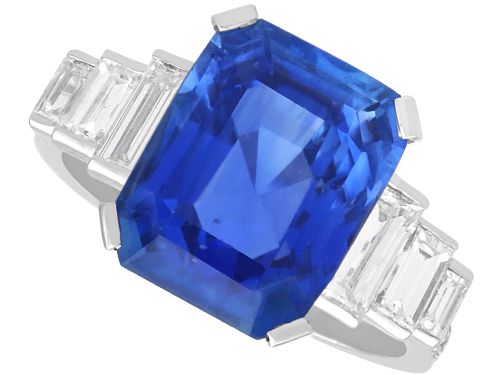
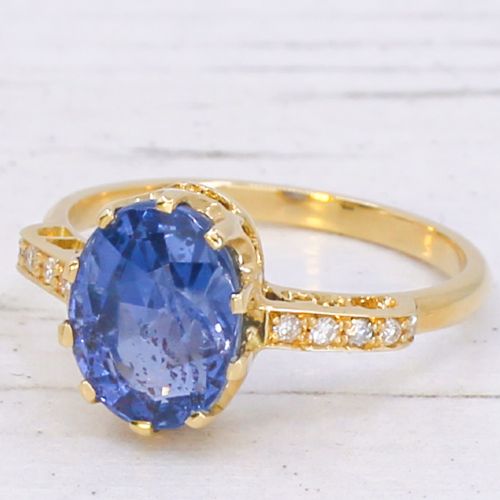


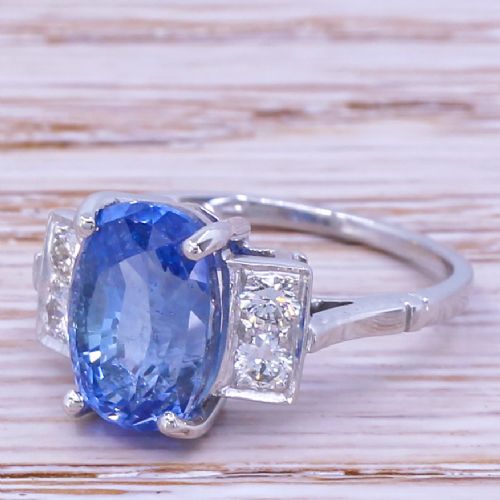


Natural Ceylon Sapphire Ring
When choosing a natural ceylon sapphire ring, collectors examine vibrant corundum gems set within platinum and gold mounts spanning Edwardian to mid-century periods.
Natural Ceylon Sapphire Ring
A natural ceylon sapphire ring brings together unheated gemstones originating from Sri Lanka, mounted in rings and cocktail rings dating from the late Victorian period through to the mid-century era. Buyers meet a variety of forms on this page, ranging from delicate solitaire settings to elaborate cluster and trilogy configurations.
Art Deco and mid-century designs dominate the selections, alongside Edwardian and late Victorian examples. These pieces frequently pair the central blue sapphire with diamonds, utilising platinum and yellow gold to frame stones that vary from modest carat weights to substantial statements over ten carats.
Materials and Techniques
Craftsmen built these settings using platinum and yellow gold, often combining metals in Edwardian and Art Deco mounts to support heavy gemstones securely. Diamonds are integrated as side stones or cluster borders, cut in old European, rose, or modern facets depending on the period.
The sapphires themselves are secured in claw or bezel settings, showing various cuts including cushion, cabochon, and star formations. Many stones retain their unheated natural state, displaying characteristic inclusions and rich saturation without artificial enhancement.
Some mid-century cocktail rings pack over fifteen carats of yellow sapphire, ensuring your hand doubles as a miniature sun.
Factors of Quality
Quality rests in the intensity, distribution, and natural state of the sapphire, where unheated stones possessing even saturation command attention. The clarity of the crystal and the absence of thermal treatment elevate a gem's standing among collectors.
Metalwork finesse and the integration of supporting diamonds also define the upper tier. Period-specific mounting techniques, structural integrity, and the harmonious proportion between the central sapphire and its surrounding melee diamonds determine overall distinction.
The Natural Ceylon Sapphire Ring Glossary
- Unheated
- A sapphire that has not undergone thermal enhancement to alter its colour or clarity. Such stones retain their natural geological properties.
- Cabochon
- A gemstone cut with a smooth, rounded, convex upper surface rather than faceted planes. This style highlights asterism in star sapphires.
- Trilogy ring
- A ring featuring three principal gemstones set in a row. These typically symbolise the past, present, and future.
- Cluster ring
- A design where a central gemstone is encircled by a border of smaller stones, frequently diamonds. This arrangement maximises visual brilliance.
Natural Ceylon Sapphire Ring: Frequently Asked Questions
How do I care for a ceylon sapphire ring?
Clean the ring using warm soapy water and a soft brush, avoiding harsh chemical ultrasonic cleaners. Platinum and gold settings benefit from periodic professional checks to ensure claws remain secure.
Store the piece separately from other jewellery to prevent harder gemstones from scratching the gold or platinum surfaces. Regular gentle maintenance preserves the lustre of both the metal and the sapphire.
What is a star sapphire ring?
A star sapphire displays an optical phenomenon called asterism, showing a six-rayed star pattern across its polished cabochon surface. This effect is caused by intersecting needle-like crystal inclusions within the corundum.
Such rings require cabochon cutting to properly display the moving light reflection. They appear across mid-century and earlier Edwardian periods.
How can I tell the period of the ring?
Dating relies upon metal choices, gemstone cuts, and distinct design markers characteristic of eras such as Art Deco or the mid-century period. Platinum usage alongside millegrain detailing points towards earlier twentieth-century workshops.
Examining the setting style and the cut of supporting diamonds clarifies the era of manufacture. Archival comparisons help anchor the approximate decade.
Are these sapphires treated?
Many listings specify unheated stones, meaning the sapphires emerged from the earth with their colour and clarity intact without human intervention. Certification or cataloguing details indicate whether a stone has undergone heat treatment.
Unheated gems display natural internal characteristics appreciated by purists and collectors. Documented origin adds historical context to the piece.