



Narrow Wooden Console Table
A narrow wooden console table brings practical surface area to a hallway or tight space without crowding the room.
Narrow Wooden Console Table
A narrow wooden console table serves as a slim surface designed to stand against a wall in hallways, living rooms, and corridors. These pieces accommodate lamps, bowls, and decorative items while occupying minimal floor space.
The selection includes examples from the nineteenth century, Victorian era, and Edwardian period, alongside styles ranging from French provincial and rustic farmhouse to neoclassical and Sheraton revival. Formats extend from dedicated console and hall tables to adapted side tables, trestles, and servers.
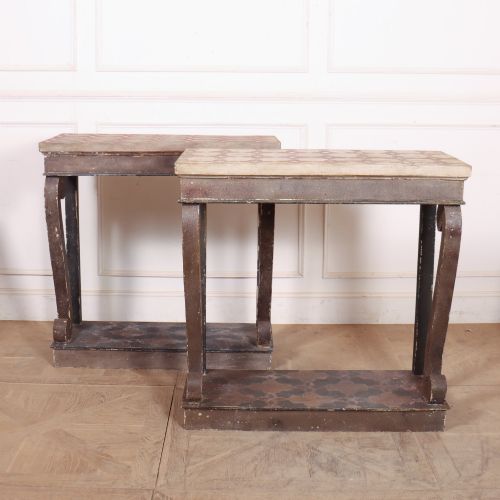
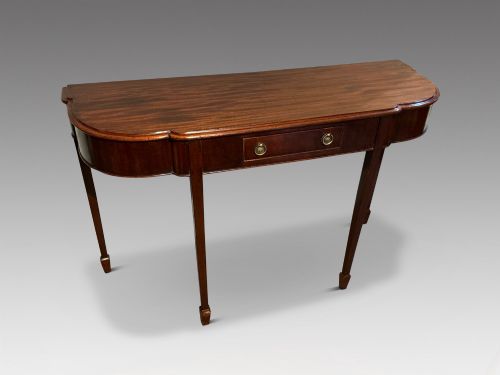
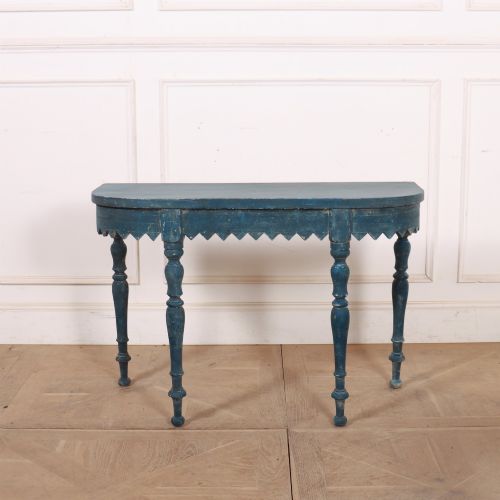
Mahogany and pine dominate the selection, appearing alongside oak, walnut, timber, and painted wood finishes. Buyers encounter pieces featuring bow ends, drop leaves, marble tops, and trestle bases.
How they were made
Cabinetmakers utilised solid timbers such as mahogany, oak, pine, walnut, elm, and poplar, often applying paint finishes or scrubbing the wood to create a lighter surface. Construction methods include traditional joinery suited to supporting narrow tabletops against walls.
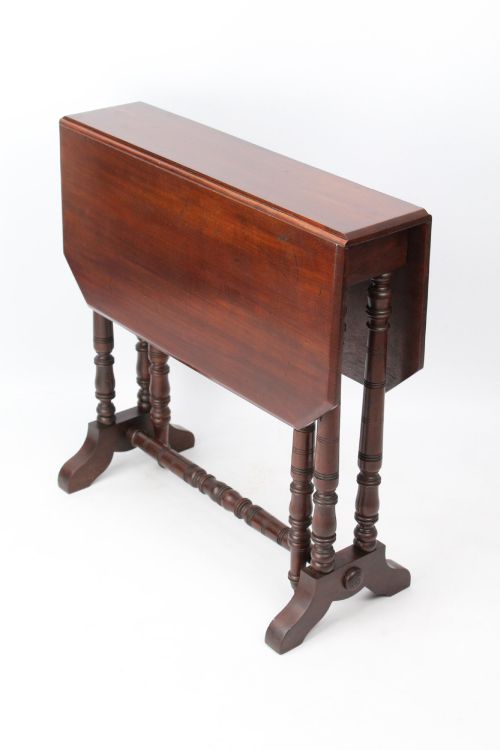
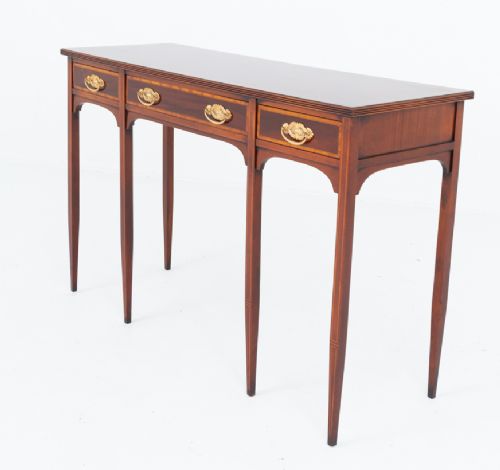
Decorative elements involve brass hardware, inlay work, and marble inserts fitted to tabletops. Structural designs incorporate gate legs, trestle supports, and dropleaf mechanisms to maximise utility in restricted spaces.
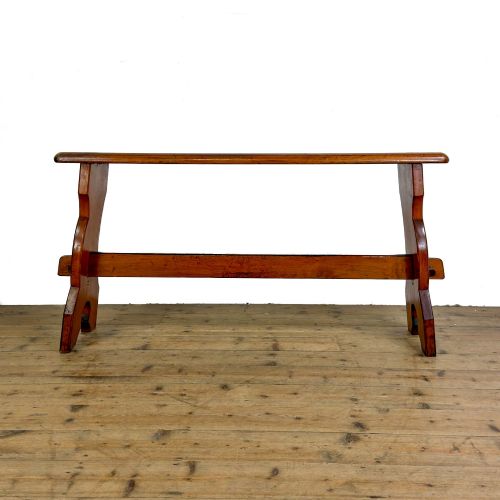
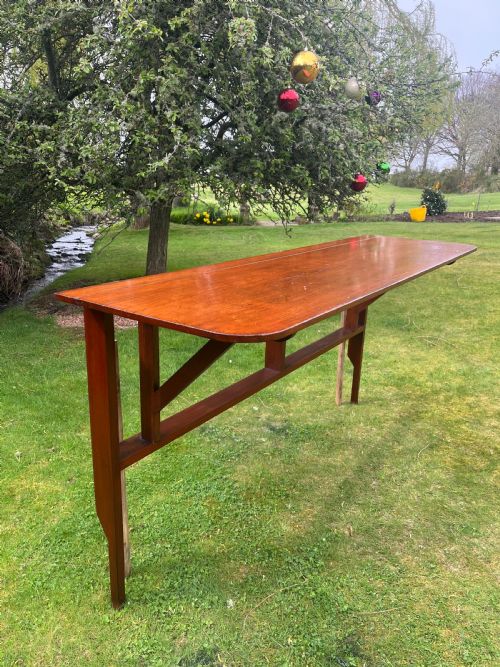
An organ bench from an old church found a second life as a slim hallway side table.
What varies in quality
The choice of timber and the precision of the joinery distinguish standard utilitarian pieces from finer cabinetwork. Mahogany and walnut examples from the Victorian and Edwardian periods often exhibit more refined proportions and deliberate detailing than utilitarian pine tables.
Surface treatments and original hardware preserve the integrity of a piece. Scrubbed finishes, intact painted surfaces, and well-fitted marble tops or brass fittings indicate careful preservation and superior initial manufacture.
The Narrow Wooden Console Table Glossary
- Console table
- A table designed to stand against a wall, typically supported by brackets or legs. These pieces provide a surface for display in narrower rooms.
- Sutherland table
- A narrow dropleaf table where the leaves fold down to a very slim profile. The design uses hinged flaps supported by pivoting legs.
- Trestle table
- A table consisting of two or more trestles supporting a horizontal top. This construction provides stability without bulky corner legs.
- Bow end
- A convex curving front edge to a table or cabinet. This shape softens the profile of a narrow piece in a hallway.
- Potboard
- A lower shelf built into a table base for storing kitchenware or pots. The feature appears frequently on country and provincial tables.
Narrow Wooden Console Table: Frequently Asked Questions
Where does a narrow wooden console table fit best?
These tables suit narrow hallways, landings, and tight spaces behind sofas where standard furniture protrudes too far into the room. Their slim profile provides a surface for daily essentials without blocking walkways.
They also function effectively in dining rooms as serving surfaces or in bedrooms as dressing tables.
How do I identify a Victorian or Edwardian table?
Victorian pieces often utilise dense timbers like mahogany and walnut, occasionally featuring rich grain patterns and turned legs. Edwardian examples tend to display lighter construction, sometimes incorporating inlaid decoration or simpler painted finishes.
Examining the underside and joinery helps confirm the period of manufacture.
Are painted wooden tables original?
Many provincial, French country, and Edwardian pieces feature painted surfaces applied during their period of origin. Scrubbed pine and poplar tables often retain traces of earlier washes or historic paint layers.
Inspect the wear patterns to understand the history of the finish.
What is the difference between a console and a side table?
Console tables are specifically designed to stand against a wall, sometimes requiring fastening for complete stability. Side tables are freestanding items that can move around a room and function independently of walls.
Many listings blur this distinction based on how previous owners utilised the piece.