

Narrow Wood Tallboy
A narrow wood tallboy is a vertical storage piece that maximises floor space while offering deep drawer capacity.
Narrow Wood Tallboy
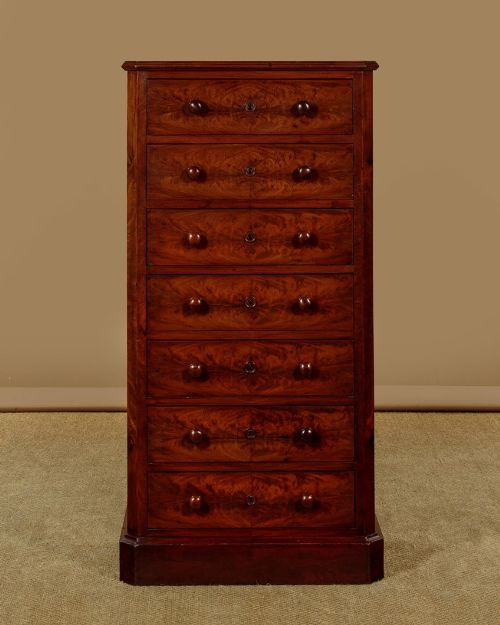
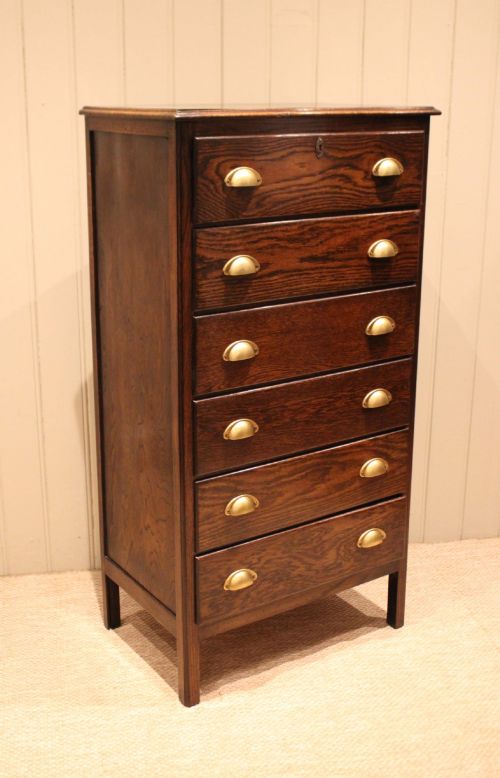
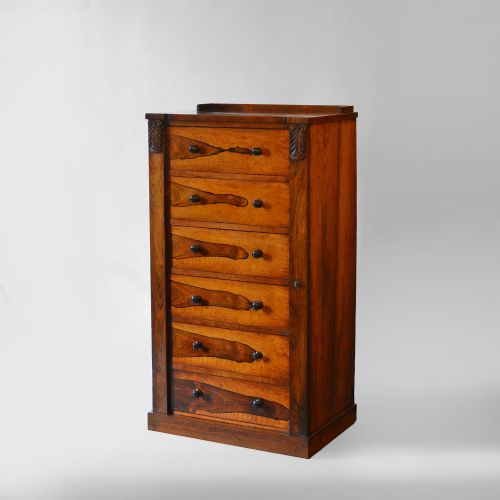
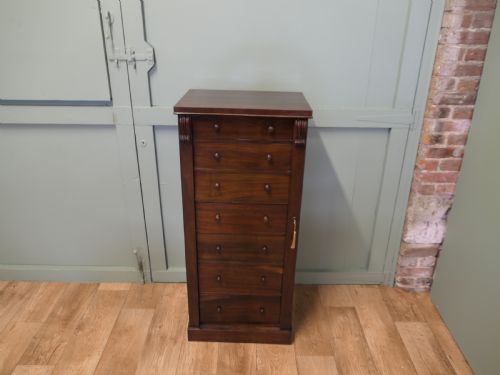
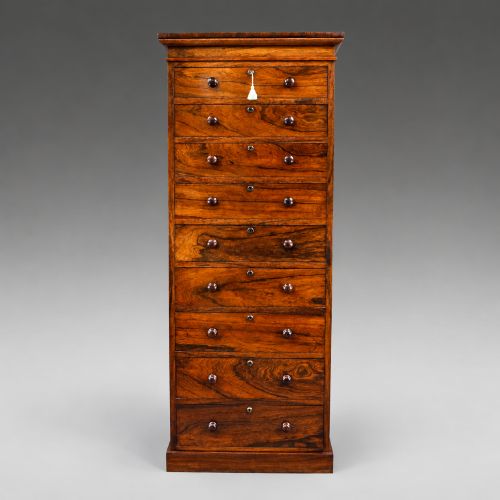
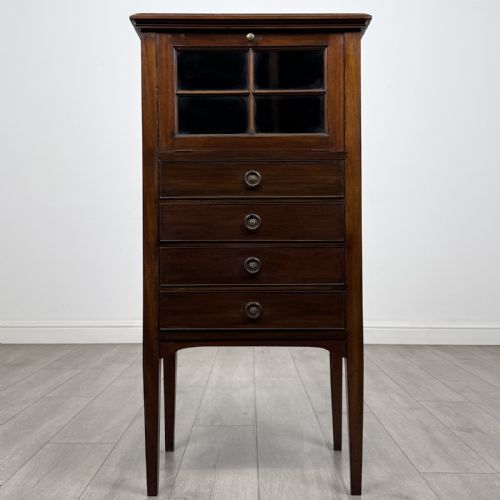
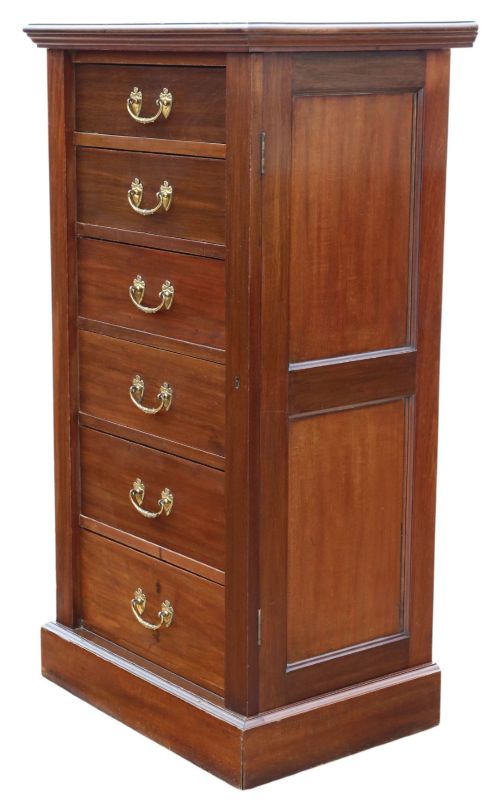
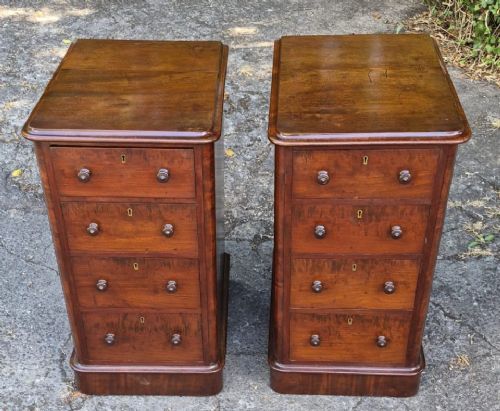
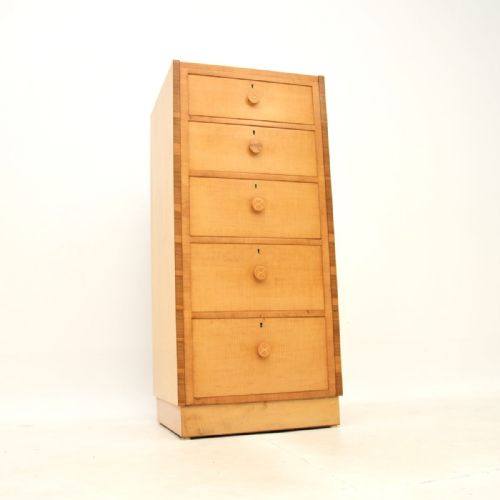
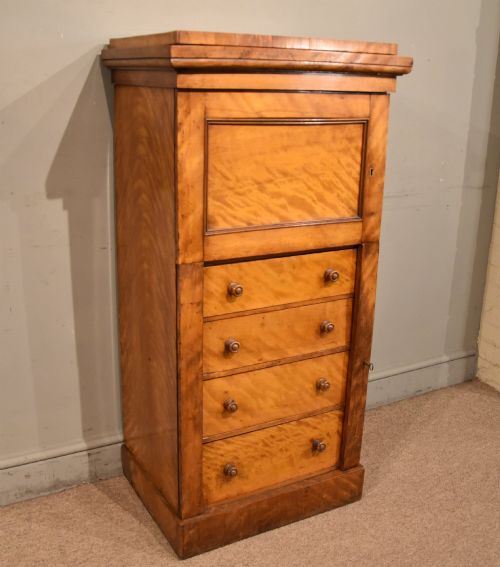
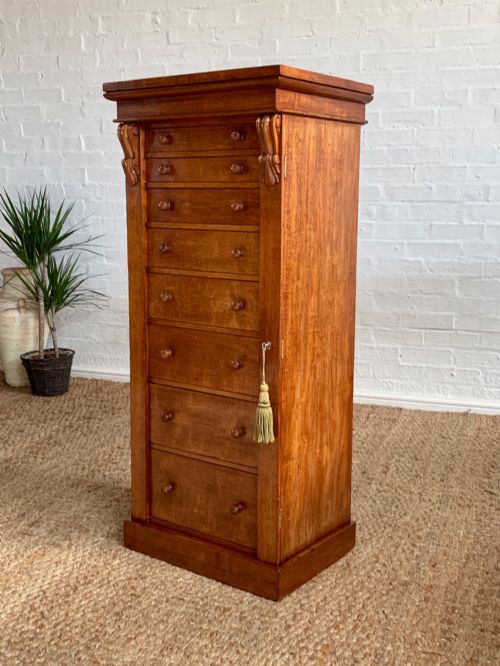
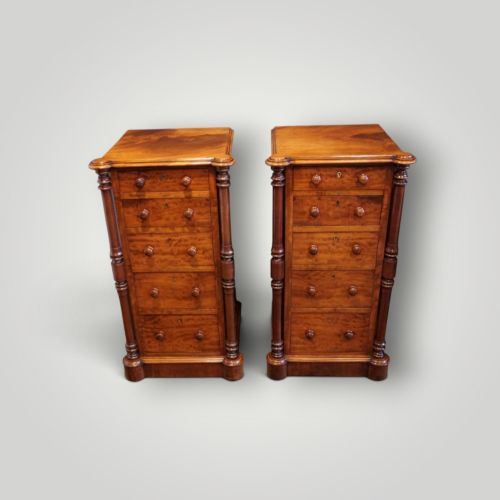
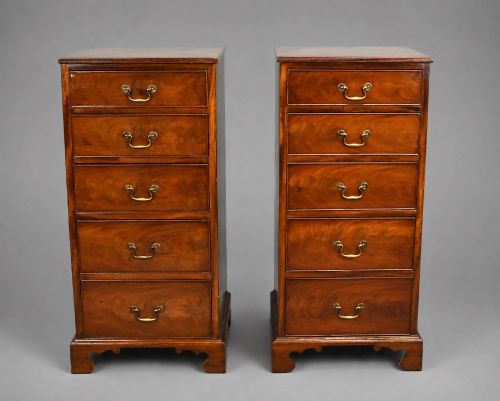
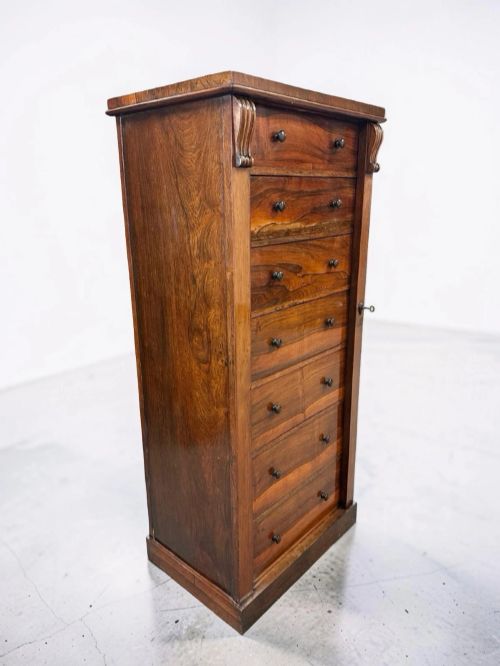
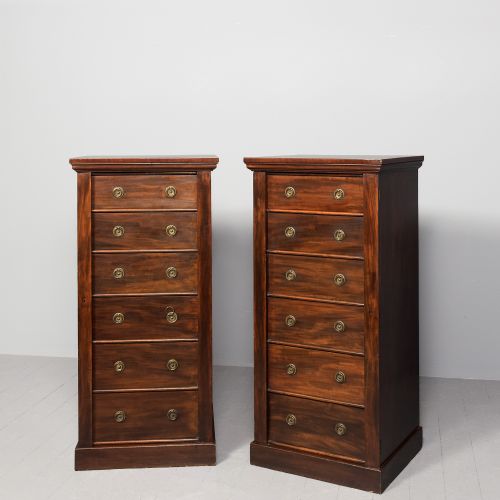
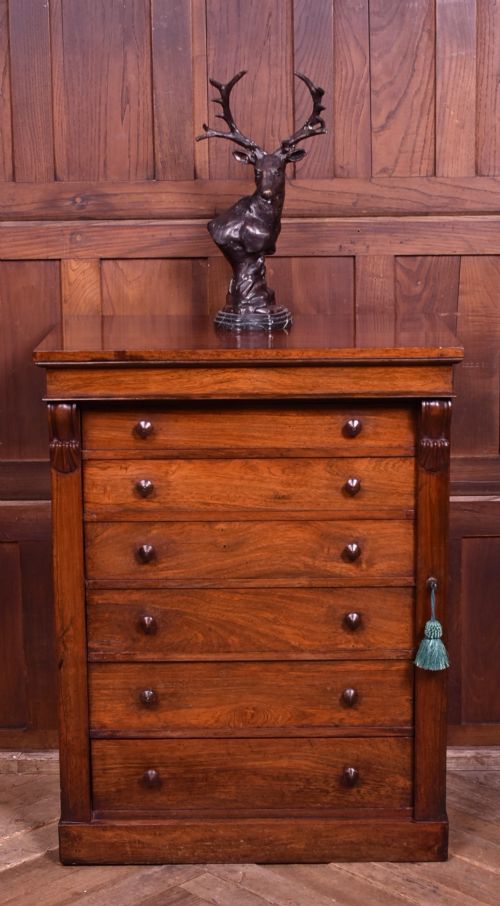
When you search for a narrow wood tallboy, you find upright pieces designed to hold personal belongings in a compact footprint. These items span periods from the nineteenth century into the twentieth century, appearing as Wellington chests, semainiers, and tall bedside chests.
The materials you encounter most often include mahogany, rosewood, walnut, and satin birch, frequently constructed with high vertical proportions. Many examples incorporate multiple graduated drawers housed beneath a hinged locking stile or a raised gallery.
Makers and workshops range from large firms like Hille and Warings Liverpool to specialised makers such as S. Mordan & Co. These tall pieces serve effectively in bedrooms or dressing rooms where floor space remains at a premium.
How they were made
Cabinet makers built these tall chests using solid hardwoods like mahogany and walnut, often applying flame or fiddleback veneers to drawer fronts for visual depth. Secondary timbers provided internal framing and drawer linings.
Construction techniques relied on hand-cut dovetail joints for drawers and robust frame structures to support the high vertical load. Many variants incorporated locking mechanisms, such as a side locking bar secured by a key.
Narrow Wood Tallboy Retail Price Guide 2026
Typical asking prices for narrow wood tallboy among the pieces listed under this phrase on Sellingantiques today, from the lower quarter to the upper quarter. They describe what is for sale here now, not the wider market.
Some Victorian Wellington chests were purportedly named after the Duke because their seven-drawer format allegedly kept a week of linen sorted.
What varies in quality
The standard of timber selection separates simpler utility chests from exceptional showroom pieces. Finely figured mahogany, rosewood, and satin birch veneers indicate superior original workshop input.
Hardware integrity and internal craftsmanship define the upper tier. Original turned knobs, smoothly operating graduated drawers, and functioning locking stiles mark the distinction between standard and high-grade items.
Hille·Warings Liverpool·Reprodux·S. Mordan & Co
The Narrow Wood Tallboy Glossary
- Wellington chest
- A tall, narrow chest of drawers characterised by a hinged locking stile on one side that secures all drawers when locked. This form originated in the nineteenth century.
- Semainier
- A French tall chest traditionally designed with seven drawers, one for each day of the week. These pieces match the narrow vertical proportions of tallboys.
- Fiddleback mahogany
- A figured timber grain displaying undulating ripples resembling the back of a violin. Cabinet makers utilised this timber for decorative emphasis on premium drawer fronts.
- Raised gallery
- A low decorative railing positioned around the top surface of a small cabinet or chest. It prevents items from sliding off the surface.
- Parquetry veneer
- Geometric wood patterns arranged meticulously across furniture surfaces. Craftsmen used contrasting timbers to form intricate decorative panels.
Narrow Wood Tallboy: Frequently Asked Questions
What is a narrow wood tallboy used for?
These vertical chests provide ample drawer storage while taking up minimal floor area in a room. They suit bedrooms and dressing spaces where horizontal furniture is impractical.
Their stacked configuration organises clothing, linens, or documents efficiently within a compact footprint.
Where should I place a tall narrow chest?
These upright pieces fit well in alcoves, corners, or narrow wall spaces between doors and windows. Their vertical height draws the eye upward without crowding the floor.
Ensure the locking stile has sufficient clearance if the piece uses a side-locking mechanism.
What woods were used for tall chests?
Victorian and Edwardian cabinet makers primarily employed mahogany, walnut, and rosewood for exterior surfaces. Finer examples frequently feature figured mahogany, satin birch, or flame veneers.
Internal drawer linings often consist of secondary timbers such as oak or pine.