

Narrow Wood Cabinet
A narrow wood cabinet satisfies the constant demand for functional storage where floor space is limited.
Narrow Wood Cabinet
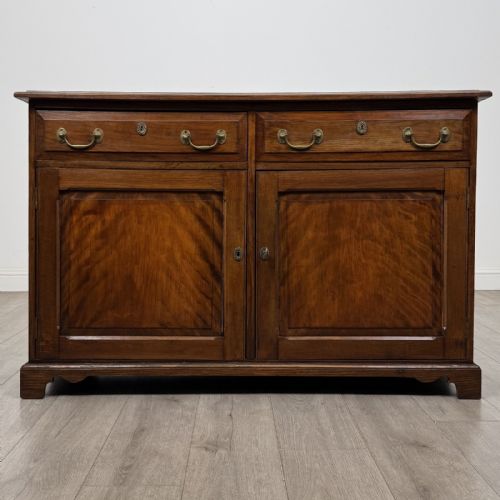
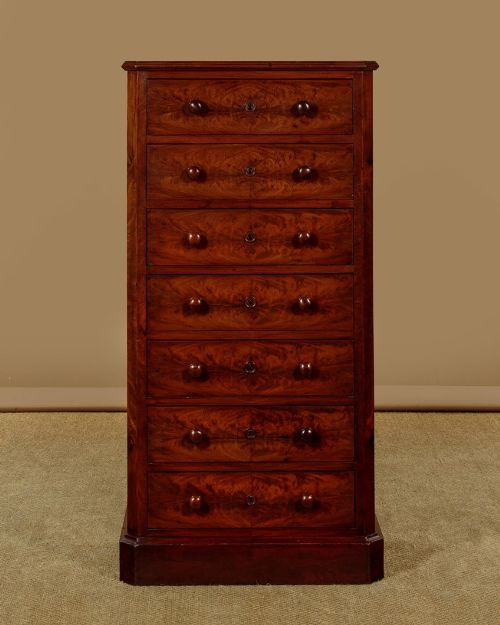
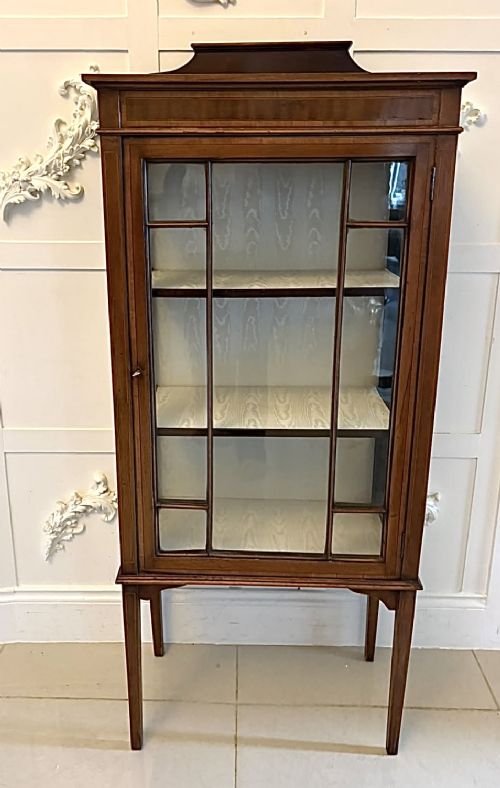
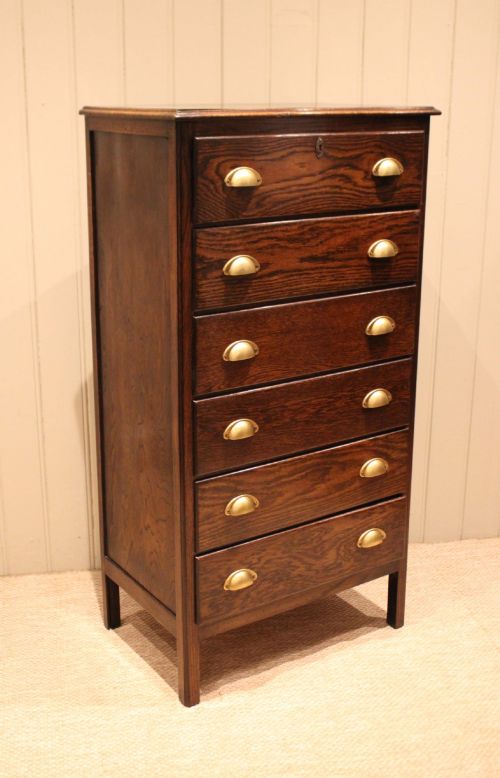
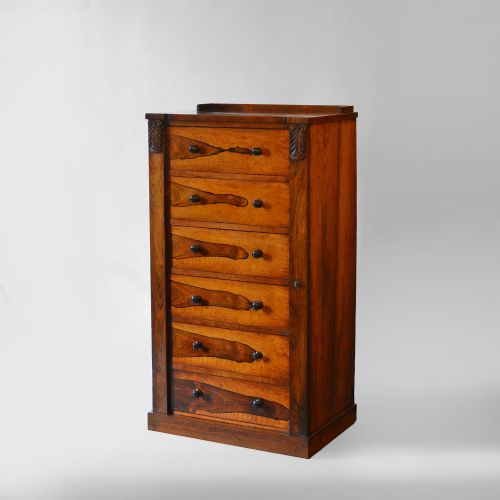
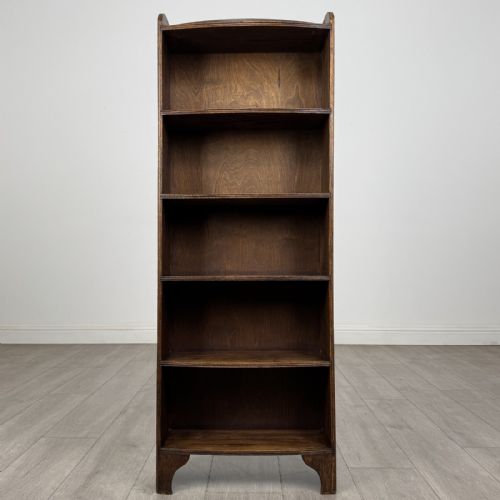
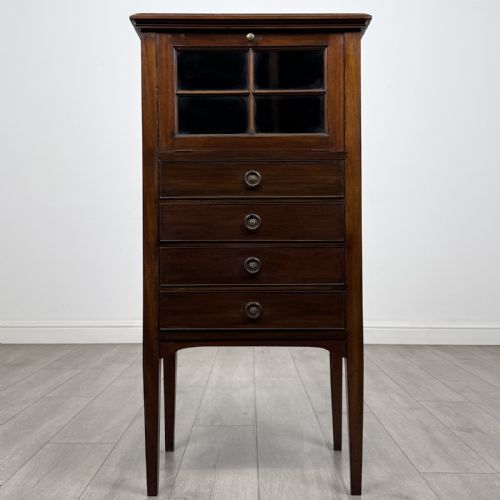
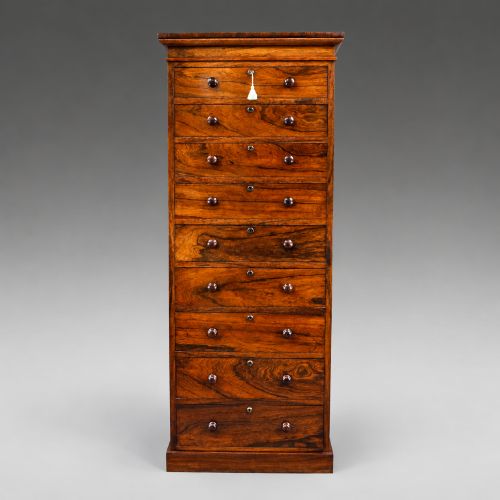
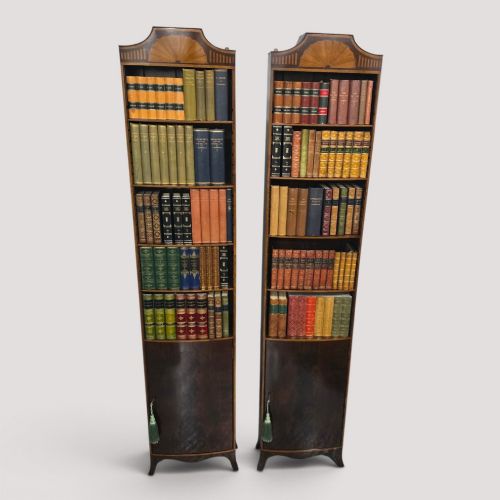
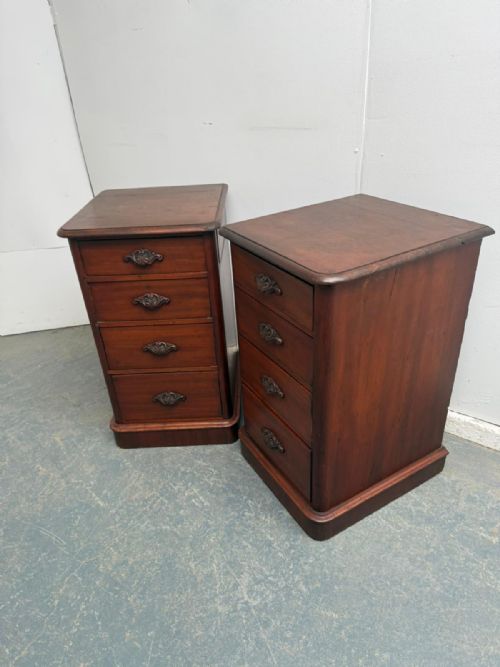
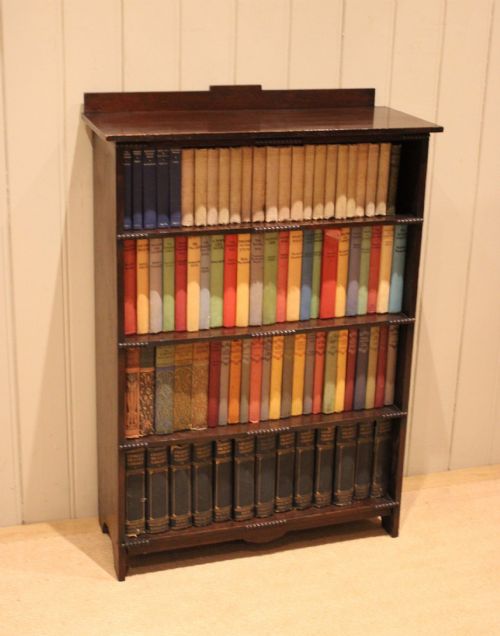
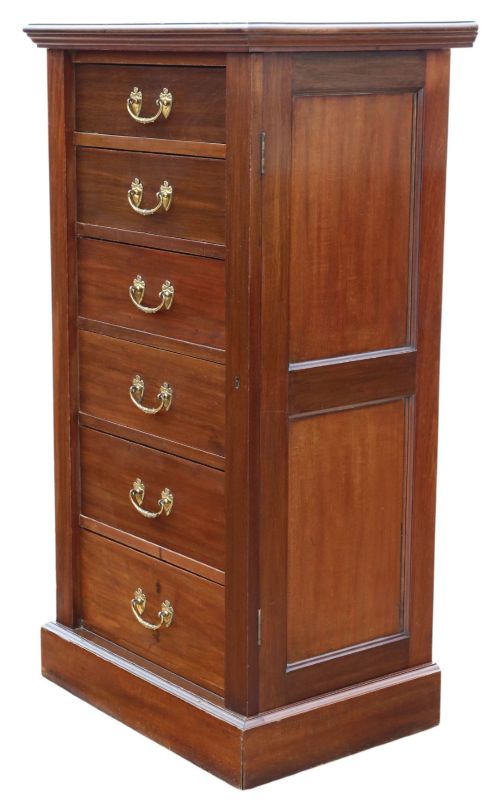
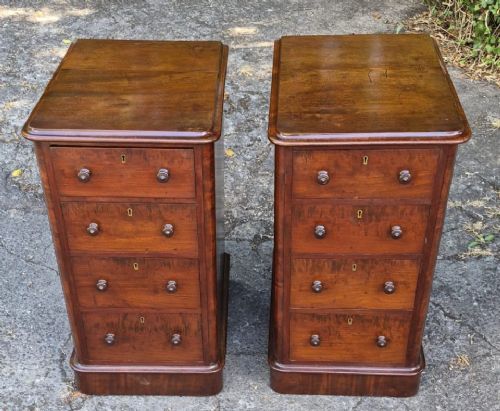
A narrow wood cabinet encompasses tall bookcases, bedside chests, Wellington chests, and small cupboards designed to occupy tight spaces in period interiors. You encounter pieces spanning the Georgian, Victorian, and Edwardian eras, constructed in forms that prioritise vertical capacity over a wide footprint.
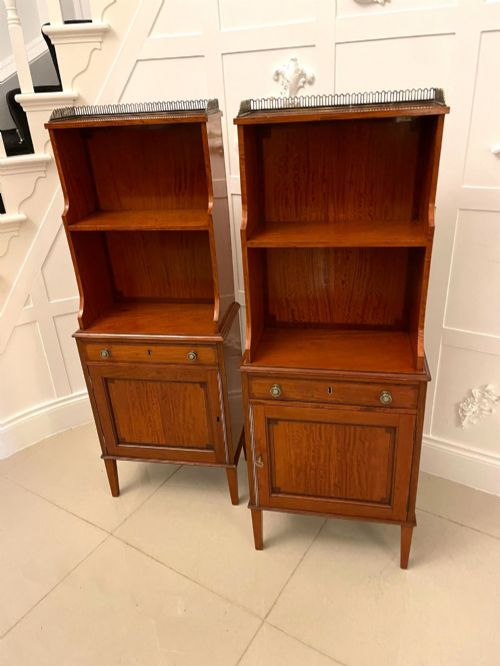
The selection ranges from open mahogany bookcases and satinwood waterfall shelving to ebonised pier cabinets and walnut bedside lockers. Makers utilised dense timbers to build sturdy tall chests and narrow display units that fit beside beds, in recesses, or along narrow hallways.
Materials and Construction
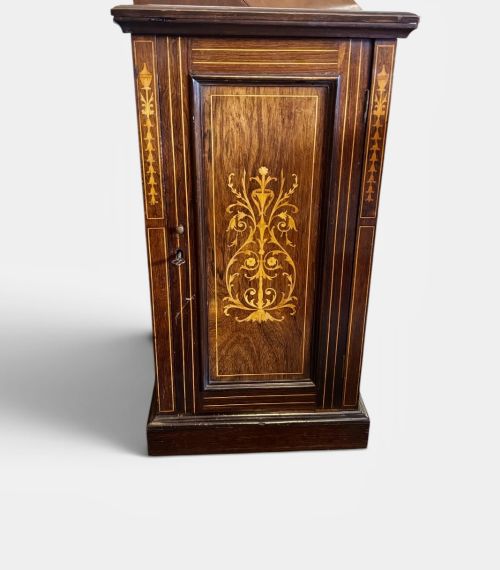
Cabinet makers built these pieces using solid and veneered timbers such as mahogany, rosewood, oak, walnut, pine, and satinwood, often accentuating surfaces with brass hardware, glass panels, and delicate inlay. Grain selection determined the visual weight of each narrow carcass, while secondary timbers like pine frequently formed internal drawer linings and carcass backs.
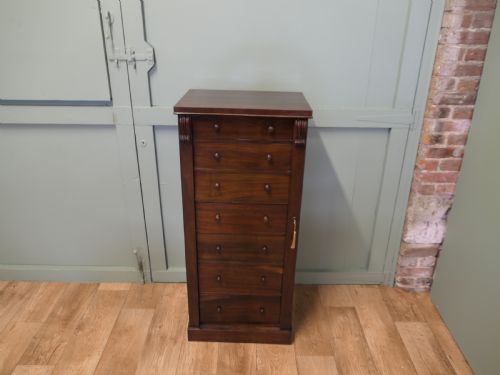
Construction techniques varied from traditional dovetail joints on drawers to specialised locking mechanisms found on Wellington chests, which secured an entire stack of drawers with a single hinged side flap. Carcasses rested on bracket feet, plinths, or slender legs, depending on the prevailing style of the period.
Narrow Wood Cabinet Retail Price Guide 2026
Typical asking prices for narrow wood cabinet among the pieces listed under this phrase on Sellingantiques today, from the lower quarter to the upper quarter. They describe what is for sale here now, not the wider market.
A hinged locking flap on a Wellington chest once kept snooping Victorian houseguests away from private journals.
Evaluating Quality
The distinction between standard utility items and finer examples lies in the selection of timbers, the crispness of inlaid details, and the retention of original hardware such as turned wooden knobs and brass handles. Pieces featuring figured mahogany veneers, book-matched rosewood, or complex satinwood marquetry demand closer attention from makers and command greater appreciation.
Structural integrity also separates individual pieces, visible in the tight tolerances of drawer construction, the smooth operation of adjustable shelving, and the preservation of original glazed doors without replacement panes. Retaining original surfaces, whether waxed, polished, or ebonised, preserves the character established during the nineteenth and early twentieth centuries.
Gillows·Ercol·Warings Liverpool
The Narrow Wood Cabinet Glossary
- Wellington chest
- A tall, narrow chest of drawers secured by a hinged locking stile on one side that fastens over the drawer edges. This specific form emerged in the nineteenth century to store documents or linen securely in limited spaces.
- Pier cabinet
- A low or tall cabinet designed specifically to fit the narrow wall space between windows, frequently featuring glass doors for the display of porcelain or collectables. These pieces often utilised ebonised or inlaid woods.
- Waterfall bookcase
- A set of open shelves diminishing in depth from bottom to top, creating a stepped profile reminiscent of cascading water. Makers such as Gillows produced these in satinwood during the late nineteenth century.
- Secretaire bookcase
- A tall cabinet combining a upper bookcase section with a fitted writing drawer that drops down to reveal a writing surface and small pigeonholes. This multi-functional furniture type maximised storage in compact rooms.
- Bracket foot
- A structural and decorative foot shape supporting the base of a cabinet, formed by two mitred pieces meeting at a corner. They appeared frequently on Georgian and Edwardian case furniture.
Narrow Wood Cabinet: Frequently Asked Questions
What is a Wellington chest?
A Wellington chest is a tall, narrow set of drawers distinguished by a hinged locking side bar that secures all the drawers at once. This design originated in the nineteenth century to provide secure storage in compact spaces.
Cabinet makers typically built them in mahogany, rosewood, or walnut, utilising the vertical format to hold papers, linen, or small personal items without occupying excessive floor space.
Where should I place a narrow cabinet?
These compact pieces suit tight architectural spaces such as hallways, alcoves beside fireplaces, or narrow bedside areas. Their restricted footprint allows them to provide functional storage where standard furniture proves too bulky.
Bedside chests and small bookcases integrate easily into domestic layouts, offering surface space and enclosed storage without dominating the room.
How do I date a Victorian cabinet?
Dating a Victorian piece involves examining the timber selection, construction methods, and hardware style. Pieces from this era often feature figured mahogany or rosewood, hand-cut dovetails on early examples, and machine-sawn components towards the late nineteenth century.
Secondary woods like pine, distinct brass fittings, and specific revival styles such as Sheraton Revival or Late Victorian ornamentation further narrow the period of manufacture.
Are these cabinets suitable for modern homes?
These cabinets adapt readily to modern interiors due to their modest dimensions and practical storage capacities. Open bookcases, narrow cupboards, and bedside chests address contemporary spatial constraints while introducing period character.
Their solid wood construction and traditional finishes contrast well with modern decor, providing functional utility in living rooms, bedrooms, and studies.