

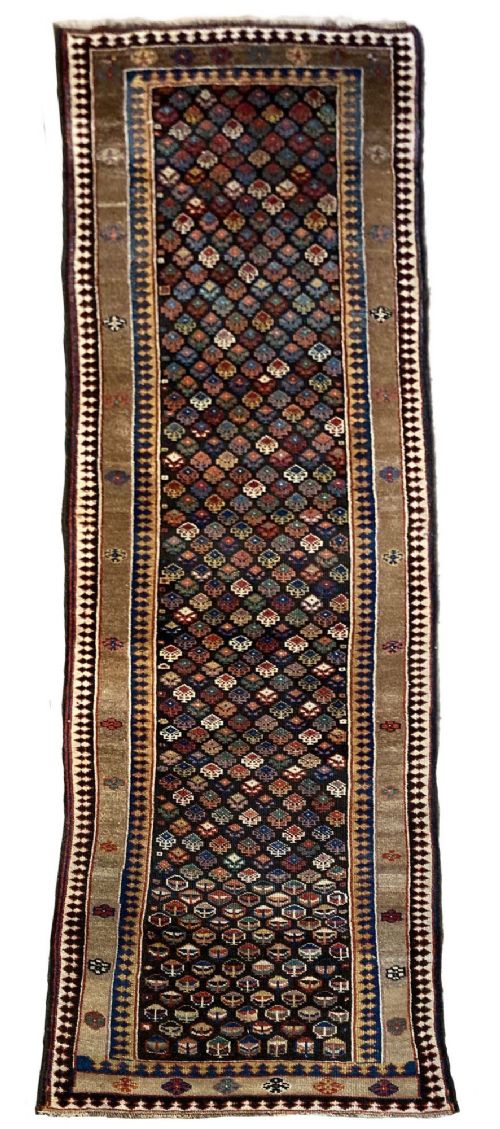
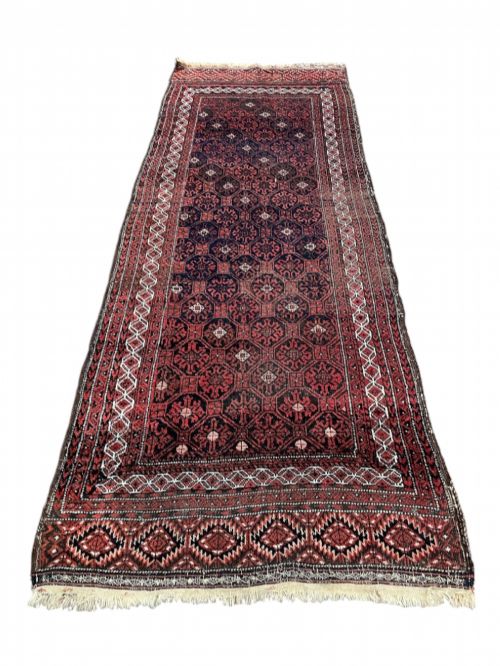


Narrow Tribal Runner Rug
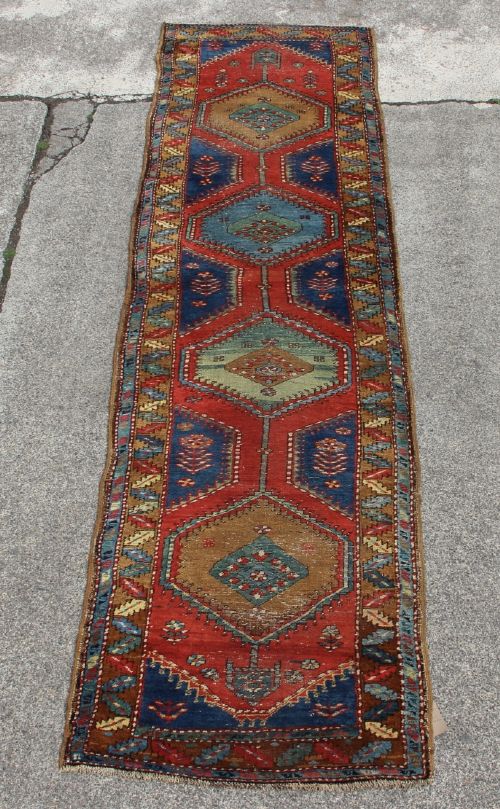
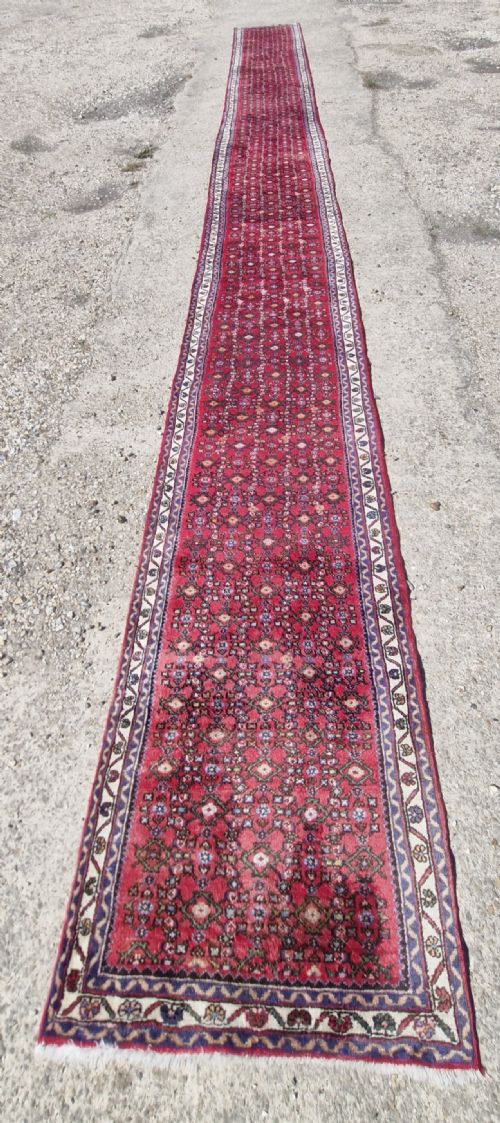
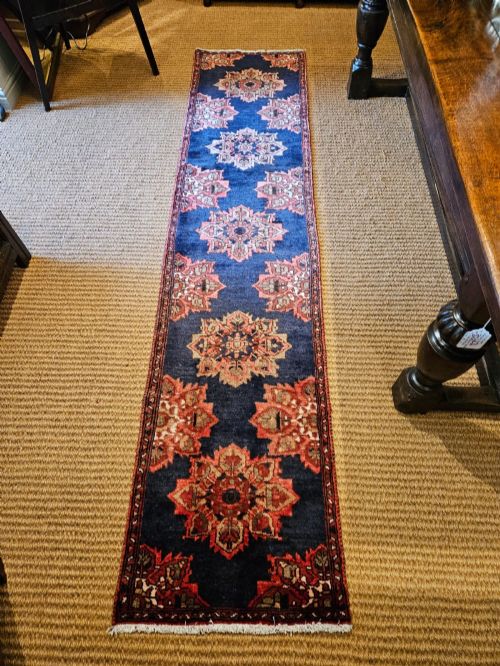
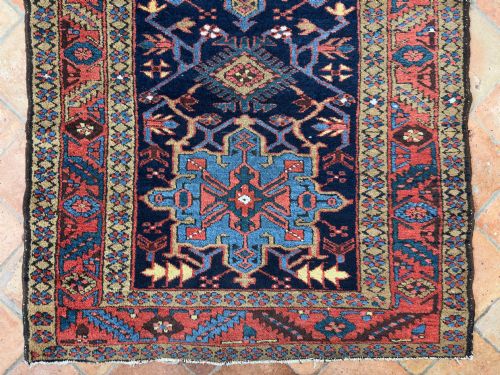
These pieces are a narrow tribal runner rug, long floor coverings woven in villages and nomadic camps to line hallways and corridors.

Narrow Tribal Runner Rug
A narrow tribal runner rug brings distinct village and nomadic character to hallways, landings and long rooms. These pieces originate largely from Persian, Turkish, Caucasian and Moroccan weaving traditions, spanning from the late nineteenth century into the mid twentieth century. Buyers encounter long, attenuated formats designed specifically for corridors and narrow spaces.
Materials and construction
Weavers utilised wool, hand-spun wool, cotton and camel hair to build durable pile and flatweave structures. Hand-spinning creates irregular textures and variable yarn diameters that absorb dye with subtle tonal shifts across the surface.
Foundation threads of cotton or wool support dense knotted piles or flatweave kilim constructions. These traditional methods yield flexible yet robust textiles capable of enduring generations of foot traffic.
Narrow Tribal Runner Rug Retail Price Guide 2026
Typical asking prices for narrow tribal runner rug among the pieces listed under this phrase on Sellingantiques today, from the lower quarter to the upper quarter. They describe what is for sale here now, not the wider market.
Listings span production dates from the 1870s through the 1960s, utilising wool, cotton and camel hair.
Evaluating the weaving standard
Quality rests upon knot density, handle and the precision of geometric or pictorial execution. Tighter knots produce sharper pattern definition, particularly in intricate motifs like birds perched on trees or medallion repeats.
The integrity of the foundation and the vibrancy of natural dyes dictate longevity and visual depth. Pieces displaying harmonious palette ageing and secure selvedges represent higher execution standards within village production.
Heriz·Hamadan·Kurdish·Baluch·Afshar·Shirvan
The Narrow Tribal Runner Rug Glossary
- Kilim
- A flatwoven carpet or runner produced without a pile. These pieces rely on interlocking weft techniques to create crisp geometric designs.
- Selvedge
- The side cords of a rug where the lateral wefts turn back. Secure selvedges prevent fraying along the long edges of the runner.
- Pile
- The upright yarn loops or cut ends that form the soft surface of a carpet. Density of pile influences durability and tactile weight.
- Medallion
- A central ornamental motif set within the field of the rug. Village weavers often adapt these geometric or floral emblems from memory.
Narrow Tribal Runner Rug: Frequently Asked Questions
Where do narrow tribal runner rugs work best?
These elongated floor coverings suit narrow corridors, stair landings and galley kitchens where length matters more than width.
Their linear formats draw the eye down a passage while protecting high-traffic wooden floors.
How do I identify a village runner from a city rug?
Village pieces display asymmetrical motifs, abrash colour variations and spontaneous geometric designs rather than rigid symmetry.
Weavers working in domestic or nomadic settings relied on regional traditions rather than cartoon templates.
What materials make up these antique runners?
Construction primarily relies on wool pile knotted onto cotton or wool foundations, occasionally incorporating camel hair.
Hand-spun yarns give the surface texture and allow dyes to weather with distinct character over decades.
How do I care for an antique wool runner?
Regular gentle vacuuming without a beater bar removes grit that settles deep within the wool pile.
Professional specialist cleaning preserves the natural lanolin and prevents dye bleed across older foundations.