

Narrow Tallboy Cabinet
A narrow tallboy cabinet offers vertical storage with a modest footprint, making it a practical choice for compact rooms.
Narrow Tallboy Cabinet
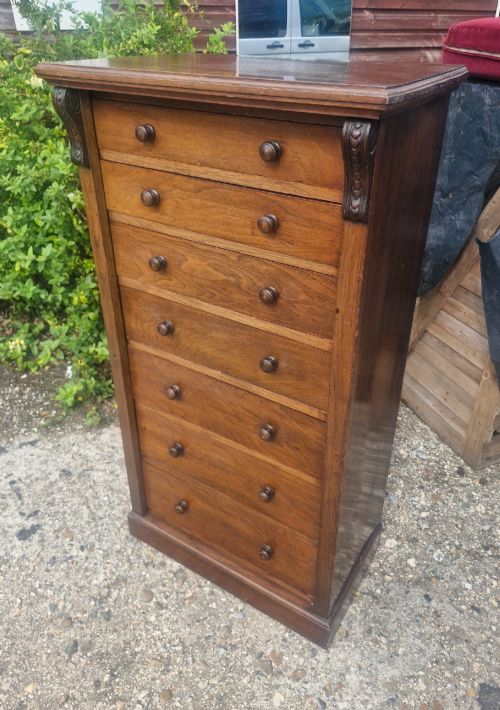
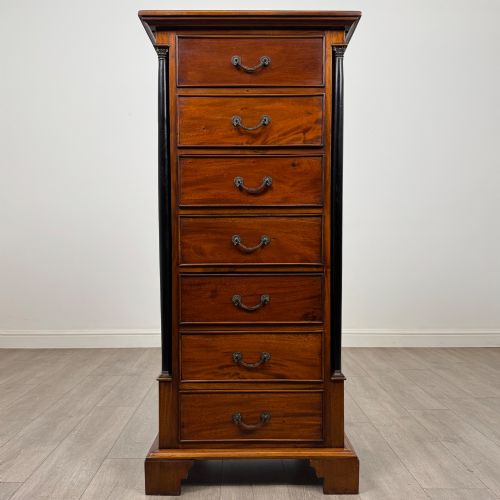
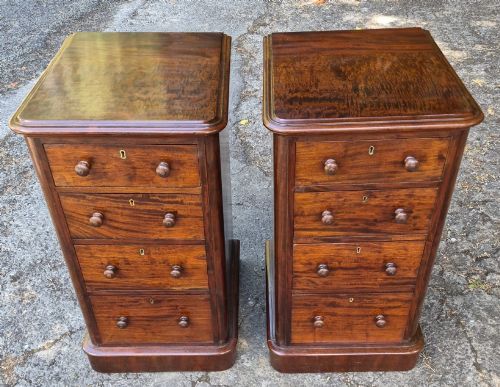
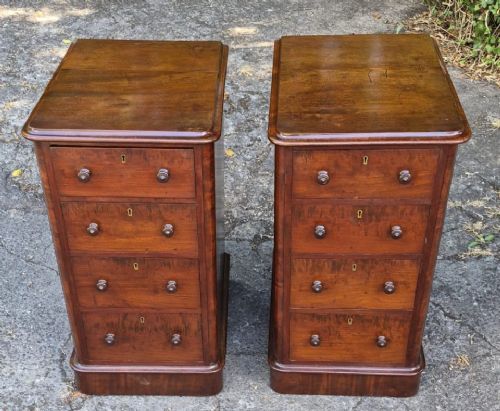
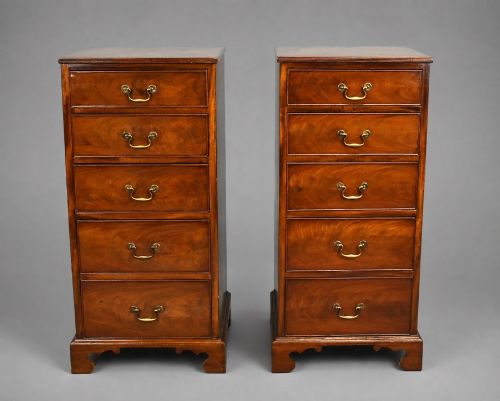
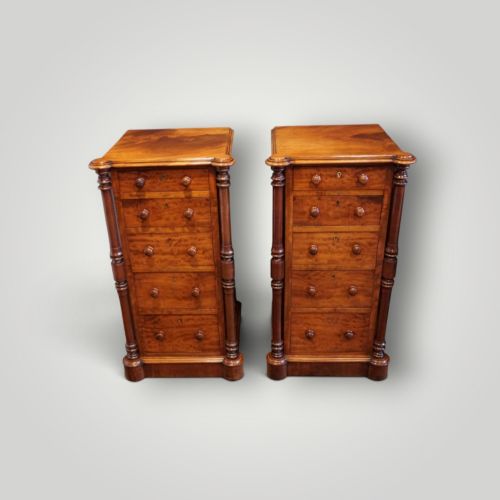
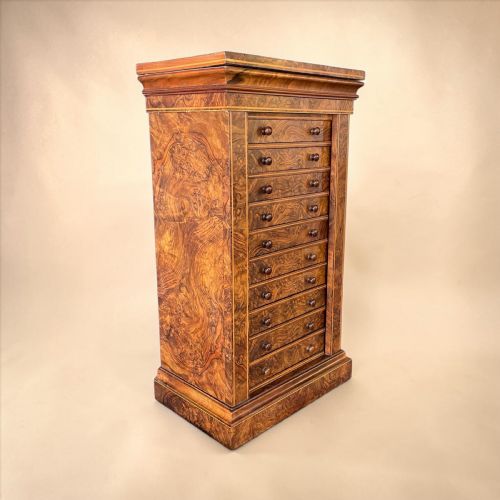
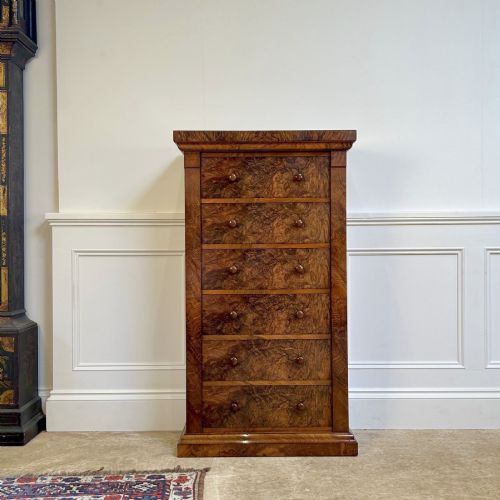
A narrow tallboy cabinet provides high-capacity storage within a restrained floor area, suiting smaller rooms where space remains at a premium. The selection on this page centres heavily on Victorian and Edwardian examples alongside pieces from the early twentieth century.
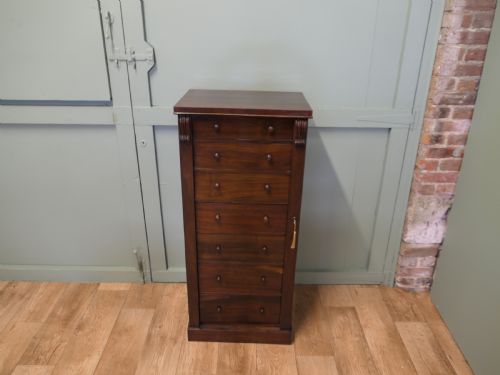
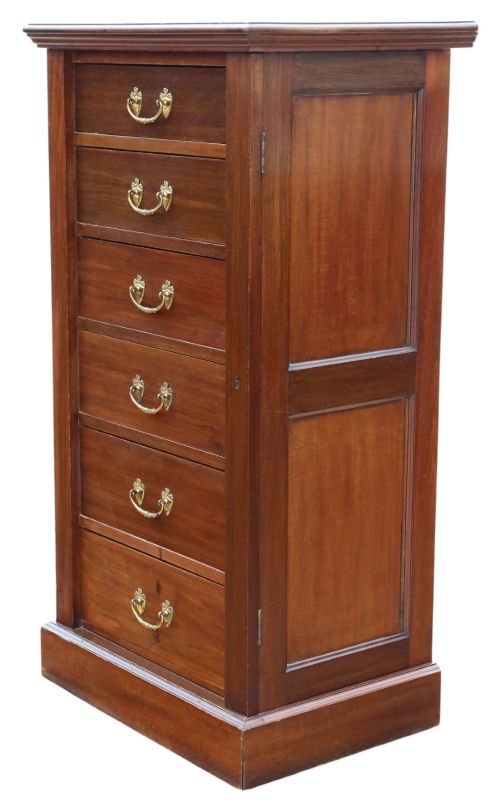
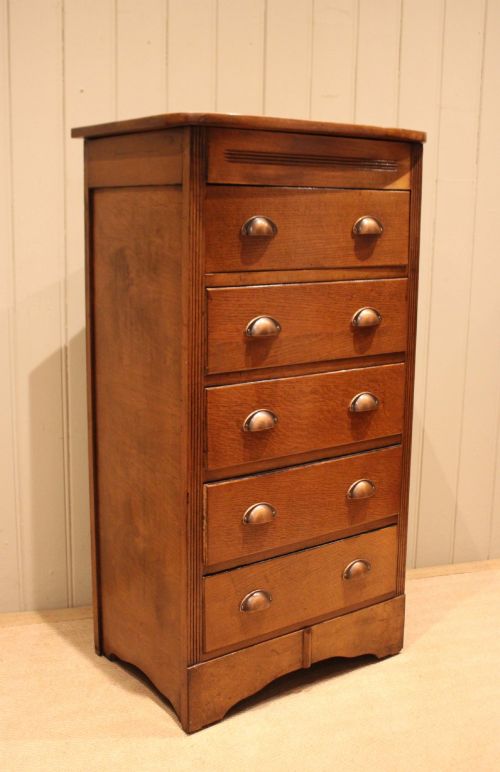
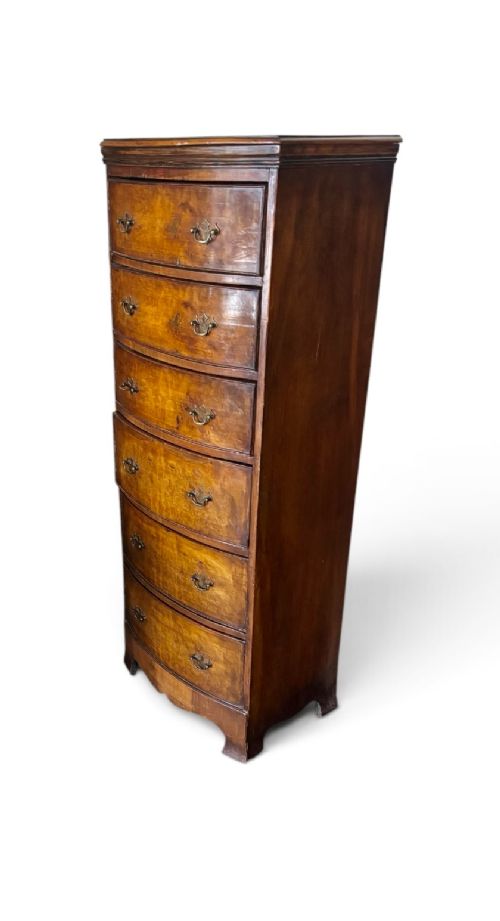
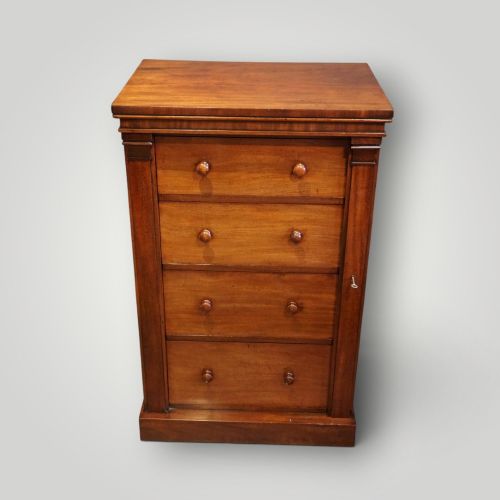
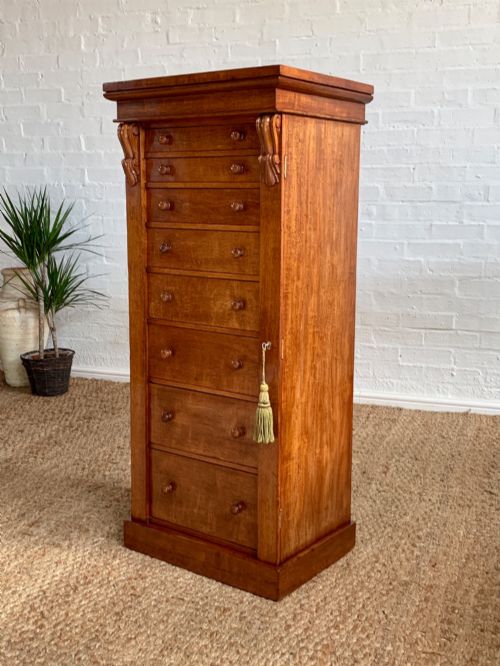
Makers utilised various forms to achieve this slim profile, including Wellington chests, upright chests of drawers and slender bedside cabinets. Mahogany, walnut, rosewood and oak dominate the construction, often enhanced by burr walnut or satinwood veneers.
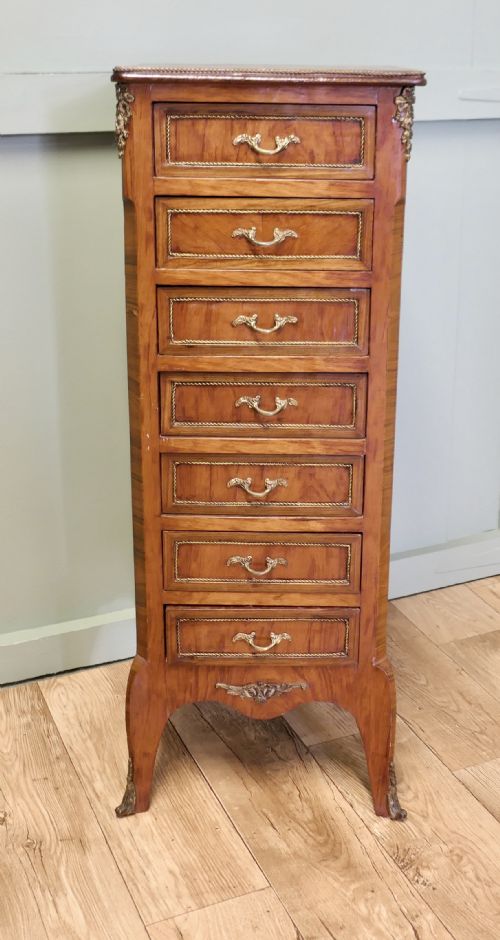
Buyers encounter distinct regional and stylistic variations, ranging from English mahogany designs to French Louis XV revival pieces and marquetry-inlaid items. Proportions stay consistently vertical, accommodating multiple drawers or enclosed shelving within a compact width.
What varies in quality
The sophistication of the timber selection dictates much of the distinction between standard items and exceptional examples, particularly where figured walnut or finely matched mahogany veneers appear. Subtlety in inlay work and the retention of original brass fittings elevate certain pieces above routine utility items.
Structural integrity depends on the precision of the drawer fit and the preservation of original locking mechanisms, especially on tall locking pilaster designs like Wellington chests. Finer pieces demonstrate careful attention to proportion and uncompromised timber quality throughout the interior and exterior.
Some Wellington chests conceal secret locking bars requiring precise key turns to release drawers.
Warings Liverpool·Gillows of Lancaster·Maple and Co
The Narrow Tallboy Cabinet Glossary
- Tallboy
- A traditional term for a tall chest of drawers, often constructed in sections. Modern usage extends this to various upright narrow cabinets.
- Veneer
- A thin layer of decorative timber applied to a secondary wood base. Figured walnut and burr walnut are common examples found on these cabinets.
- Parquetry
- Geometric wood inlay patterns forming decorative surfaces. French pieces frequently utilise this technique on cabinet doors and drawer fronts.
- Marquetry
- Elaborate pictorial inlay work using various tinted woods and botanical motifs. This ornamentation appears on several Victorian rosewood and mahogany pieces.
Narrow Tallboy Cabinet: Frequently Asked Questions
What is a Wellington chest?
A Wellington chest is a tall, narrow set of drawers characterised by a hinged locking arm on one side that secures all the drawers at once. This locking pilaster operates with a small key.
Cabinet makers originally designed these pieces for gentlemen's dressing rooms, allowing secure storage for folded garments and personal items within a minimal floor space.
How do I date a tallboy cabinet?
Dating relies on examining the timber species, construction methods, handles and overall style characteristics. Victorian and Edwardian examples display distinct moulding profiles and hardware choices.
Earlier nineteenth-century pieces often feature solid mahogany with hand-cut dovetails, while twentieth-century versions introduce lighter oak and different veneer treatments.
Where should I place a narrow cabinet?
These cabinets suit alcoves, hallways and bedrooms where floor space is restricted but vertical height is available. Their slim proportions allow them to fit between windows or doors.
Pairing bedside versions next to a bed provides balanced surface area and storage without dominating the room layout.
Are these cabinets difficult to maintain?
Maintenance involves standard wooden furniture care, keeping pieces away from direct heat sources and sudden humidity changes to protect the veneers. Regular dusting with a soft cloth preserves the polished finish.
Applying wax occasionally helps nourish older timbers like mahogany and walnut without building up heavy residues.