

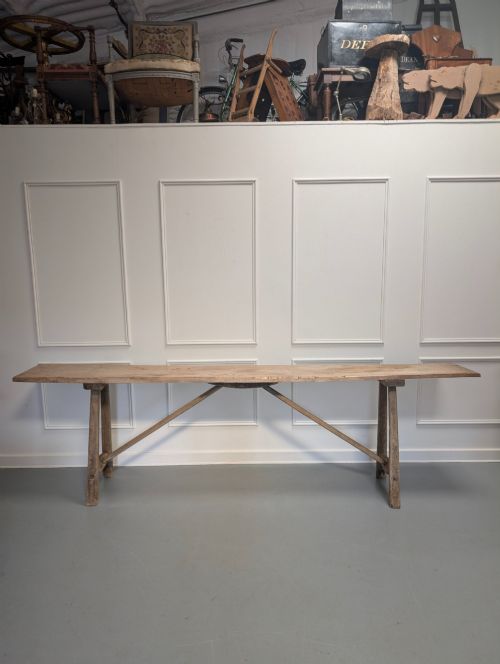
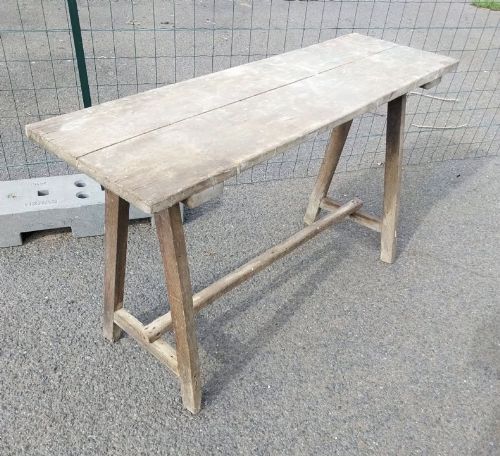
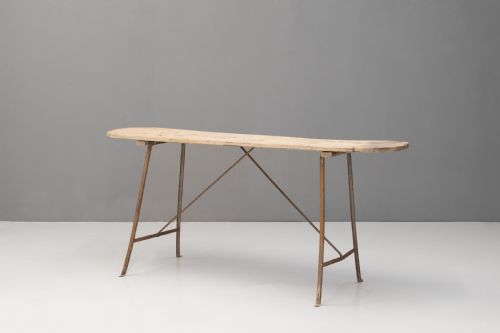
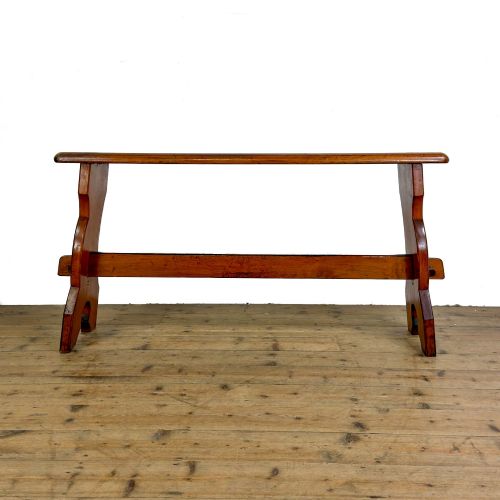


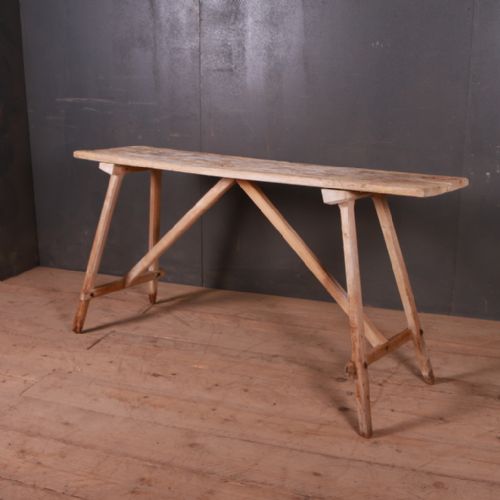

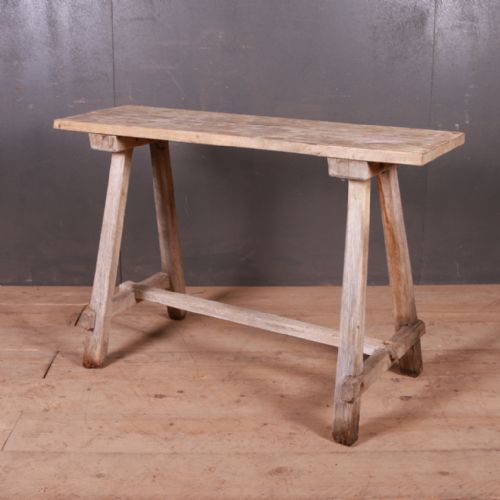


Narrow Pine Console Table
A narrow pine console table brings honest timber and utility to a hallway, finding purpose where deeper furniture blocks the passage.
Narrow Pine Console Table
A narrow pine console table stands as a practical piece designed for tight spaces like hallways and corridors, drawing on forms originally made for practical work. When you search for a narrow pine console table, you encounter pieces that range from scrubbed laundry tables and wash stands to trestle formats and organ benches adapted for the home.
The pieces listed span the nineteenth century into the early twentieth century, showing influences from French provincial, French country, rustic farmhouse, and Scandinavian country traditions. You are most likely to meet French trestle tables and nineteenth-century wash tables adapted to serve this console function.
Makers and builders of these items prioritised simple utility over ornate decoration, resulting in narrow proportions that suit modern corridors and living rooms alike. The form adapts well to narrow spaces because the underlying structures were originally built for specific utilitarian tasks in kitchens, laundries, and workshops.
How they were made
Construction relies primarily on solid timber, with pine, pitch pine, and poplar forming the main tabletops and frames. Some variants introduce oak or timber supports alongside wrought iron elements and marble tops to add weight and surface durability.
Surfaces often show the evidence of scrubbing, painting, or natural weathering accumulated over decades of functional use. Carpenters utilised straightforward joinery methods suited to utilitarian furniture, focusing on stability and load-bearing capacity for daily labour rather than cabinet-making finesse.
Narrow Pine Console Table Retail Price Guide 2026
Typical asking prices for narrow pine console table among the pieces listed under this phrase on Sellingantiques today, from the lower quarter to the upper quarter. They describe what is for sale here now, not the wider market.
Listings feature pine, pitch pine, and poplar alongside occasional marble and wrought iron elements across nineteenth-century and early twentieth-century periods.
What varies in quality
Quality rests in the integrity of the timber and the honesty of the surface finish, whether a scrubbed natural grain or an aged painted coat. Pieces retaining their original structural timbers without excessive replacement hold greater integrity than those rebuilt from disparate salvage.
Proportion and scale dictate the success of the console, as narrower depths and balanced height separations create a more harmonious silhouette against a wall. The presence of secondary materials like marble inserts or wrought iron brackets distinguishes finer architectural examples from simpler domestic work benches.
The Narrow Pine Console Table Glossary
- Scrubbed pine
- Timber that has been repeatedly washed and scrubbed down over generations, removing old finishes to leave a pale, clean grain. This treatment is common on laundry and preparation tables.
- Trestle table
- A table structure composed of two or more support frames connected by a horizontal beam. This design provides maximum legroom beneath the narrow top.
- Pitch pine
- A dense, resinous variety of pine noted for its durability and strong grain pattern. It appears frequently in utilitarian furniture intended for heavy domestic tasks.
- Wash table
- A low-standing piece originally designed to hold washbasins and ewers in bedrooms. Their naturally shallow depths make them ideal for adaptation as narrow console tables.
- Console table
- A table fixed to a wall or freestanding with slim proportions designed for display and surface storage in narrow circulation spaces.
Narrow Pine Console Table: Frequently Asked Questions
Where do I put a narrow pine console table?
These tables find a natural home in hallways, narrow entryways, and behind living room sofas where floor space is limited. Their shallow depths allow them to sit flush against walls without obstructing pathways.
They also serve well in dining rooms as serving surfaces or in bedrooms as compact writing desks and display ledges.
How do I clean a scrubbed pine top?
Maintenance requires little more than a soft, dry cloth to remove dust and occasional wiping with a damp cloth for spills. Harsh chemical cleaners strip the dry, untreated character from aged pine surfaces.
Applying a clear beeswax sparingly helps protect the wood grain without creating an artificial gloss.
Are these tables sturdy enough for daily use?
Solid timber construction and pegged or nailed joinery give these utility tables a robust frame designed for hard labour. Wash tables and trestle formats were built to support heavy pots, water basins, and folding laundry.
Placing items on the surface poses no challenge, though uneven antique floors may require minor stabilisation.
How do I identify a nineteenth-century pine table?
Clues lie in the hand-sawn tool marks, irregularities in the timber dimensions, and the mellow patina developed through generations of use. Fasteners such as hand-forged nails or early iron screws indicate period manufacture before mass production standardised hardware.
Wear patterns around the edges and stretcher bases also reveal the natural friction of daily chores.