
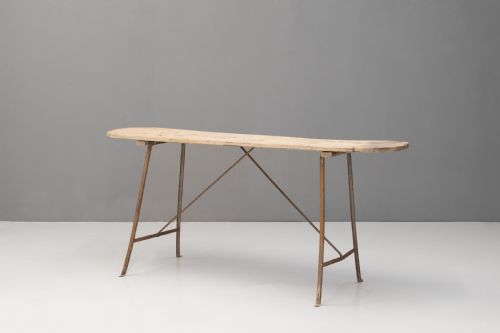


Pine Trestle Console Table
These pine trestle console table examples combine robust utility with vernacular charm, offering narrow proportions and sturdy supports suited to modern hallways and living spaces.
Pine Trestle Console Table
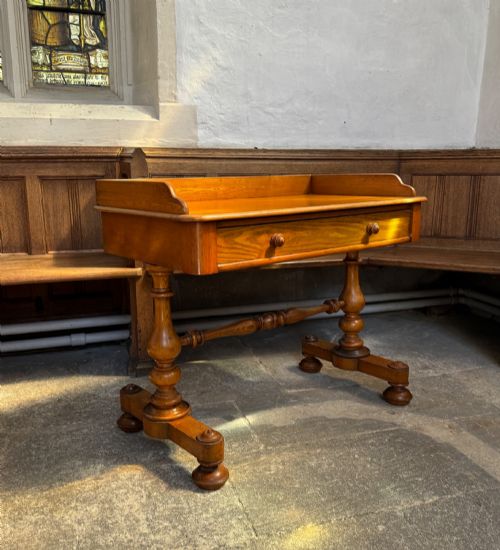
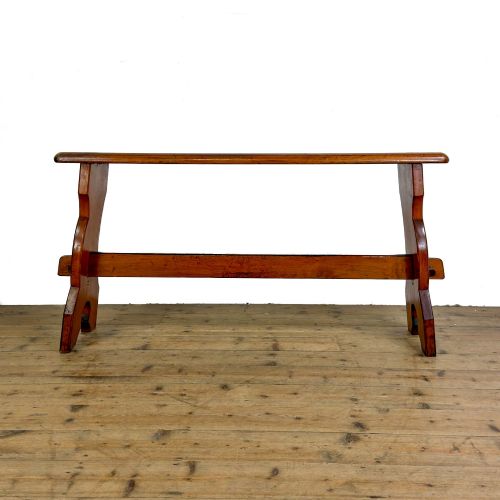
A pine trestle console table brings functional domestic furniture into compact spaces, often drawing on forms originally made for washstands, side tables, and serving tables. These pieces utilise sturdy upright supports joined by horizontal stretchers, providing stability without bulk along narrow corridors and against walls.
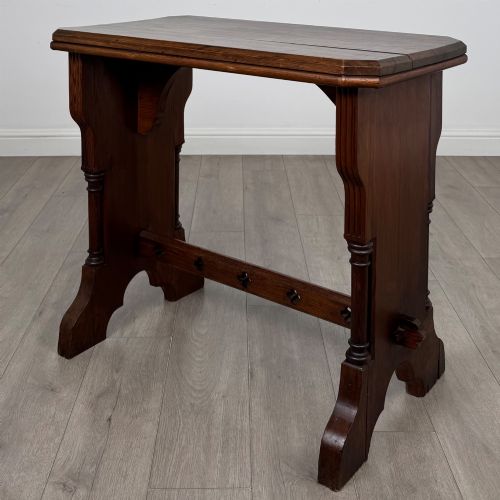
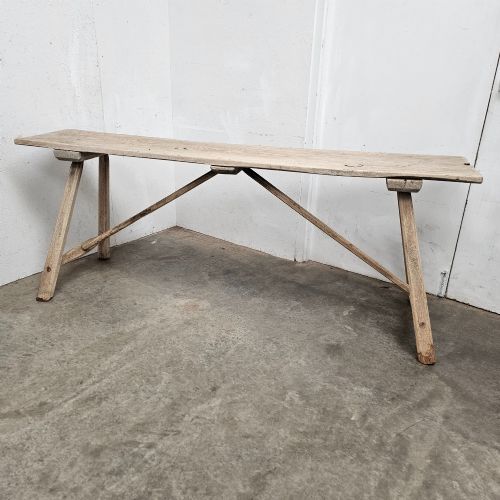
The selection here draws heavily from nineteenth century workshops, encompassing French provincial scrubbed surfaces alongside English Victorian pitch pine items. Buyers encounter variants ranging from simple domestic boards to ecclesiastical designs bearing Gothic revival details.
Materials and Construction
Makers relied primarily on native pine and dense pitch pine timber, sometimes incorporating wrought iron braces or contrasting woods like oak and poplar. These softwoods and hardwoods were selected for structural endurance, taking scrubbed finishes or historic paint applications that survive through generations of daily use.
Construction methods focus on functional trestle framing and pegged joints, yielding rigid support for heavy daily tasks in kitchens, laundries, and halls. Surfaces show the marks of hand planes and scrubbing brushes rather than factory sanding.
Several tables began life scrubbing laundry or holding altar vessels before finding retirement in modern hallways.
Evaluating Quality and Character
Quality rests in the integrity of the timber selection and the honesty of the surface wear, where dense pitch pine grain or scrubbed poplar demonstrates superior ageing. Better examples maintain original framing joints and uncompromised proportions without excessive timber replacement.
The distinction between ordinary utility items and finer pieces lies in the subtlety of architectural detailing, such as chamfered trestle uprights, pegged construction, and well-proportioned overhangs. Original patination earned through decades of domestic service outweighs mere decorative restoration.
AW Pugin
The Pine Trestle Console Table Glossary
- Trestle table
- A board resting on two or more upright supports connected by a longitudinal stretcher. This design allows maximum legroom along the length of the furniture.
- Pitch pine
- A resinous North American and European pine species prized for its durability and prominent grain pattern. It yields a harder surface than standard softwoods.
- Scrubbed finish
- A surface repeatedly scoured with water and abrasive brushes to remove grease and stains. This treatment leaves a pale, clean timber texture.
- Console table
- A wall-mounted or freestanding narrow table designed for display or service. Its shallow depth suits passageways and reception rooms.
Pine Trestle Console Table: Frequently Asked Questions
Where should I place a console table?
These narrow tables suit hallways, landings, and reception rooms where floor space is limited. Their shallow depths allow placement against walls without obstructing movement.
They also function effectively behind sofas or within dining spaces as serving surfaces. The sturdy trestle construction ensures stability despite modest proportions.
How do I clean a scrubbed pine surface?
Maintenance requires minimal intervention to preserve the dry, historic texture of the timber. Gentle dusting with a dry cloth prevents dirt accumulation.
Avoid heavy oils or modern polishes that seal the open grain. Natural soap flakes and warm water address marks when necessary.
What is pitch pine?
Pitch pine is a durable timber harvested for its high resin content and dense growth rings. It resists heavy wear and displays a distinct golden brown grain pattern.
Victorian makers utilised this wood extensively for utilitarian and institutional furniture. Its resilience explains the survival of these pieces.
Are these tables completely original?
Historic furniture frequently retains evidence of past repairs, timber shrinkage, and structural adaptation suited to domestic changes. Scrubbed surfaces often reflect centuries of active use.
Inspection reveals whether joints remain stable and components contemporary to the period. Minor timber replacement is standard for working antique tables.