


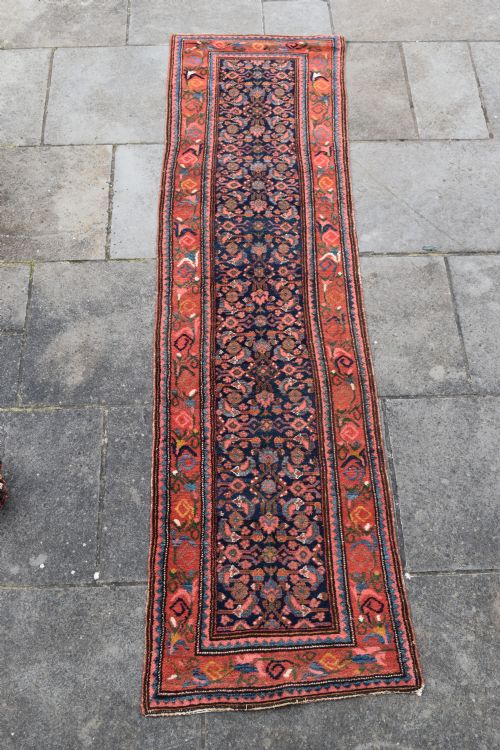

Narrow Persian Hall Rug
A narrow persian hall rug brings corridor floors alive with tribal patterns and rich wool pile woven across generations.
Narrow Persian Hall Rug
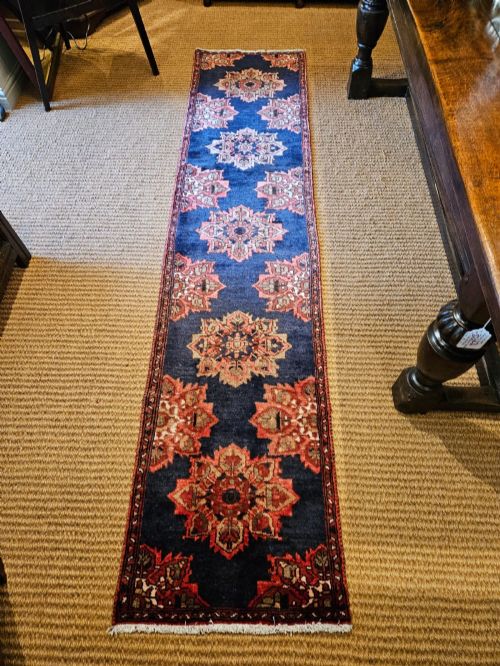
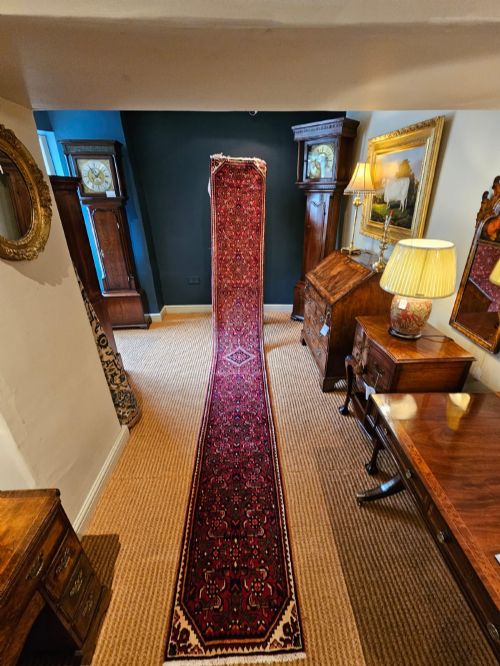
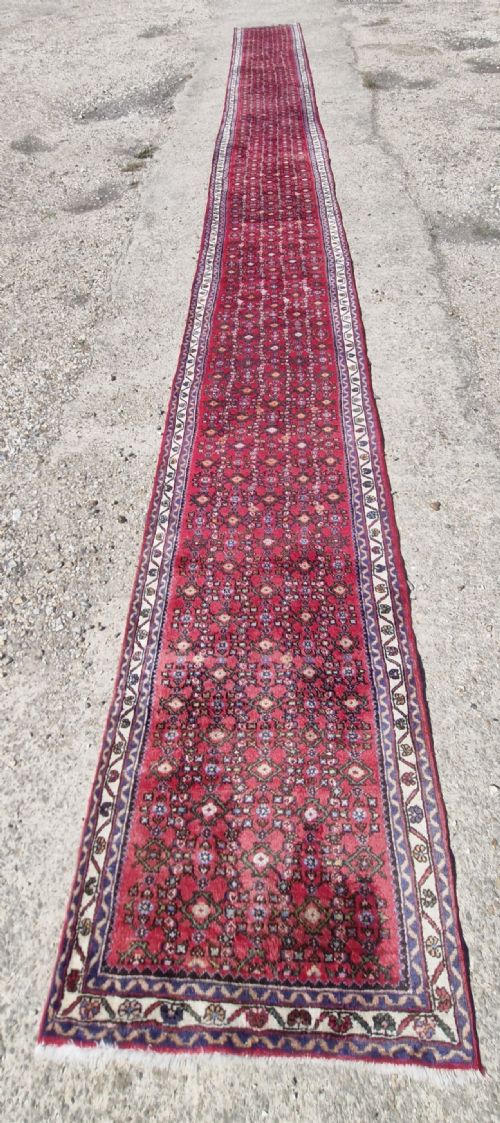
A narrow persian hall rug is primarily a long runner designed specifically for corridors, landings, and hallways. These pieces stretch from modest lengths to exceptional proportions reaching over thirty feet, maintaining a narrow width suited to restricted spaces.
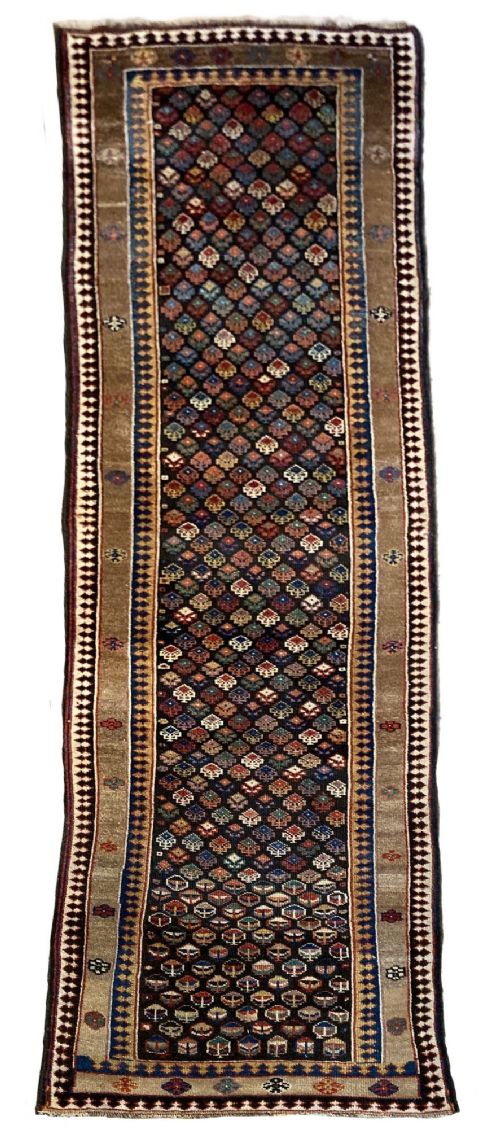
The format encompasses traditional regional types including Kurdish, Hamadan, Bidjar, Serab, Sarouk, Heriz Karaja, and Varamin weaves. Dating spans from the late nineteenth century through the mid twentieth century, featuring classical medallion layouts and repetitive tribal motifs.
Materials and construction
These floor coverings utilise natural sheep wool for the pile, providing resilience under heavy foot traffic. Foundation threads typically consist of spun cotton or sturdy wool warp and weft structures.
Weavers knot the pile by hand onto the vertical foundations, incorporating camel hair in select areas for natural colour variation. The resulting dense structure handles the physical demands of hallway placement.
Selected tribal pieces incorporate figures of tribal women woven directly into the geometric field.
Distinguishing quality factors
Quality rests upon knot density and the precision of the geometric or floral drawing. Finer execution in regional workshops produces sharper pattern definition along the extended format.
The integrity of the wool and the depth of natural dyes dictate visual longevity. Uniform width across extreme lengths also marks superior weaving skill.
The Narrow Persian Hall Rug Glossary
- Runner
- A long, narrow carpet format intended for corridors and staircases. It measures significantly longer than its width.
- Warp
- The stationary vertical threads stretched across a loom that form the structural skeleton of the rug.
- Weft
- The horizontal threads passed alternately over and under warp threads to bind the knots in place.
- Pile
- The upright cut ends of yarn that form the usable surface texture of the textile.
- Medallion
- A central ornamental design motif placed symmetrically in the field of the rug.
Narrow Persian Hall Rug: Frequently Asked Questions
Where should I place a narrow persian hall rug?
These runners suit narrow corridors, grand entryways, and long landing spaces where standard rectangular carpets fail to fit.
Ensure adequate clearance for doors to swing freely over the pile thickness.
How do I care for antique wool runners?
Vacuum regularly with suction only, avoiding beater bars that can damage old wool foundation threads.
Rotate the runner periodically to distribute wear evenly across high traffic paths.
Are these rugs suitable for heavy traffic?
Traditional construction using dense wool pile on sturdy foundations handles everyday corridor usage exceptionally well.
Quality underlays protect the antique textile from shifting and premature friction against hard floors.
How are regional styles identified?
Distinctions appear in the colour palette, border arrangements, and specific repeating motifs such as the Mina Khana pattern.
Kurdish, Hamadan, and Sarouk pieces each display characteristic tribal geometry and dye signatures.