

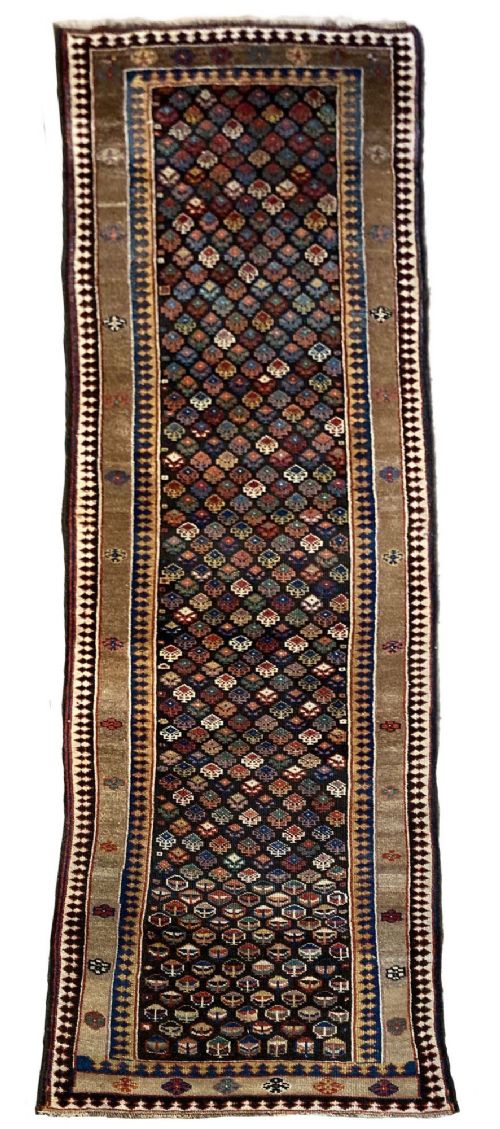
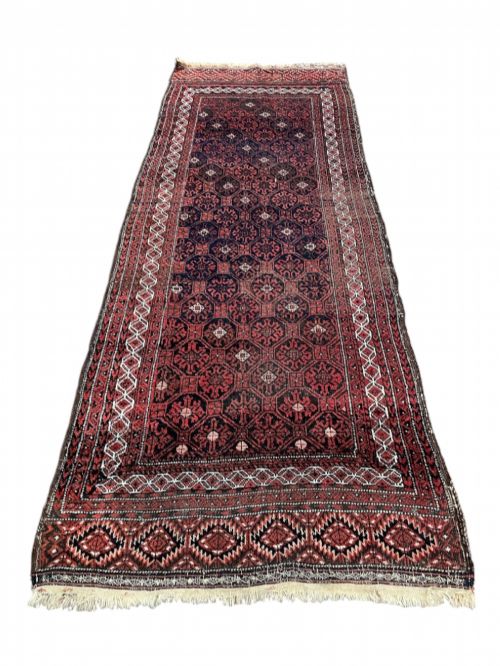


Narrow Oriental Rug
A narrow oriental rug brings linear geometry and historic hand-knotted pile to corridors and long hallways.
Narrow Oriental Rug
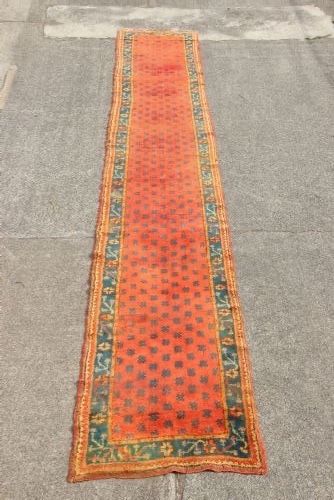
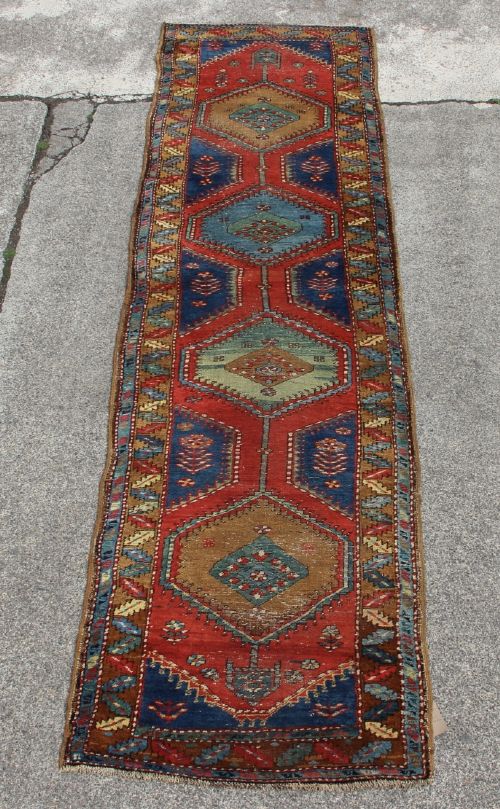
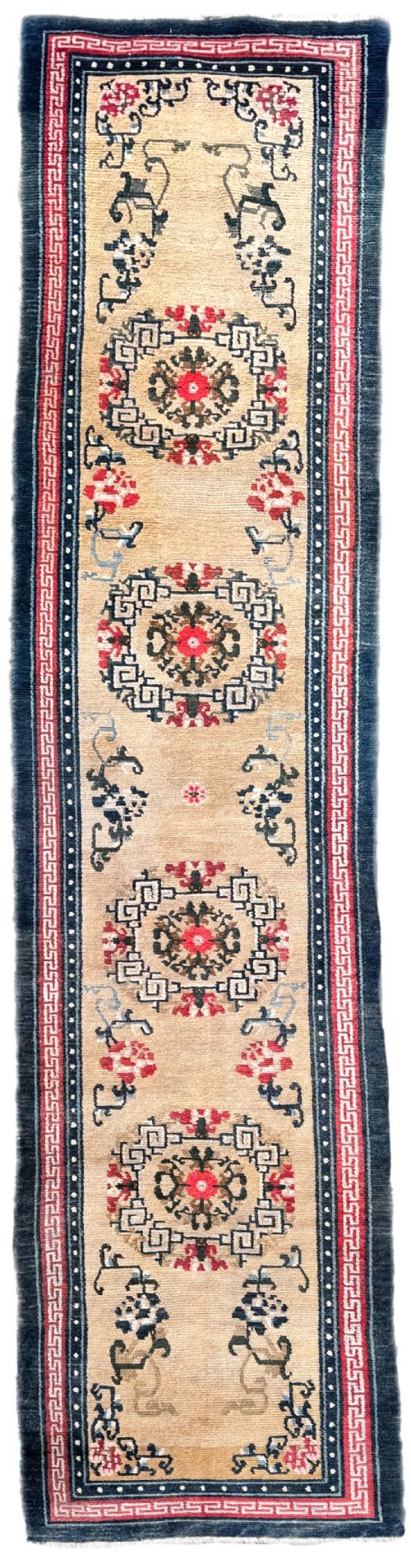
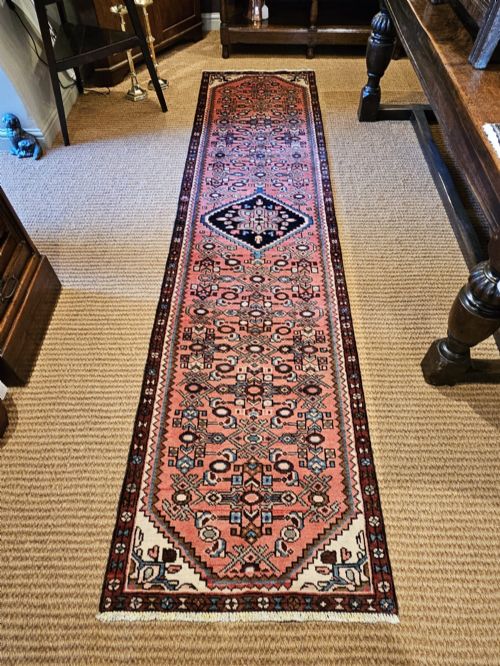
When you search for a narrow oriental rug, you encounter long, floor-covering textiles designed specifically for hallways, landings and galleries. These pieces typically originate from Persian, Turkish, Caucasian, Tibetan and Afghan workshops or tribal groups.
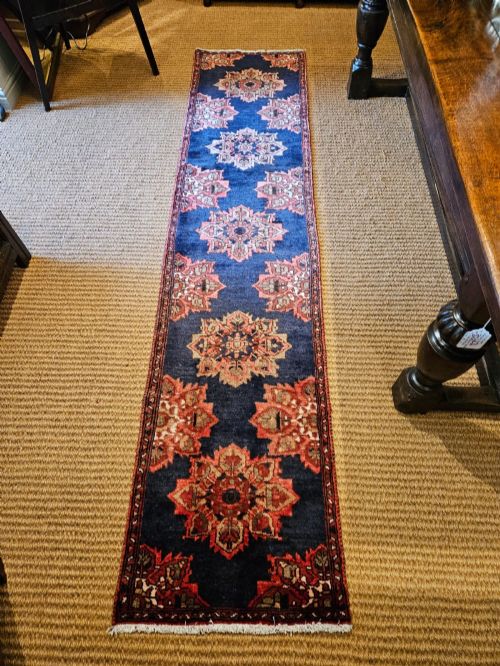
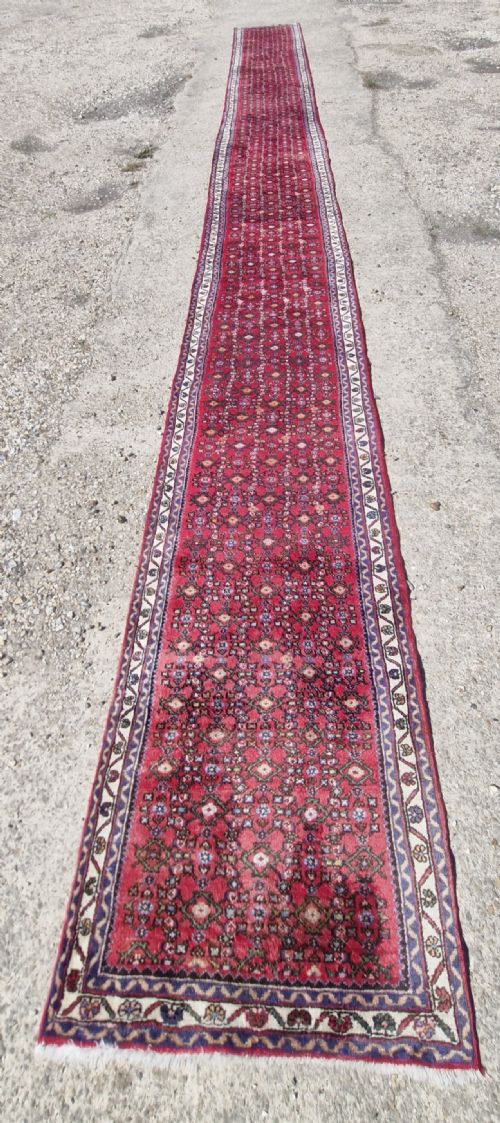
The selections available here lean heavily toward nineteenth and early twentieth-century village and tribal productions. You will find distinct regional formats such as Heriz, Hamadan, Kurdish and Baluch runners stretching past three or four metres in length.
How they were made
Weavers constructed these long floor coverings primarily using wool pile knotted onto sturdy cotton or wool foundations, occasionally incorporating camel hair for natural tones. Hand-spun wool provided the durability required for heavy foot traffic in domestic hallways.
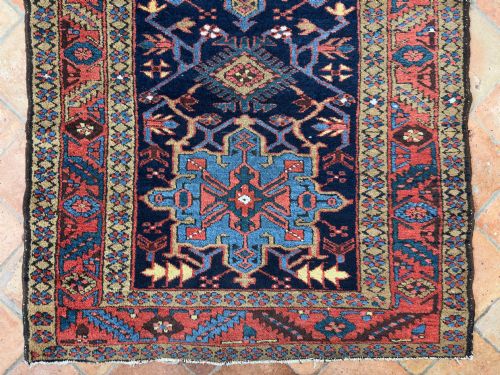
Dyes derived from local plants and minerals produced the deep navy blues, olive greens and terracotta reds recorded across the inventory. Artisans tied symmetrical or asymmetrical knots by hand, securing the ends with flatwoven kilim finishes.
Narrow Oriental Rug Retail Price Guide 2026
Typical asking prices for narrow oriental rug among the pieces listed under this phrase on Sellingantiques today, from the lower quarter to the upper quarter. They describe what is for sale here now, not the wider market.
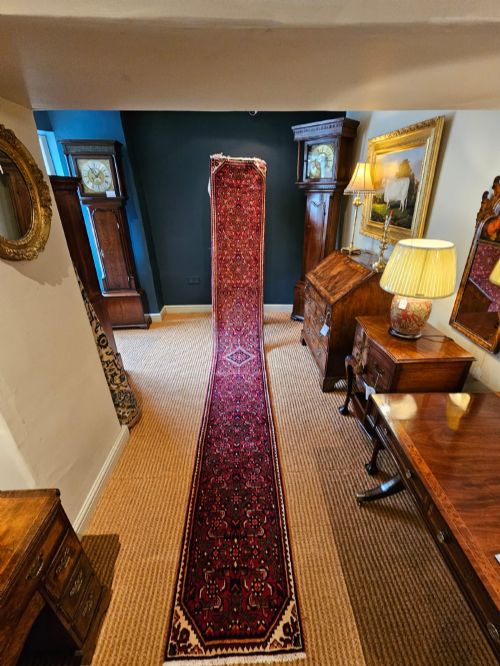
One remarkably persistent runner stretches an astonishing thirty-two feet down the hallway.
What varies in quality
Knot density and structural integrity dictate the distinction between everyday village work and finer workshop pieces. Closely packed knots allow intricate geometric medallions and floral motifs to hold their definition over decades of use.
The condition of the wool pile and the crispness of the vegetable dye palette influence overall visual balance. Uniform width along extended lengths and intact original selvedges mark superior survival through heavy household wear.
The Narrow Oriental Rug Glossary
- Runner
- A long, narrow carpet format traditionally utilised in corridors, staircases and hallways. These pieces measure significantly longer than they are wide.
- Pile
- The upright yarn loops or cut ends that form the soft surface of a rug. Pile depth affects both the underfoot feel and how light catches the colours.
- Selvedge
- The bound or reinforced side edges of a rug that prevent the foundation threads from fraying. Original selvedges indicate a well-preserved piece.
- Kilim
- A flatwoven textile technique often used at the horizontal ends of pile rugs. It provides a clean terminal finish without added bulk.
Narrow Oriental Rug: Frequently Asked Questions
Where should I place a narrow runner?
These elongated formats suit hallways, corridors and narrow landings where linear floor coverage protects timber boards from heavy foot traffic.
They also function effectively beside beds or in galley kitchens to introduce texture and warmth to confined spaces.
How do I clean an old wool rug?
Regular gentle vacuuming without a rotating brush lifts surface dust from the wool pile without straining the historic foundation threads.
Professional specialist cleaning remains necessary for deep washing to protect natural dyes and prevent fibre distortion.
What periods do these runners date from?
The inventory spans from the late nineteenth century through to the interwar decades of the twentieth century, capturing distinct weaving traditions.
Pieces from the eighteen-nineties sit alongside examples produced in the nineteen-twenties and nineteen-thirties.
How do regional styles differ?
Persian Heriz runners typically display bold geometric medallions and strong structural layouts suited to formal spaces.
Village pieces from Hamadan or Kurdish regions often feature repetitive tribal motifs and more varied, spontaneous colour arrangements.