
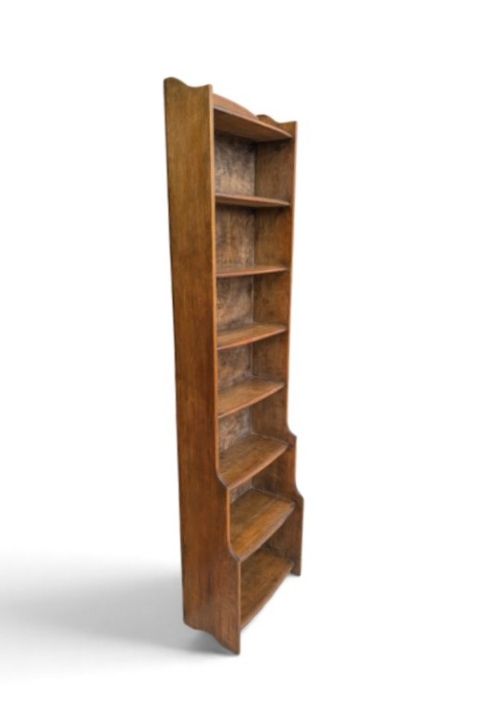
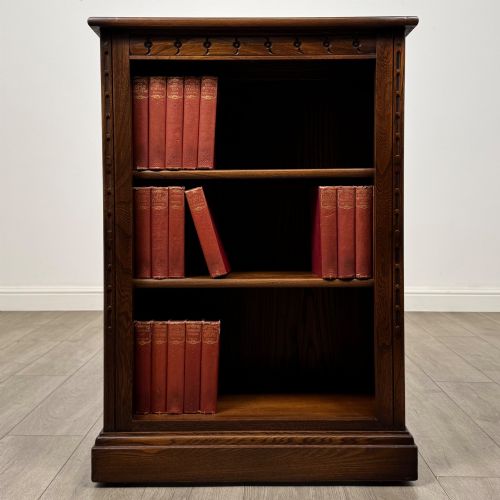
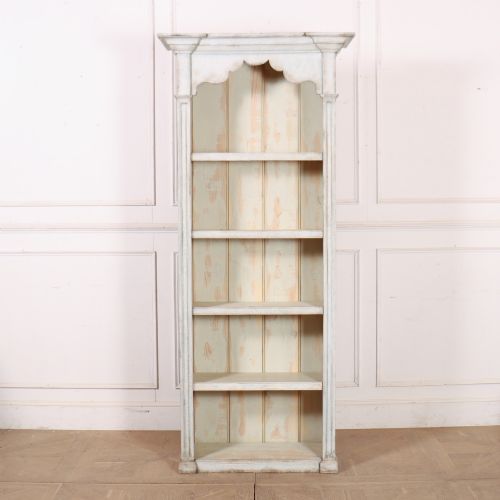
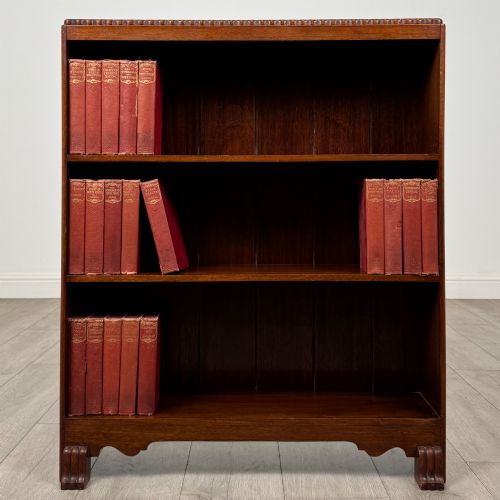
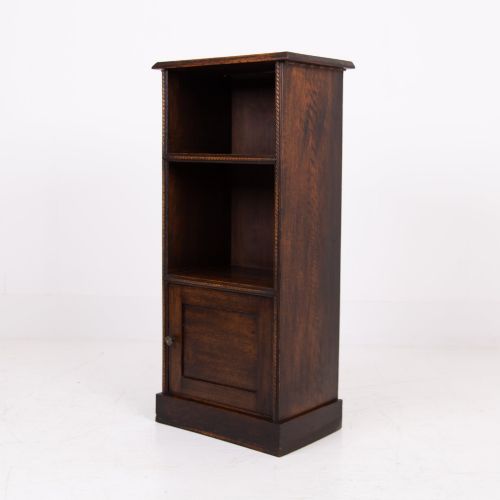
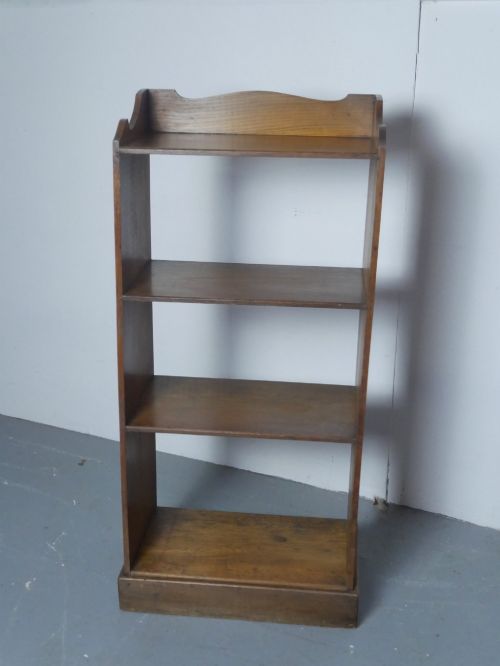
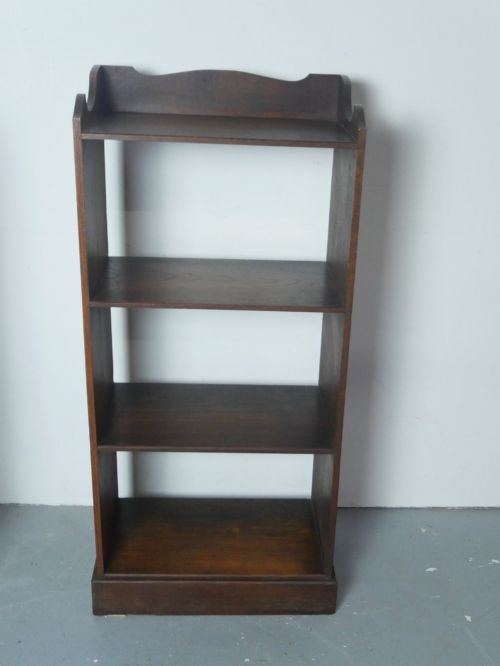
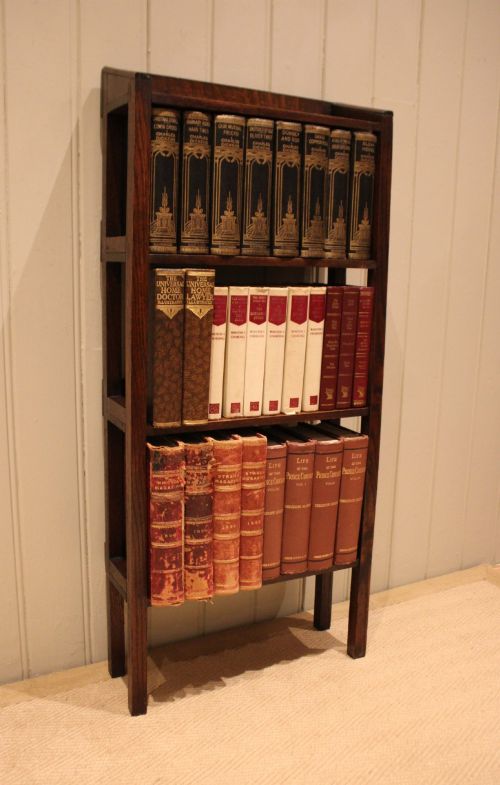
Narrow Open Shelves
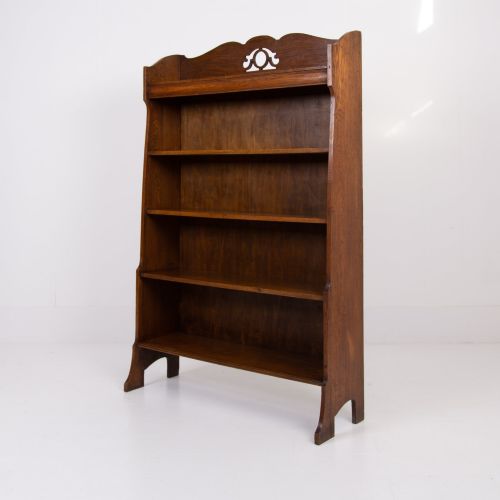
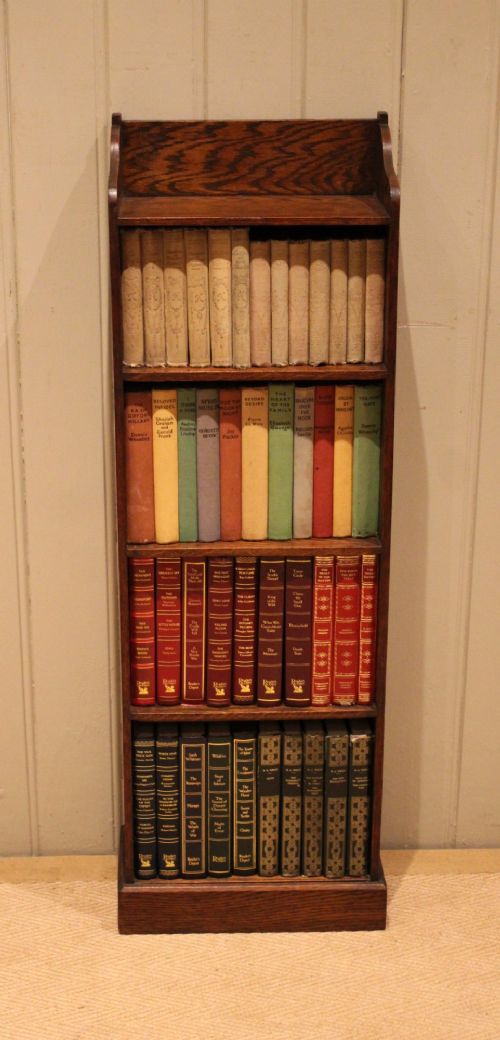
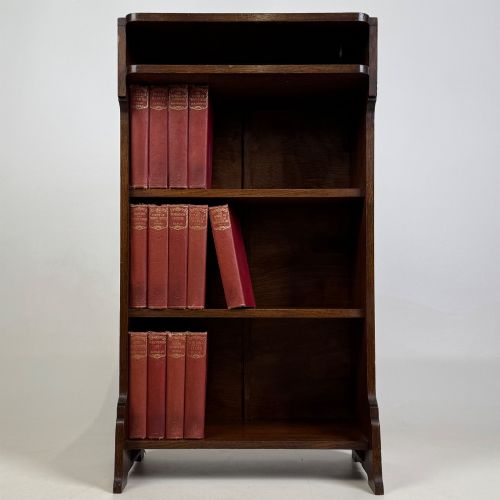
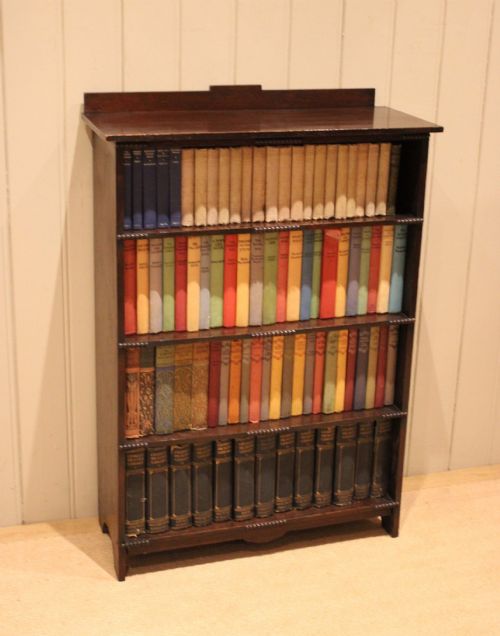
Narrow open shelves combine upright vertical storage with accessible display space, appearing most often in sturdy Edwardian oak or rich mahogany.
Narrow Open Shelves
Narrow open shelves comprise bookcases, etageres, whatnots, and display units designed to fit compact spaces while holding volumes or decorative objects without obstructing the room. These pieces span the late nineteenth century through the early decades of the twentieth century, with Edwardian examples particularly prevalent.
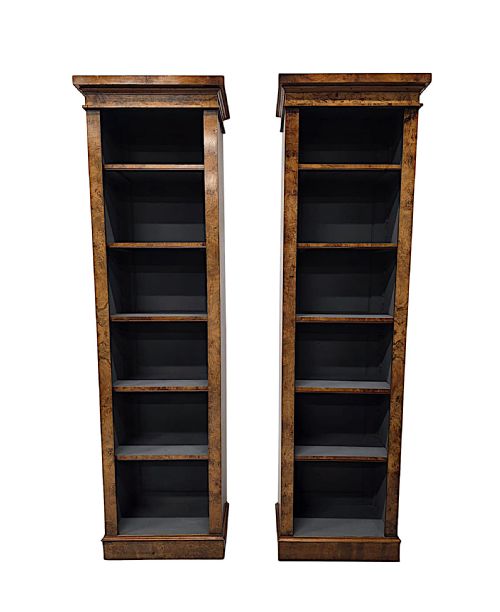
Makers and workshops constructed these slender units in various revival styles, including Regency, Georgian, Jacobean, and Arts and Crafts movements. Pieces range from simple rustic oak forms to finely inlaid satinwood and burr walnut creations.
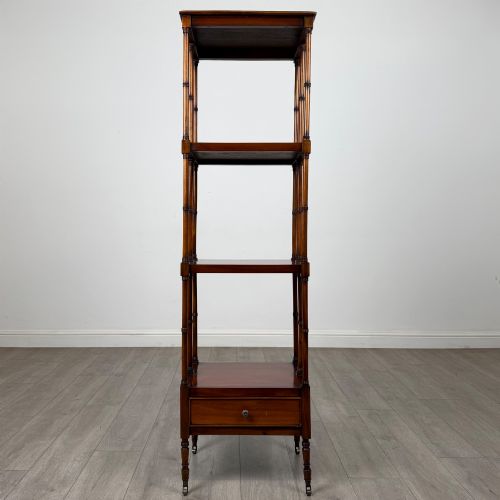
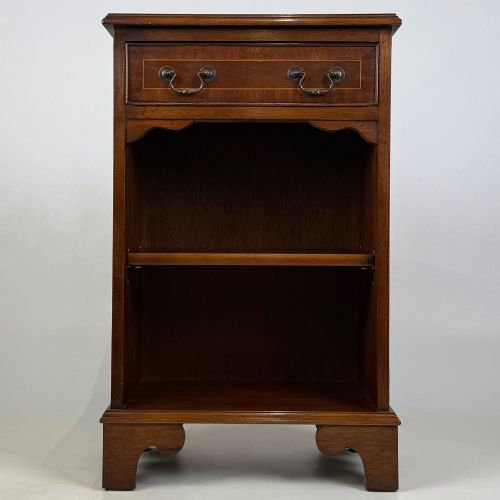
Standing formats dominate the selection, frequently featuring adjustable shelving or tiered levels. Some variants incorporate lower cupboards or single drawers beneath the open display tiers.
Construction and Materials
Cabinet makers utilised solid and veneered timbers, predominantly oak and mahogany, alongside accents of satinwood, walnut, rosewood, pine, and brass hardware. Timber selection dictated the character of the piece, from dark fumed oak in Arts and Crafts designs to warm figured mahogany in Edwardian formats.
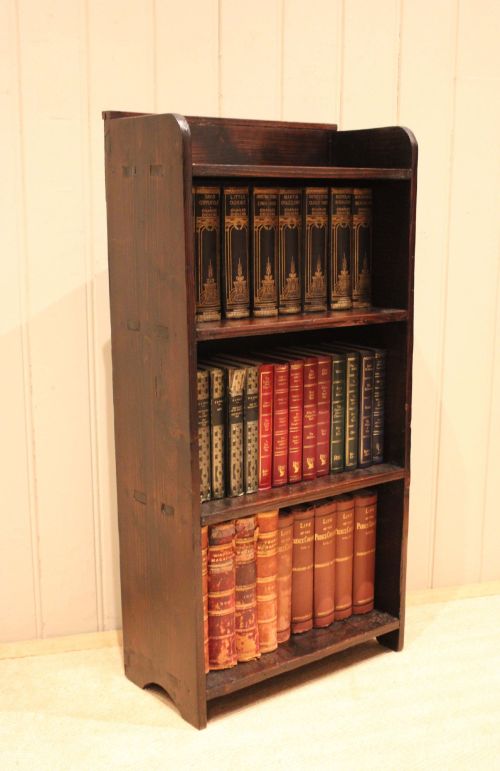
Joining techniques relied on traditional cabinet-making methods suited to standing furniture, including pegged mortise and tenon joints in early twentieth-century oak pieces. Inlaid stringing, decorative cut-outs, beaded edges, and painted finishes provided surface ornamentation without compromising structural integrity.
Early twentieth-century makers occasionally added playful decorative cut-outs to Arts and Crafts shelves, ensuring dust had decorative company.
Judging Quality and Proportion
Quality rests upon the selection of timber and the precision of the joinery, particularly in the upright supports and shelf seating. Superior examples demonstrate balanced proportions, clean lines, and restrained decorative elements such as hand-cut motifs or fine mahogany crossbanding.
The integration of adjustable shelving mechanisms and sturdy back panels distinguishes finer items from standard utilitarian storage. Maker attribution and careful attention to grain alignment elevate specific pieces significantly above typical commercial output.
Gillows·Waring and Gillows·Wylie Lochhead·E.A. Taylor
The Narrow Open Shelves Glossary
- Etagere
- A set of open shelves for displaying small objects or books. These tiered pieces typically feature slender upright supports.
- Whatnot
- A multi-tiered piece of standing furniture used for ornaments and books. It gained popularity during the Victorian and Edwardian eras.
- Inlay
- A decorative technique where contrasting woods or brass are embedded into the primary surface. It frequently defines Edwardian mahogany furniture.
- Waterfall bookcase
- A shelving unit with tiers that step back progressively from bottom to top. This form appears in walnut, rosewood, and oak.
- Beaded edge
- A narrow rounded moulding carved along the border of a shelf or frame. It adds subtle architectural definition to oak bookcases.
Narrow Open Shelves: Frequently Asked Questions
What rooms suit narrow open shelves?
These compact standing units fit easily into alcoves, hallways, and studies where floor space is limited. Their open design keeps small rooms feeling light while providing practical vertical storage.
They accommodate books, ceramics, and small collections without overwhelming the surrounding interior decor.
How do I identify an Edwardian bookcase?
Edwardian pieces often feature lighter timbers such as satinwood or polished mahogany, frequently accented with delicate string inlay. They frequently show simpler lines than heavy Victorian predecessors.
Construction details tend to be neat, reflecting the domestic interior fashions of the early twentieth century.
Are these shelves suitable for heavy books?
Solid oak and mahogany examples from the Victorian and Edwardian periods offer robust support for standard volumes. Many tall variants include adjustable wooden shelves to accommodate varying book heights.
Heavier volumes sit best on lower fixed shelves to maintain overall structural stability.
What is an etagere used for?
An etagere serves primarily as a decorative display stand for ornaments, porcelain, and select volumes. The tiered open design allows items to be viewed from multiple angles.
These slim pieces function well as side tables or corner accents in living spaces.