

Narrow Bedroom Drawers
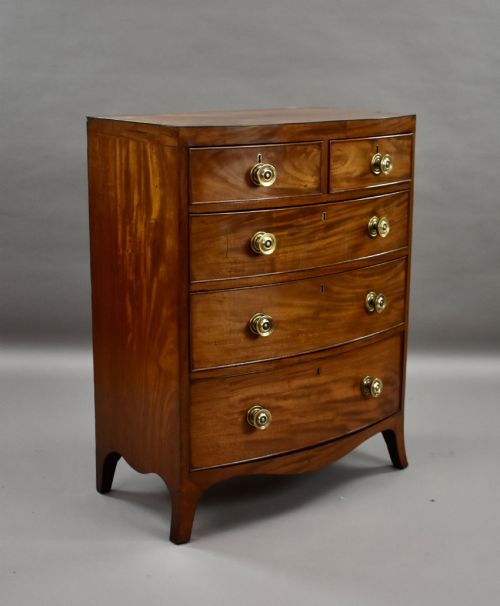
Narrow bedroom drawers save floor space while offering deep storage, coming to us primarily in Victorian and Edwardian mahogany, walnut, and oak.
Narrow Bedroom Drawers
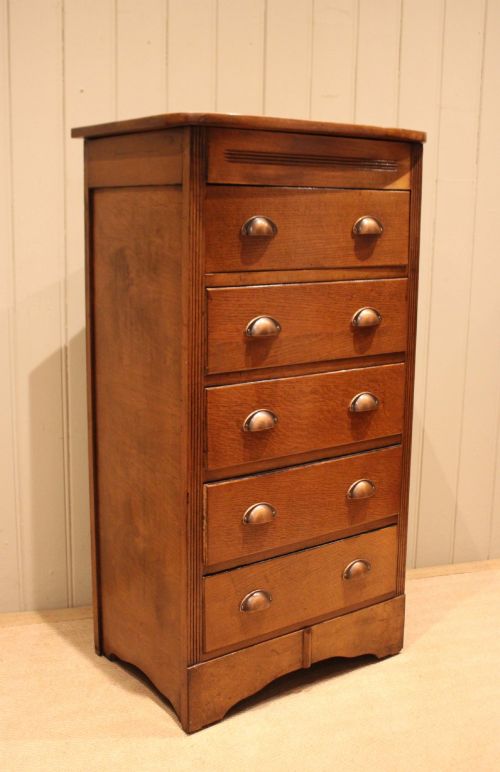
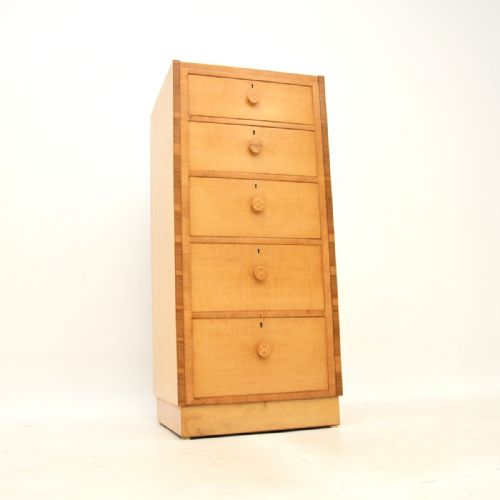
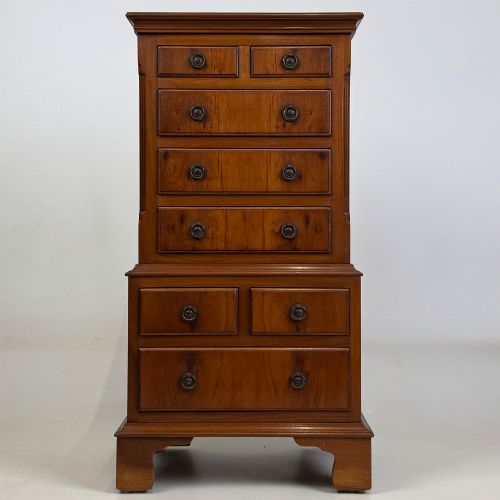
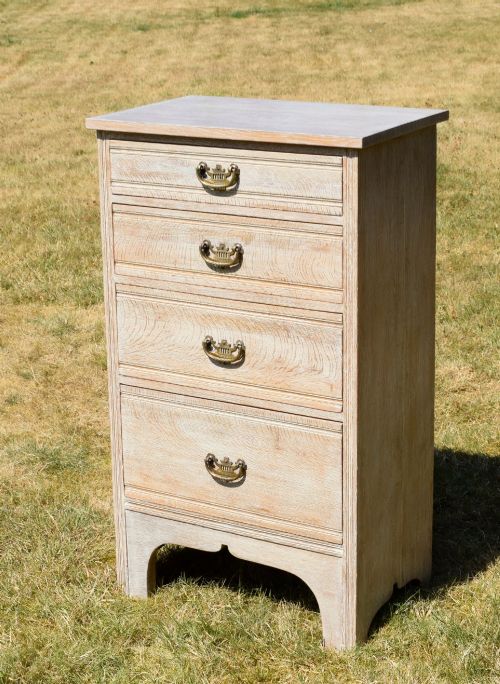
Narrow bedroom drawers encompass tall forms like Wellington chests, slim chests of drawers, tallboys, and compact bedside cabinets designed for restricted footprints. These pieces span the Victorian, Edwardian, and Georgian periods, alongside later 1930s examples and revival styles.
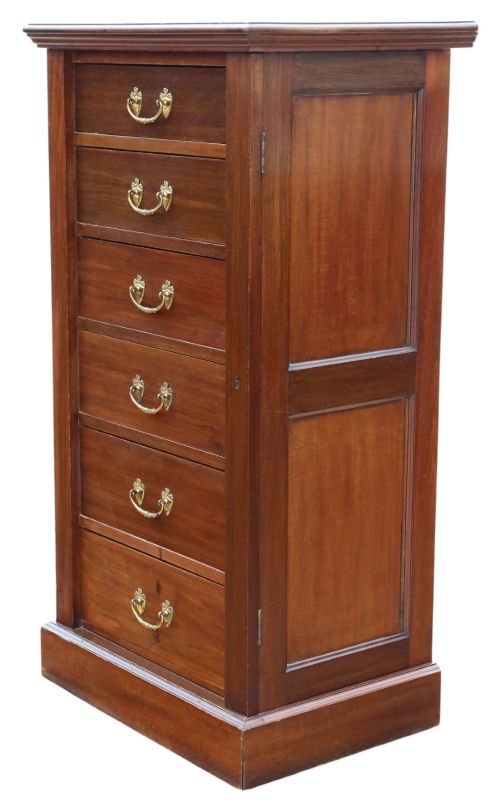
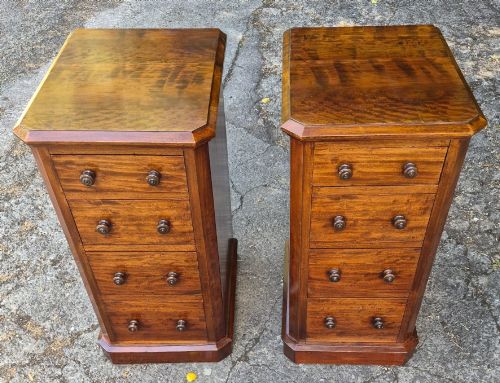
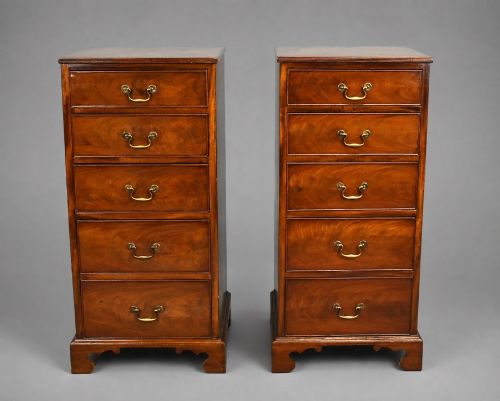
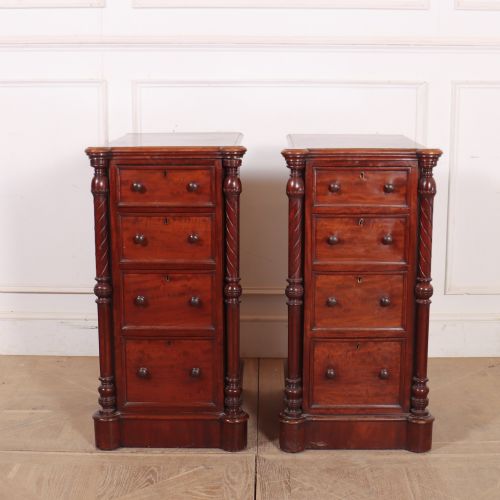
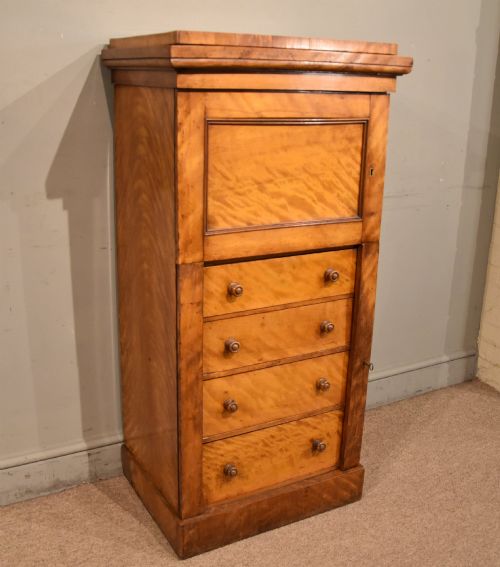
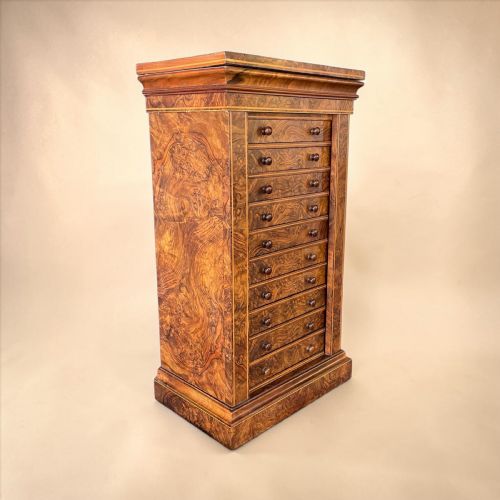
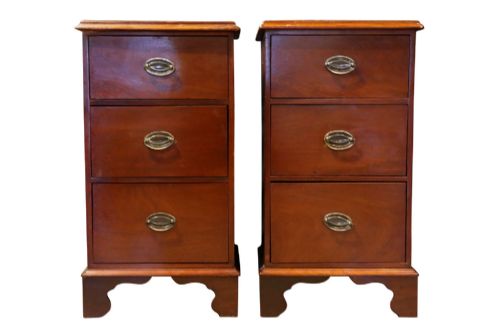
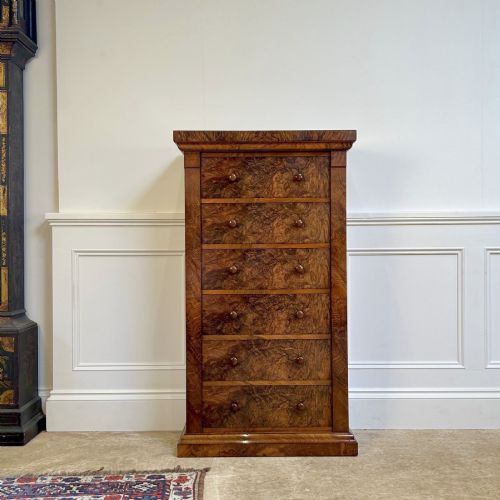
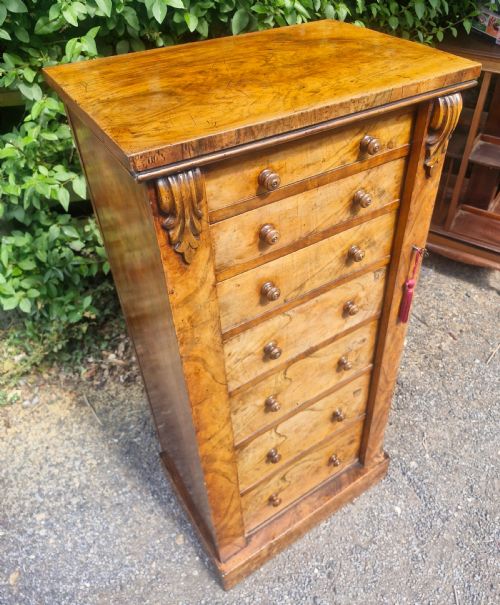
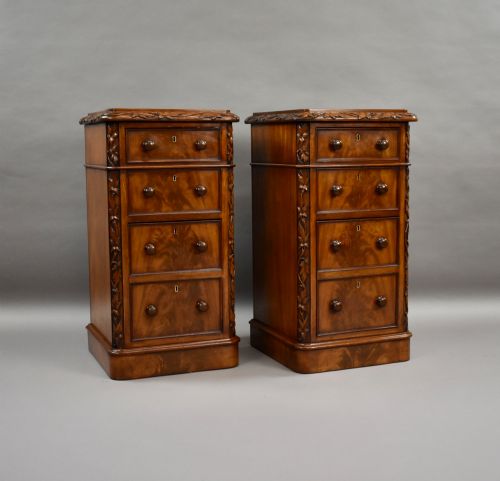
The version most commonly met on this page is the Victorian mahogany Wellington chest or bedside chest, often standing tall with multiple narrow drawers. Alongside these, buyers find Edwardian satinwood and oak pieces, plus pairs of bedside lockers and cabinets in various timbers.
Makers and workshops range from standard cabinetmakers to noted firms like Gillows and Hille, utilising timber species from standard mahogany and walnut to burr walnut, satin birch, sycamore, and pine. The overarching format remains narrow storage built to suit compact domestic spaces.
How they were made
Construction relies heavily on dense hardwoods like mahogany, walnut, and oak, often paired with secondary timbers like pine and accented with veneers of burr walnut, satinwood, or sycamore. These timbers provide the structural rigidity needed for tall, narrow frames that must bear the weight of multiple drawers without twisting.
Joinery techniques involve tightly fitted drawer boxes, dovetailed joints, and specialised locking mechanisms found on Wellington chests and safe chests. Surface finishes range from polished mahogany and inlaid details to country house scumble paint and limed oak treatments.
Listings feature periods from the Georgian era through to the 1930s, constructed in mahogany, walnut, oak, satinwood, and pine.
What varies in quality
Quality separates along the lines of timber selection, such as the choice between plain mahogany and highly figured burr walnut or satinwood veneers. The sophistication of the internal mechanism, particularly the locking stile on Wellington chests and the tightness of drawer dovetailing, dictates the tier of the piece.
Proportion and execution define the upper range, where pieces maintain clean architectural lines and crisp mouldings despite their diminutive footprints. Lesser pieces show heavier proportions or later adaptations that alter the original proportions of the drawers.
Gillows·Hille·S Mordan Co
The Narrow Bedroom Drawers Glossary
- Wellington chest
- A tall, narrow chest of drawers secured by a hinged locking side bar that fastens with a key. This form typically contains six or seven shallow drawers.
- Tallboy
- A tall chest of drawers, often constructed in two stacked sections to allow easier movement through narrow domestic stairways.
- Bedside locker
- A small cabinet or chest designed to stand beside a bed, frequently found in matched pairs across Victorian and Edwardian periods.
- Semainiere
- A French-derived term for a tall, seven-drawer chest intended to hold a week of linen or garments.
- Scumble paint
- A decorative surface finish applied over a base coat to imitate the grain of more expensive timbers.
Narrow Bedroom Drawers: Frequently Asked Questions
What is a Wellington chest?
A Wellington chest is a tall, narrow set of drawers featuring a locking side bar that secures all the drawers at once. This locking stile typically fastens with a small key.
Originally designed in the nineteenth century, these chests maximise vertical storage while occupying minimal floor space in the bedroom.
How do I spot a true pair of bedside chests?
True pairs feature mirrored construction, matching timber grain patterns, and identical drawer depths on both left and right cabinets. They show consistent wear and identical hardware throughout.
Assembled pairs often combine pieces built years apart, resulting in subtle discrepancies in height, timber colour, or leg style upon close inspection.
Where were narrow drawers used?
These compact pieces served primarily in bedrooms, dressing rooms, and smaller chambers where standard wide chests obstructed movement. Their narrow footprints suited tight corners and wall spaces beside bed frames.
Taller versions held linens and accessories, while shorter bedside cabinets kept personal items within arm reach of the bed.
How do I care for antique mahogany and walnut?
Keep wooden chests away from direct sunlight and heat sources to prevent the veneers from drying, warping, or cracking over time. Maintaining stable room humidity preserves the joints and polish.
Apply a traditional beeswax polish occasionally to nourish the timber grain and protect the original surface finish from dust and minor wear.