





Napoleon III Salon Chairs
Napoleon iii salon chairs bring gilded French grandeur and plush upholstery to a room, offering both decorative presence and historic seating.
Napoleon III Salon Chairs
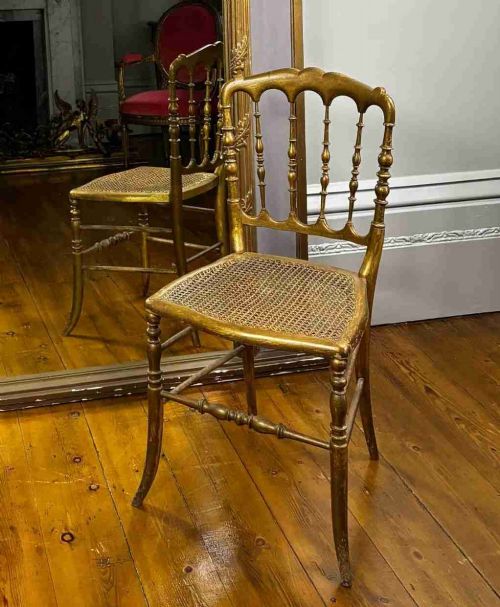
Napoleon iii salon chairs encompass French seating from the nineteenth century, including gilt armchairs, side chairs, and larger salon suites. These pieces reflect the ornate tastes of the Second Empire, featuring decorative frames designed for formal reception rooms.
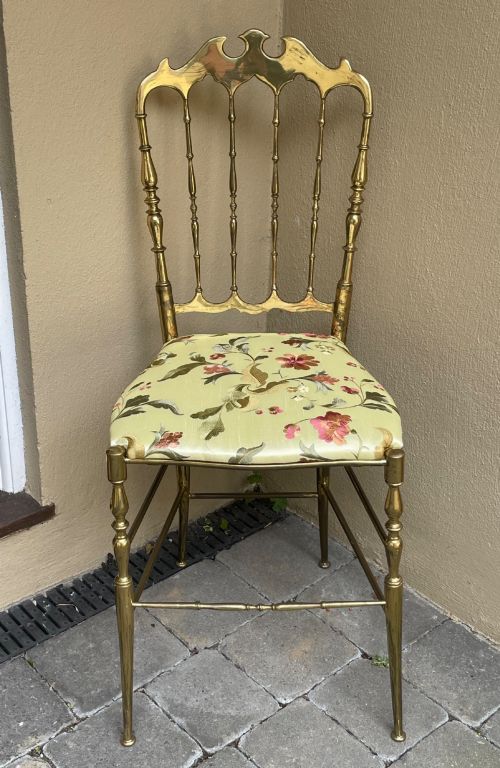
The versions most commonly met on this page span the 1870s and 1880s, alongside later nineteenth-century examples and occasional twentieth-century interpretations. They appear in forms ranging from polished brass frames to carved giltwood and walnut structures.
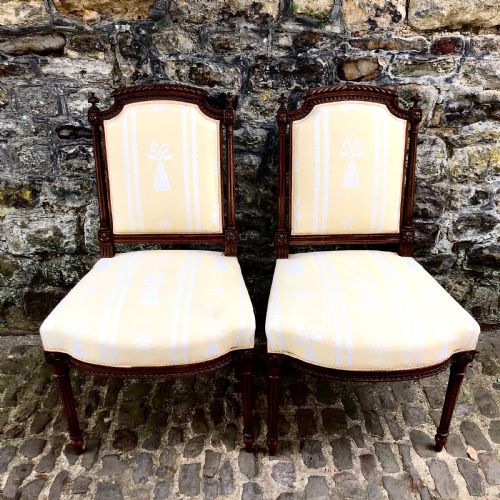
Buyers encounter individual chairs, matched pairs suitable for a salon, and complete suites including berger armchairs and settee canapes. Many retain historical upholstery in velvet, calico, or damask, while others await recovered fabric.
How they were made
Makers utilised traditional timber construction, shaping walnut and other foundational woods into curved frames for armchairs and side chairs. Joinery techniques supported the weight of formal seating while allowing for elaborate carved ornamentation.
Surfaces received rich treatments, notably through gilded finishes on giltwood and polished brass components. Artisans applied intricate marquetry inlay on select pieces, particularly within French Empire style suites.
Upholstery formed an integral part of the manufacturing process, employing materials like velvet, damask, calico, and fabric over sprung or stuffed bases. Caned seats also appeared on lighter salon chairs for textural contrast.
Napoleon III Salon Chairs Retail Price Guide 2026
Typical asking prices for napoleon iii salon chairs among the pieces listed under this phrase on Sellingantiques today, from the lower quarter to the upper quarter. They describe what is for sale here now, not the wider market.
Several chairs arrive ready for new upholstery, offering a blank canvas for modern fabrics while retaining their historic nineteenth-century bones.
What varies in quality
The depth and crispness of the carving separate standard production from superior examples, as hand-chiseled detail on giltwood and walnut frames requires significant skill. Frames that retain their original structural integrity without excessive reinforcement command greater attention.
The quality of the gilding or metal finish dictates the visual impact of the chair, with well-preserved surfaces showing superior original application. Fabric selection and the execution of upholstery work also influence the overall standard of the piece.
The Napoleon III Salon Chairs Glossary
- Giltwood
- Wood that has been coated with gold leaf or a gold-coloured finish. This technique creates a luminous, reflective surface characteristic of formal French seating.
- Canape
- A decorative French settee or sofa designed to match a suite of salon chairs. It shares the stylistic motifs and upholstery materials of the accompanying armchairs.
- Marquetry
- The art of applying pieces of veneer to a structure to form decorative patterns. This technique frequently appears on French Empire style furniture frames and panels.
- Damask
- A reversible figured fabric woven on a jacquard loom, featuring patterns formed by contrasting warp and weft threads. It is commonly used for upholstery on formal nineteenth-century chairs.
Napoleon III Salon Chairs: Frequently Asked Questions
How were salon chairs used?
Salon chairs served primarily for seating guests during formal gatherings, receptions, and musical evenings in nineteenth-century drawing rooms. Their relatively light construction allowed servants to rearrange them easily around the room.
Unlike heavier dining or library seating, these chairs prioritized decorative elegance and social comfort. They were positioned in conversational groups rather than pushed permanently against walls.
How do I live with these chairs?
Place them in living rooms, hallways, or bedrooms where their gilded frames and textured upholstery can act as focal points. Pair armchairs with complementary side chairs to create a balanced arrangement.
Protect fragile giltwood and historic fabrics from direct sunlight and heavy daily wear. Gentle dusting preserves the gilded surfaces without damaging the underlying wood.
How do I distinguish Second Empire from Victorian?
Second Empire pieces, often associated with Napoleon III design, typically display French stylistic markers such as giltwood frames, cabriole legs, and elaborate Rococo Revival motifs. They emphasise lighter, more fluid curves than standard Victorian furniture.
Victorian pieces from the same era often feature heavier proportions and darker timbers like mahogany or rosewood. Examining the carving style and framing reveals the distinct regional origins.