

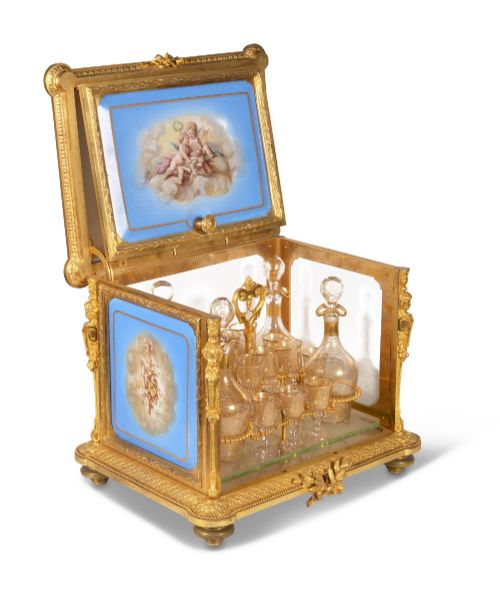


Napoleon III Glass Box
These pieces for a napoleon iii glass box bring French Second Empire elegance into a room to hold your keepsakes securely.
Napoleon III Glass Box
A napoleon iii glass box typically brings together heavy glass or crystal with gilt bronze, ormolu, and brass mounts, reflecting the opulent French style of the nineteenth century.
You will encounter jewellery boxes, trinket caskets, and larger display tables alongside desk accessories and tantalus sets from periods spanning the middle to the end of the Victorian era.
The objects serve both decorative and practical purposes, often lined with silk or velvet to cradle small valuables or house decanters safely upon a surface.
Materials and Construction
Makers combined blown or moulded glass and crystal with cast brass and ormolu frames, securing the panels with precise metal joints and hinges.
More elaborate examples incorporate ebonised wood or tortoiseshell with inlaid brass work, demonstrating the meticulous marquetry techniques popular in French workshops.
Napoleon III Glass Box Retail Price Guide 2026
Typical asking prices for napoleon iii glass box among the pieces listed under this phrase on Sellingantiques today, from the lower quarter to the upper quarter. They describe what is for sale here now, not the wider market.
Listings feature items utilising Baccarat crystal, heavy brass, and ormolu mounts across the nineteenth century.
Judging Quality
The refinement of the cast ormolu mounts and the weight and clarity of the crystal set the standard, with sharper chased details and heavier metalwork marking out superior examples.
The integration of the internal silk or velvet lining alongside the precision of the brass inlay work indicates the level of craftsmanship invested in the piece.
The Napoleon III Glass Box Glossary
- Ormolu
- Gilded bronze used extensively for decorative mounts on nineteenth-century furniture and caskets. The technique involves applying a finely ground gold-mercury amalgam to bronze.
- Baccarat
- A renowned French crystal manufacturer known for producing heavy, high-clarity glassware. Pieces often feature deeply cut patterns and polished finishes.
- Tantalus
- A locking wooden or metal frame designed to hold decanters securely while displaying their contents. They typically house stoppered bottles for spirits.
- Boulle
- A form of marquetry using brass and tortoiseshell inlaid into wood surfaces. It gained immense popularity in France during the reign of Louis XIV and later revivals.
Napoleon III Glass Box: Frequently Asked Questions
What is a Napoleon III glass box?
These items are nineteenth-century French caskets and trinket boxes made with glass panels held in brass or ormolu frames. They reflect the ornate tastes of the Second Empire period.
They were designed to sit on dressing tables, desks, or mantelpieces to display and store jewellery, trinkets, or small desk accessories.
How were these glass caskets used?
Original owners utilised these boxes for holding valuable jewellery, letters, and personal trinkets in formal drawing rooms and private chambers.
Larger versions functioned as display tables or housed decanters and glasses for entertaining guests with liqueurs.
How do I style one at home?
Place a box on a wooden chest of drawers or a dressing table where light can pass through the crystal panels. They work well as standalone decorative objects or containers for modern accessories.
Keep them away from direct edges where they might be knocked, as the heavy glass and metal mounts require a stable surface.
How can I tell the period?
Look at the combination of materials, such as heavy ormolu mounts paired with Baccarat crystal, which point directly to nineteenth-century French manufacturing methods.
Constructive details like hand-cut joinery in the brass frames and traditional silk or velvet linings also help distinguish authentic period pieces from later reproductions.