






Naive Portrait of Child
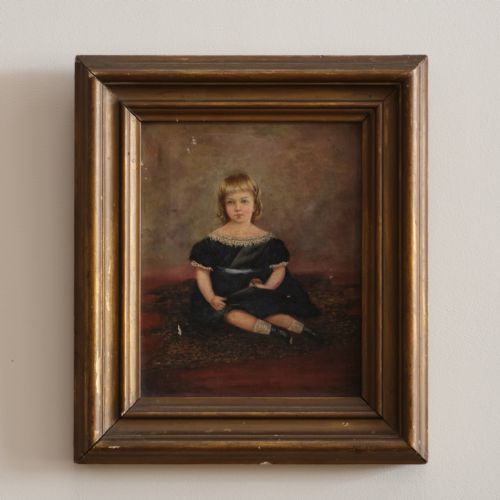
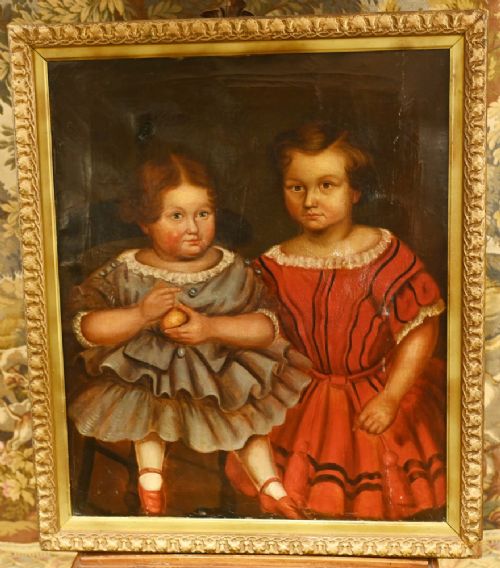
A naive portrait of child captures early portraiture with charming directness, offering an honest, unpretentious record of youth from the nineteenth century.
Naive Portrait of Child
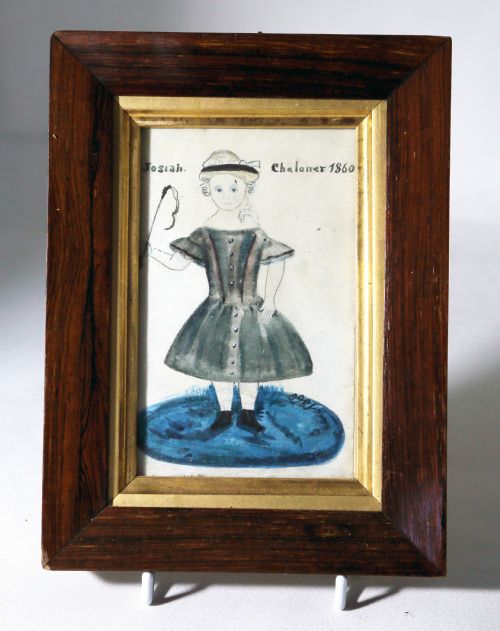
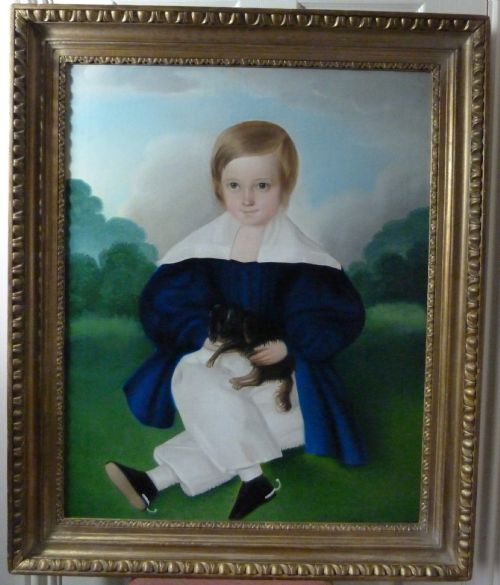
These works are historic depictions of youngsters created outside the formal academic traditions of portraiture, spanning periods from the Regency era through the Victorian years. Most examples on this page take the form of oil paintings on canvas or works on paper, often showing young subjects alongside pets or architectural settings.
The style draws on regional traditions such as English naive school, Victorian folk art, and American primitive art. Such pieces prioritise character and directness over proportion and academic perspective.
Subjects range from individual boys and girls to family groups and commemorative pieces. These pictures capture historical dress, toys, and domestic animals with simple sincerity.
Materials and construction
Makers utilised oil paint on stretched canvas or applied watercolour and ink to paper, occasionally housing the finished works in rosewood frames with gesso and gold leaf details. The physical components reflect standard materials available to regional painters and provincial workshops of the period.
Canvas supports are often mounted on original wooden stretchers, whilst paper works rely on quality rag stock suited to watercolour application. Framing materials range from simple wood mouldings to ornate gilt finishes depending on the origin.
Naive Portrait of Child Retail Price Guide 2026
Typical asking prices for naive portrait of child among the pieces listed under this phrase on Sellingantiques today, from the lower quarter to the upper quarter. They describe what is for sale here now, not the wider market.
One recorded infant sitter achieved immortality not just on canvas, but with their exact age of three months and three years duly noted for posterity.
Distinctions in quality
Quality rests in the strength of expression and the confidence of brushwork or ink application, where the most compelling works convey the personality of the subject despite anatomical liberties. The handling of surrounding details, such as pets, clothing, and architectural backgrounds, also distinguishes finer pieces.
The preservation of the original surface, including untouched paint layers and period framing materials, influences the overall integrity of the piece. Works that retain their original stretcher and unlined canvas display greater historical authenticity.
The Naive Portrait of Child Glossary
- Folk art
- Artistic production originating from cultural traditions of community rather than academic training. It encompasses self-taught painting and craft objects made for domestic or local use.
- Oil on canvas
- Pigment mixed with drying oils applied to a woven fabric support stretched over a wooden frame. This medium allowed artists to build rich colour and texture.
- Watercolour
- Paint consisting of colourants suspended in a water-soluble binder, typically applied to paper. It produces translucent washes well-suited to detailed narrative and portrait works.
- Gesso
- A paint mixture consisting of a binder mixed with chalk, gypsum, or pigment used to prepare surfaces for painting or gilding. It provides a smooth base for gold leaf application.
- Primitive
- A descriptive term for art produced outside formal academic conventions, often characterised by simplified perspective and direct emotional expression.
Naive Portrait of Child: Frequently Asked Questions
What is a naive portrait of child?
A naive portrait of child is an artwork created by a self-taught or provincial painter working outside the formal academies of the nineteenth century. These pieces record young subjects with direct observation and unpolished technique.
Such works often include pets, toys, or specific domestic interiors that reflect the everyday life of the period.
How do I date these portraits?
Dating relies on costumes, hairstyles, and accompanying objects recorded in the composition, alongside any inscribed dates or framing details. Regency and Victorian styles offer clear markers for chronological placement.
Paint canvas types, stretcher construction, and framing materials also help confirm the period of origin.
Why do some portraits include dogs?
Animals frequently appeared in children's portraiture to symbolise loyalty, companionship, or the character of the young sitter. Dogs were cherished members of households and added narrative interest to the scene.
Including a pet often enhanced the personal nature of the commissioned picture.
How should I display these paintings?
These works suit domestic interiors where their direct character can be appreciated alongside period furniture or contrasting modern decor. Keeping them out of direct sunlight preserves the pigments on canvas and paper.
Appropriate wall placement protects fragile watercolours and oil paintings from excessive humidity.